Day 1
Arrival, opening circle and a first practice
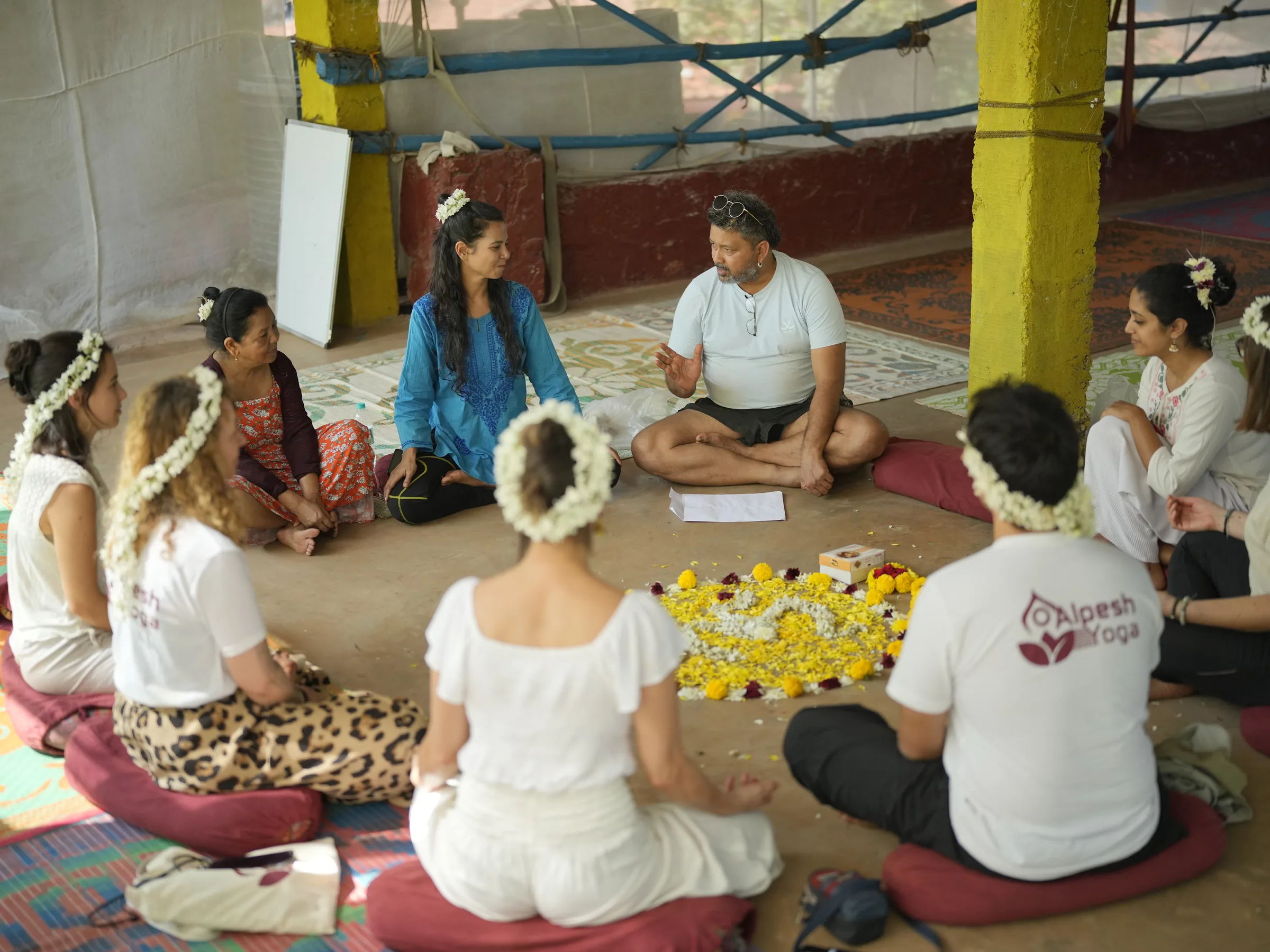
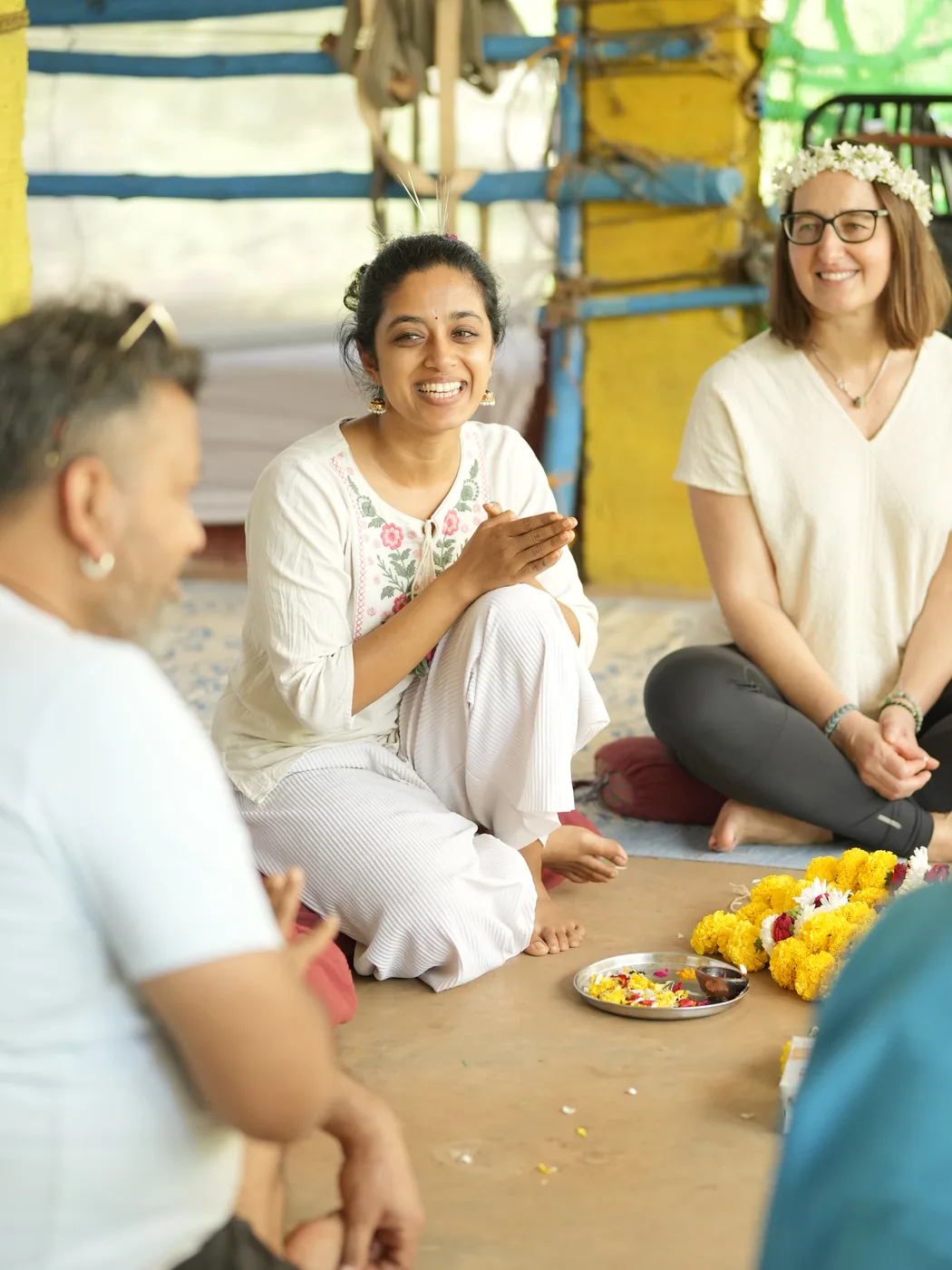
Settle in, meet the group and the teachers, and take a deliberately gentle first practice so we can see how each of you moves before anything is asked of you. A short opening ceremony in the evening, dinner together, and an early night.
Day 2
Foundations: feet, legs and standing poses
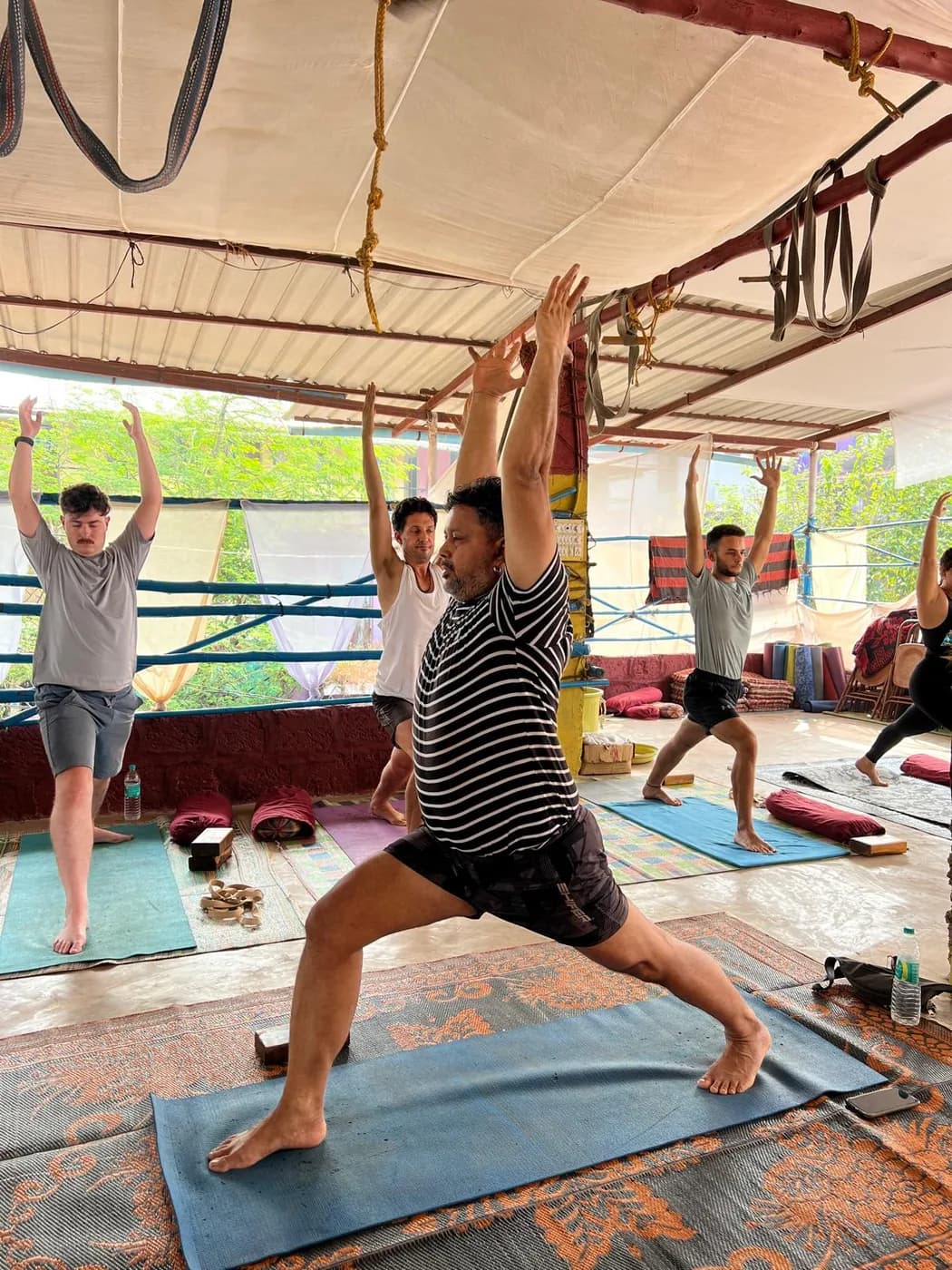
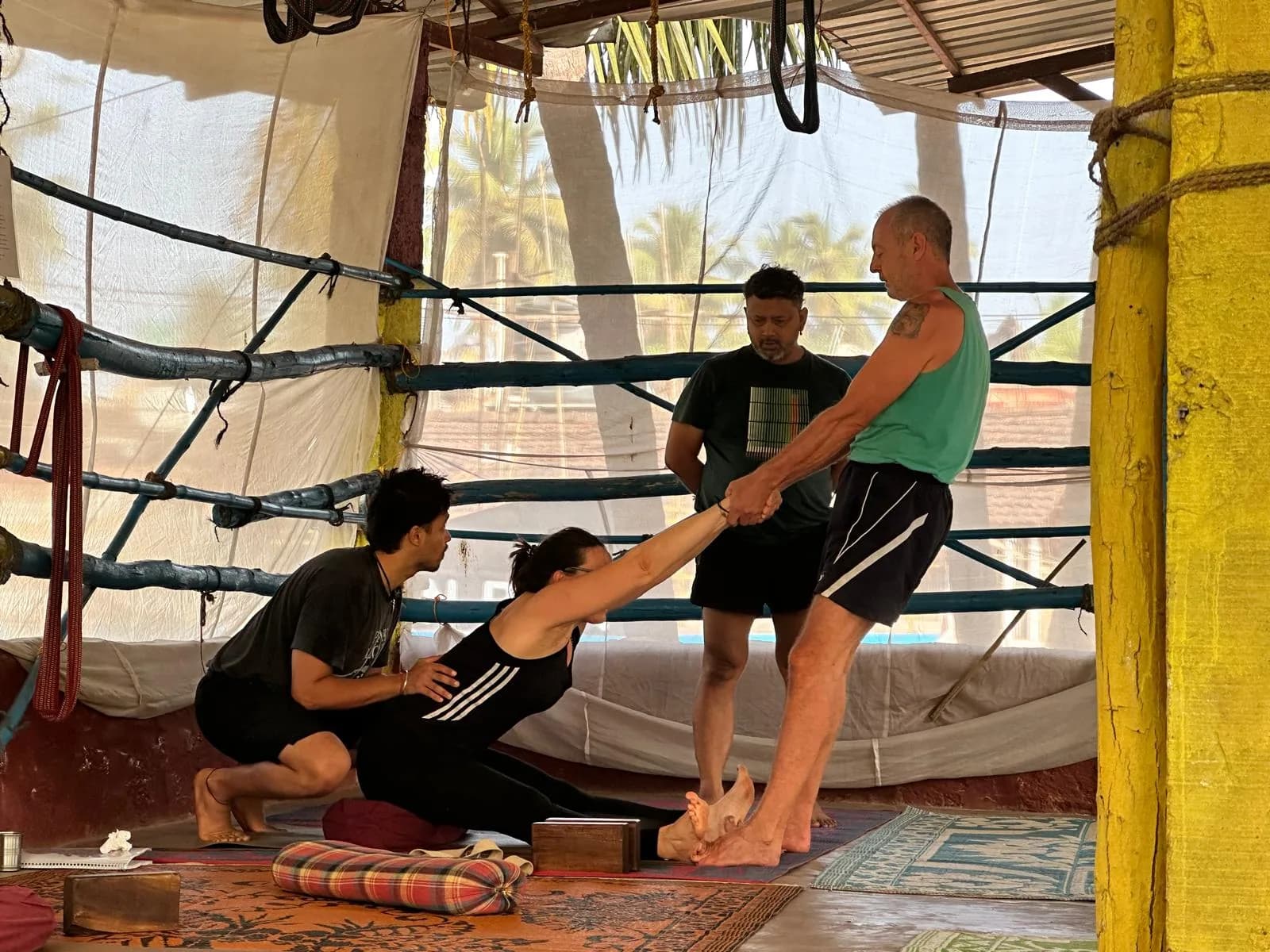
The alignment work starts at the floor. Tadasana taken seriously, then the warriors, triangle and side angle taken apart one joint at a time with blocks and a belt. First breath-awareness session, and an introduction to what the eight limbs actually are.
Day 3
Sun salutations and your first full flow
Morning: how a sun salutation is built, and why yours probably starts in the shoulders. Afternoon: a complete Hatha Vinyasa Flow class, paced to the breath rather than to a count. Evening philosophy on the yamas and niyamas as working ethics.
Day 4
Hips, forward bends and twists
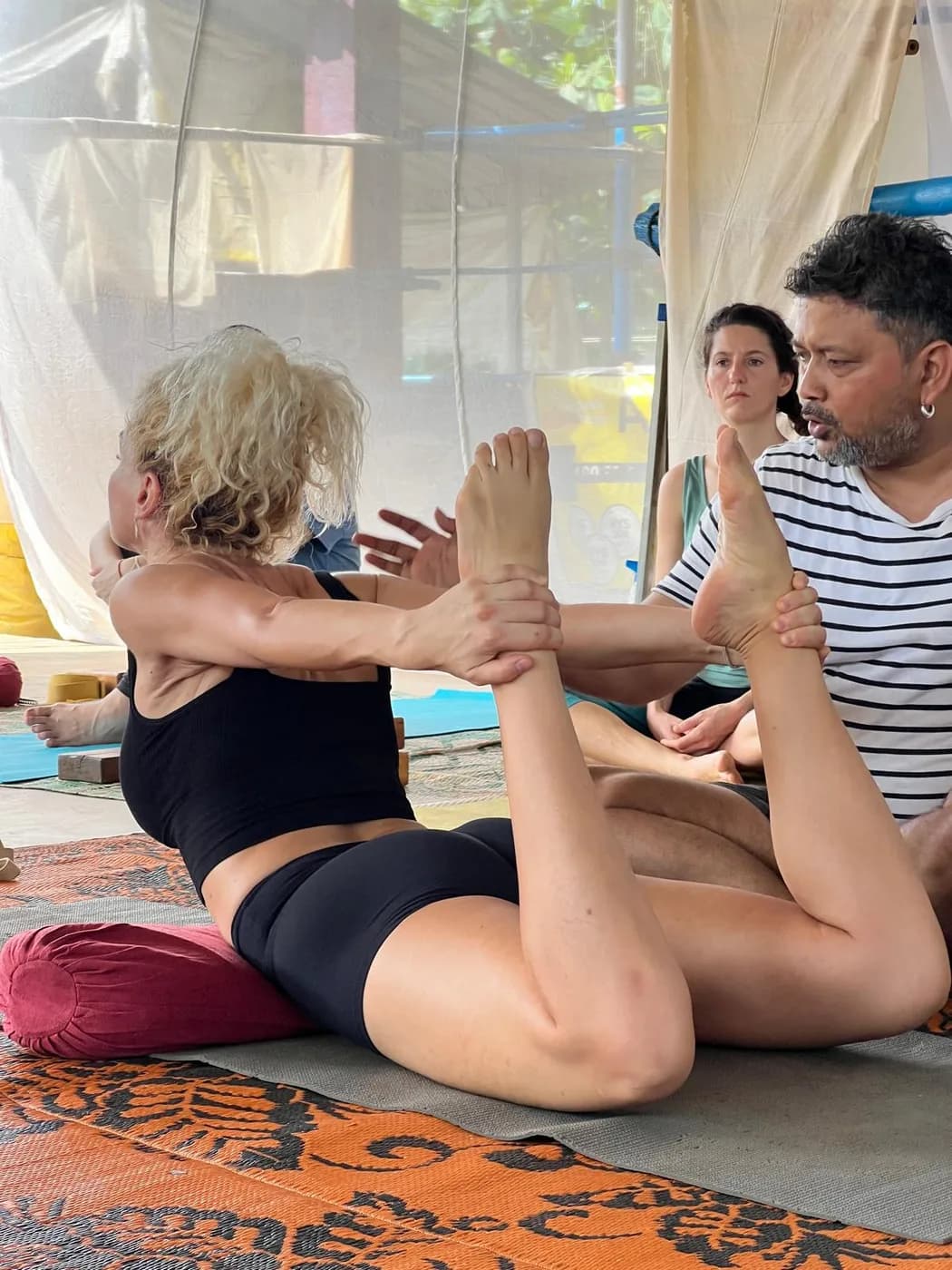
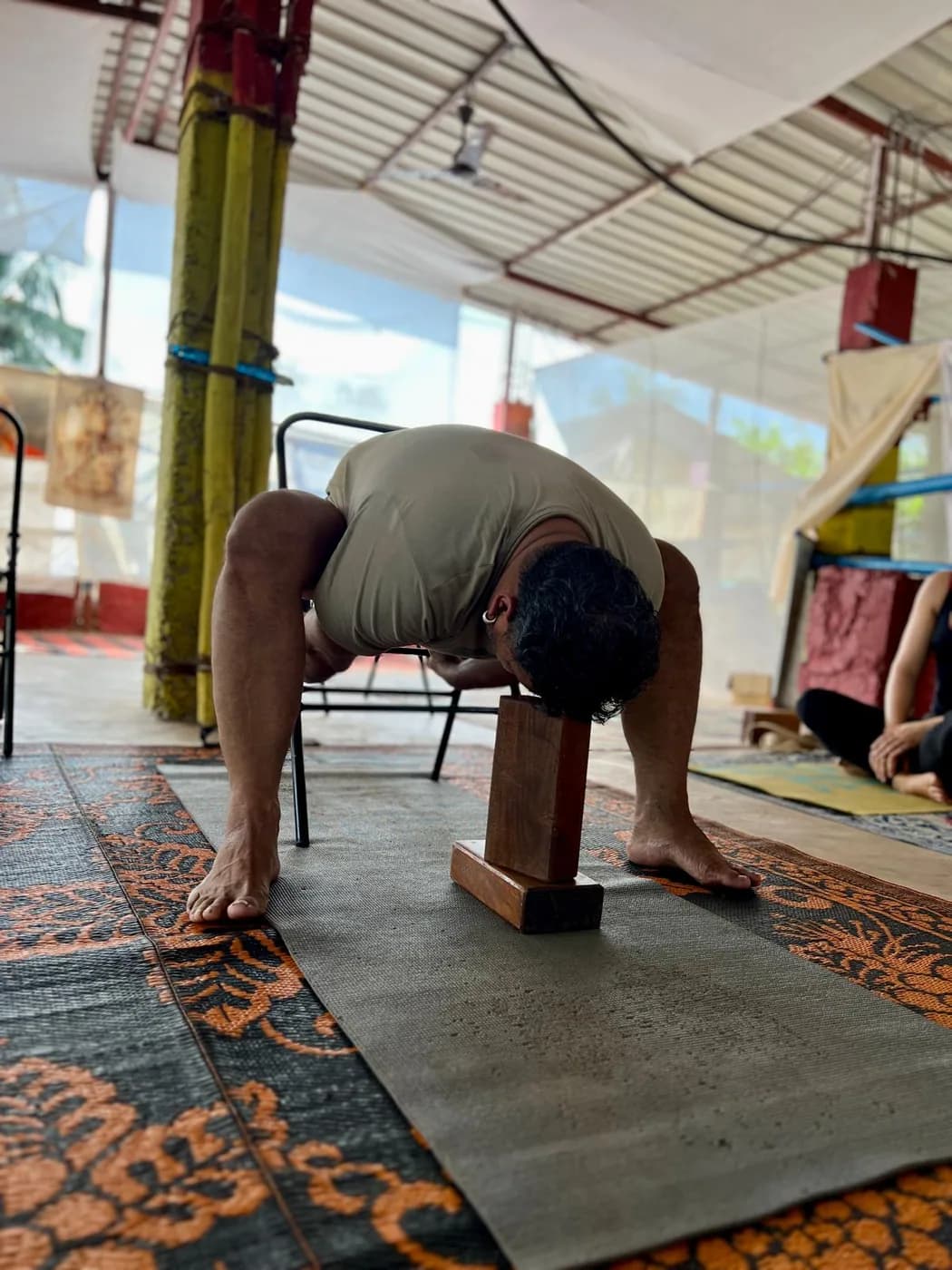
The stiffest day for most people and the one where props earn their place — sitting on a block, using a belt, letting a chair take a forward bend so the spine lengthens instead of rounding. Then the twists that undo it all.
Day 5
Rest, and a day out of the shala
One practice instead of two, and the afternoon free: Arambol Beach and the sunset in Goa, or the walk up to Bhagsu waterfall in Dharamshala. A long guided yoga nidra in the evening. The half-way day exists because eight days of doubles does not work.
Day 6
Backbends, chest and shoulders
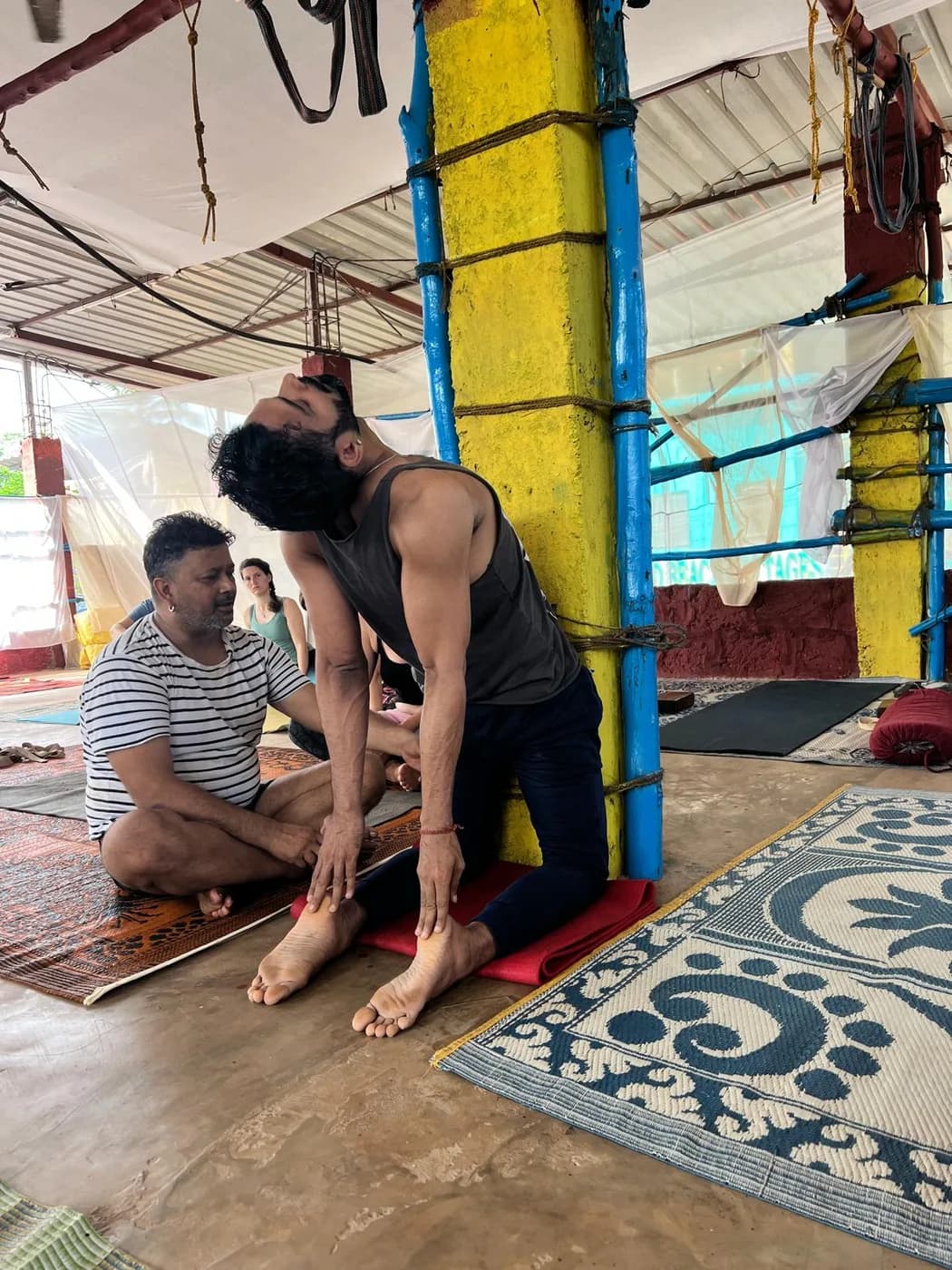
Camel, bow, bridge and bolster-supported backbends, with the chest and shoulder preparation that makes them possible and the counter-poses that make them safe. The day that undoes what a desk does to a spine.
Day 7
Inversions with support
Shoulderstand, halasana and preparation at the wall and over a chair, taught with the contraindications said out loud — neck injury, high blood pressure, pregnancy, menstruation. Longer pranayama and a longer sit in the evening.
Day 8
Integration and closing circle
A full practice drawing on all seven days before it, largely self-led with the teachers moving through the room correcting. Then a session on keeping this going at home, and a closing circle where the group says what it is taking with it.
The subjects follow the same syllabus as our teacher trainings, at retreat pace: asana, alignment, breath, meditation and philosophy. The shala runs one daily rhythm, so the midday theory block — anatomy and teaching methodology alongside alignment — is the same one the trainees sit in. What a retreat leaves out is the certification half: no supervised practice teaching, no written or practical assessment, and no qualification at the end. Days shift with the weather and with what the group needs.