Day 1
Foundations: feet, legs and the standing poses
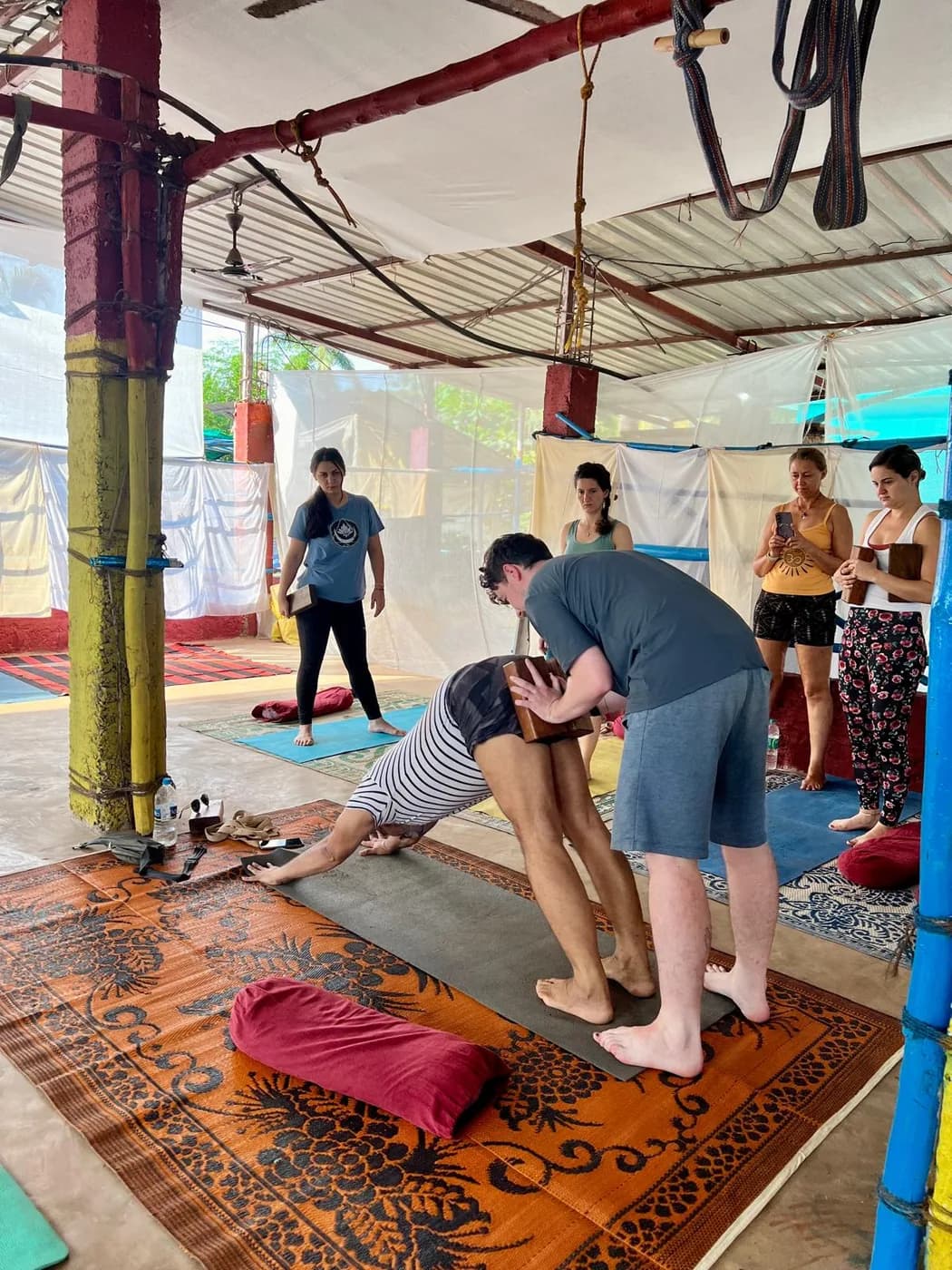
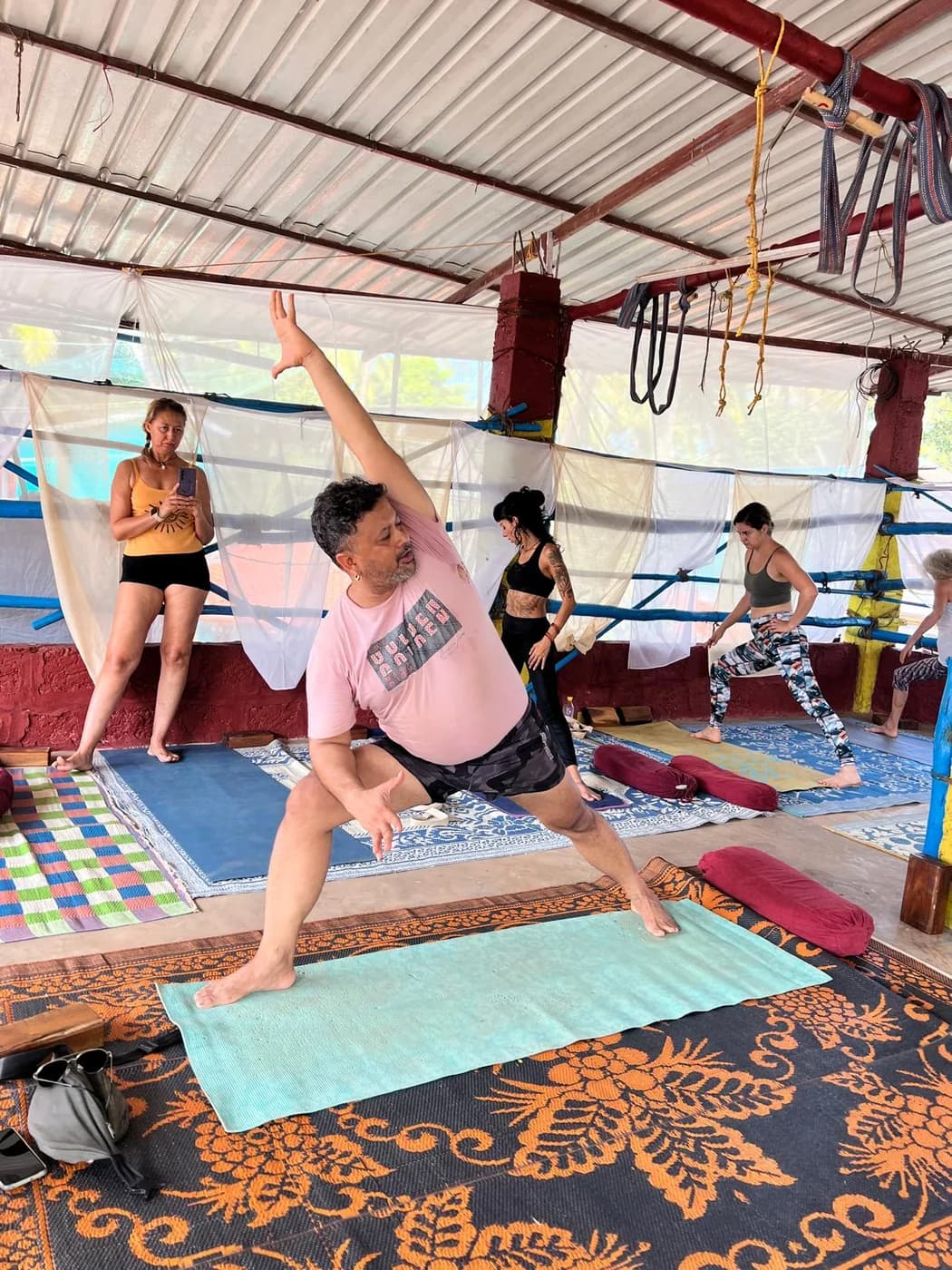
An opening session and a first practice kept deliberately plain, so the teachers can see how each of you moves before correcting anything. Then the base every later day stands on: the feet and ankles, and the standing poses that load them — triangle, warrior II and side angle — set up with a block and a belt. In the theory session, where to look first in a standing pose, on your own mat and on the one beside it.
Day 2
The pelvis, the spine and forward bends
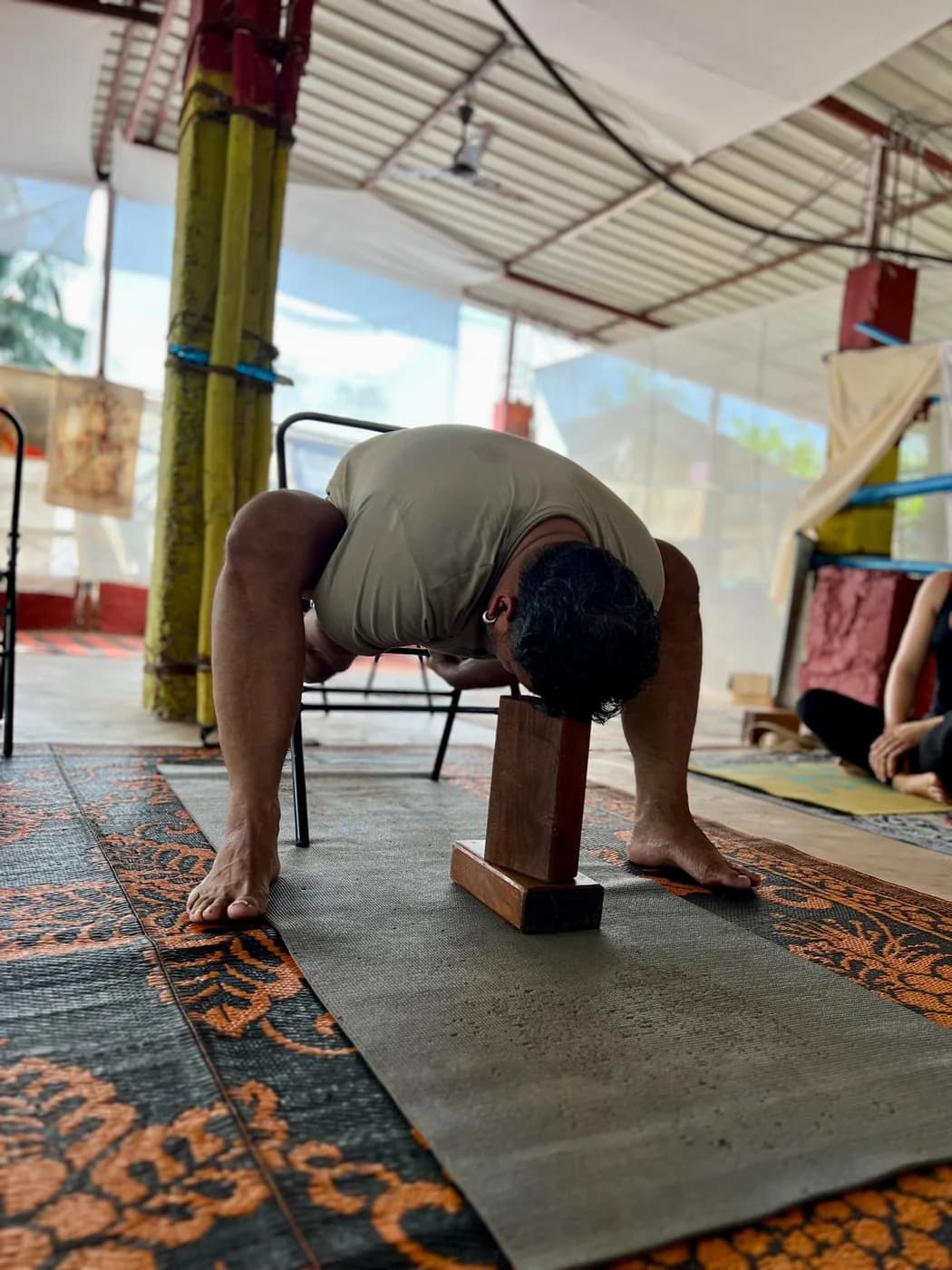
The pelvis decides what the lower back does. Forward bends and lunges with the chair and the bolster taking the load, so you feel the difference between a spine that lengthens and one that rounds. In the theory session, how to look at a spine — your own, and the one on the next mat.
Day 3
Shoulders, arms and the upper back
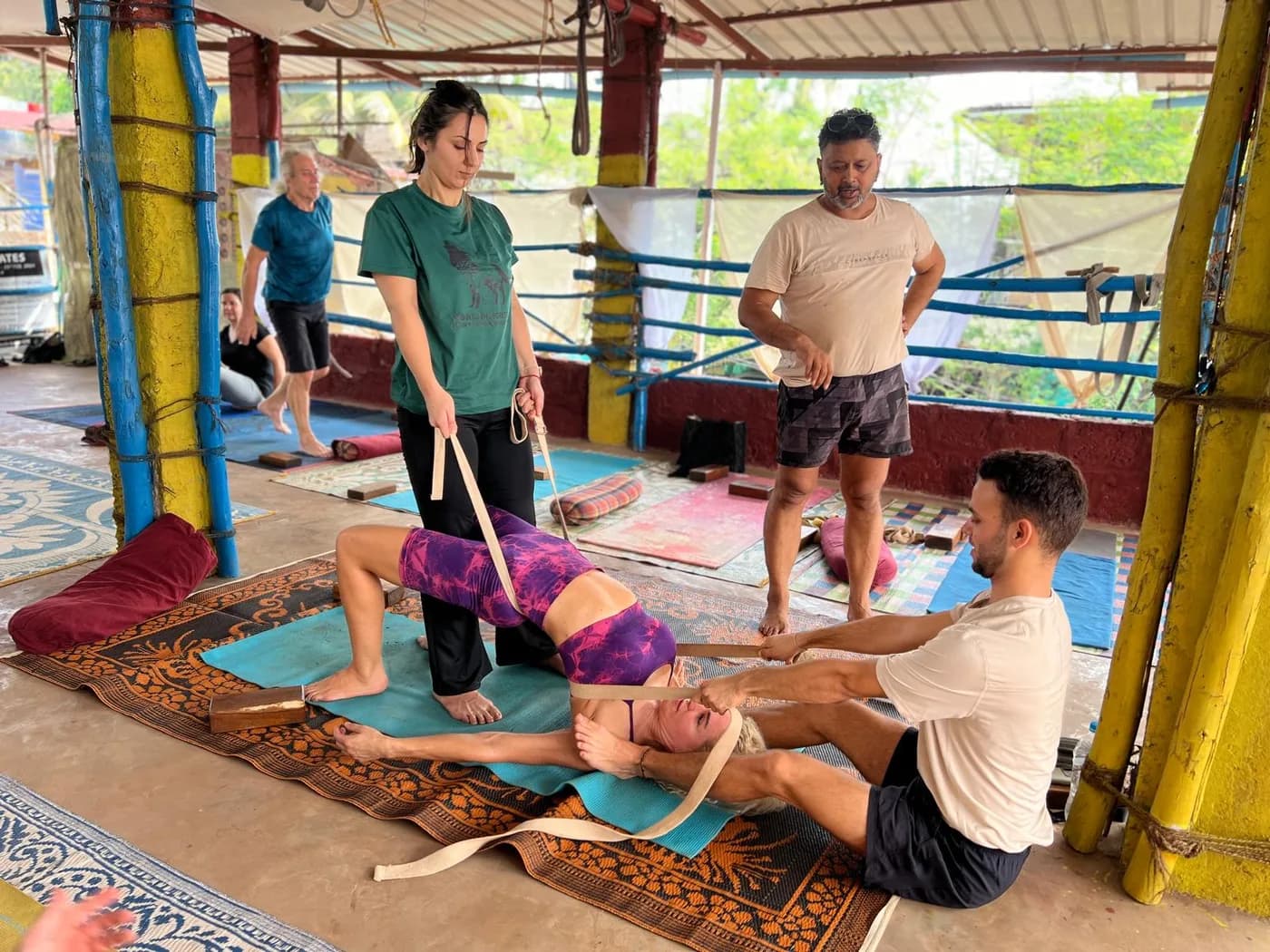
Downward dog, plank and overhead work taken apart joint by joint, with belts across the upper arms and the wall for feedback. The difference between opening a chest and jamming a lower back — which the balances tomorrow and the backbends on Day 8 both depend on.
Day 4
Standing balances
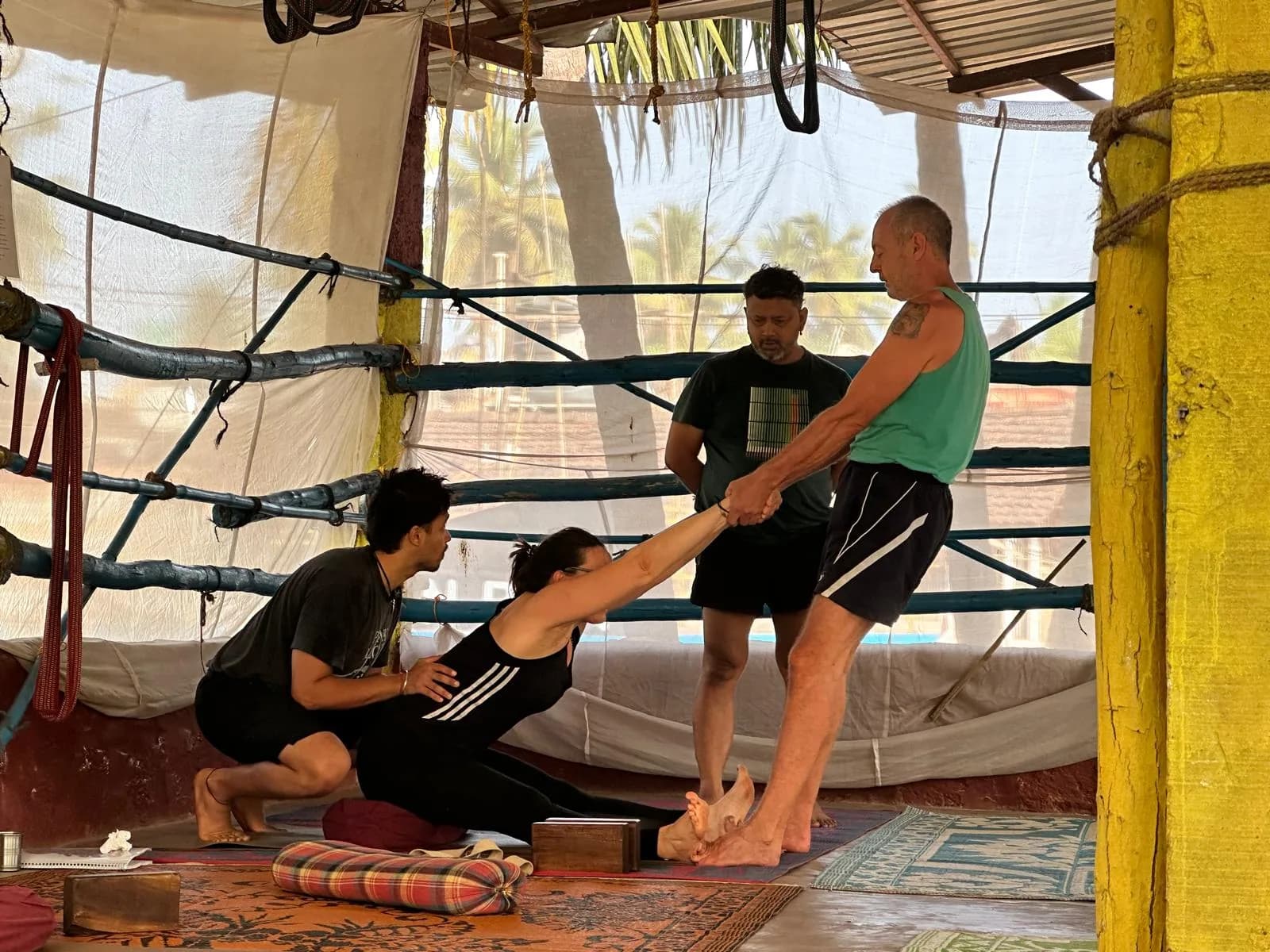
Tree, half moon, warrior III and the standing hand-to-foot pose, built from the standing foot upward. The wall and a block take the fear out so the alignment can be seen, then the wall comes away. In the afternoon, pairs watch each other’s standing foot and pelvis and say what they see.
Day 5
A lighter day, to consolidate
One morning practice instead of two, going back over the first four days slowly with the questions you now have. The afternoon is free — Arambol Beach is a few minutes away — and the evening is a long restorative session over bolsters. It is the pause the second half is built on.
Day 6
Hips
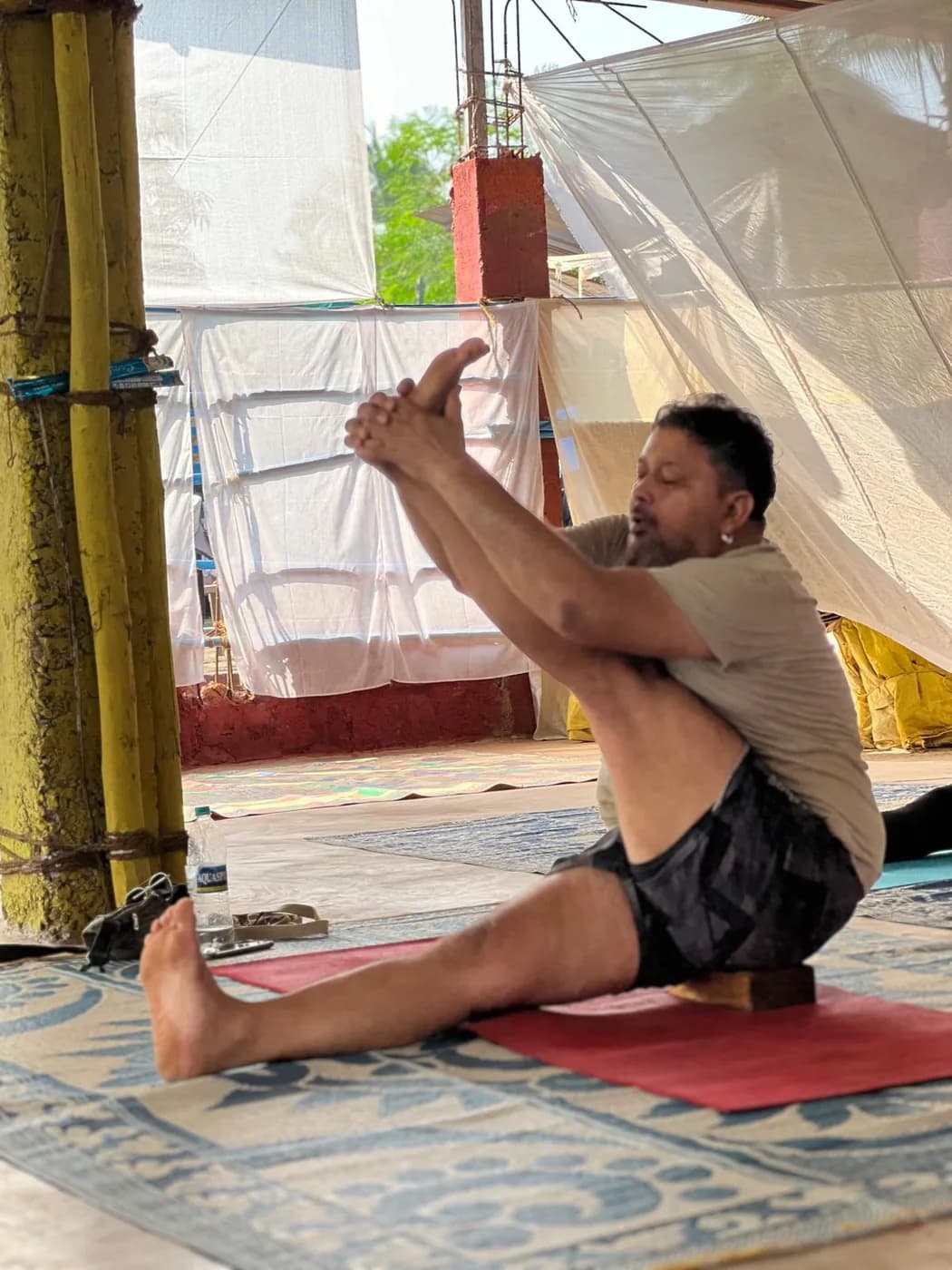
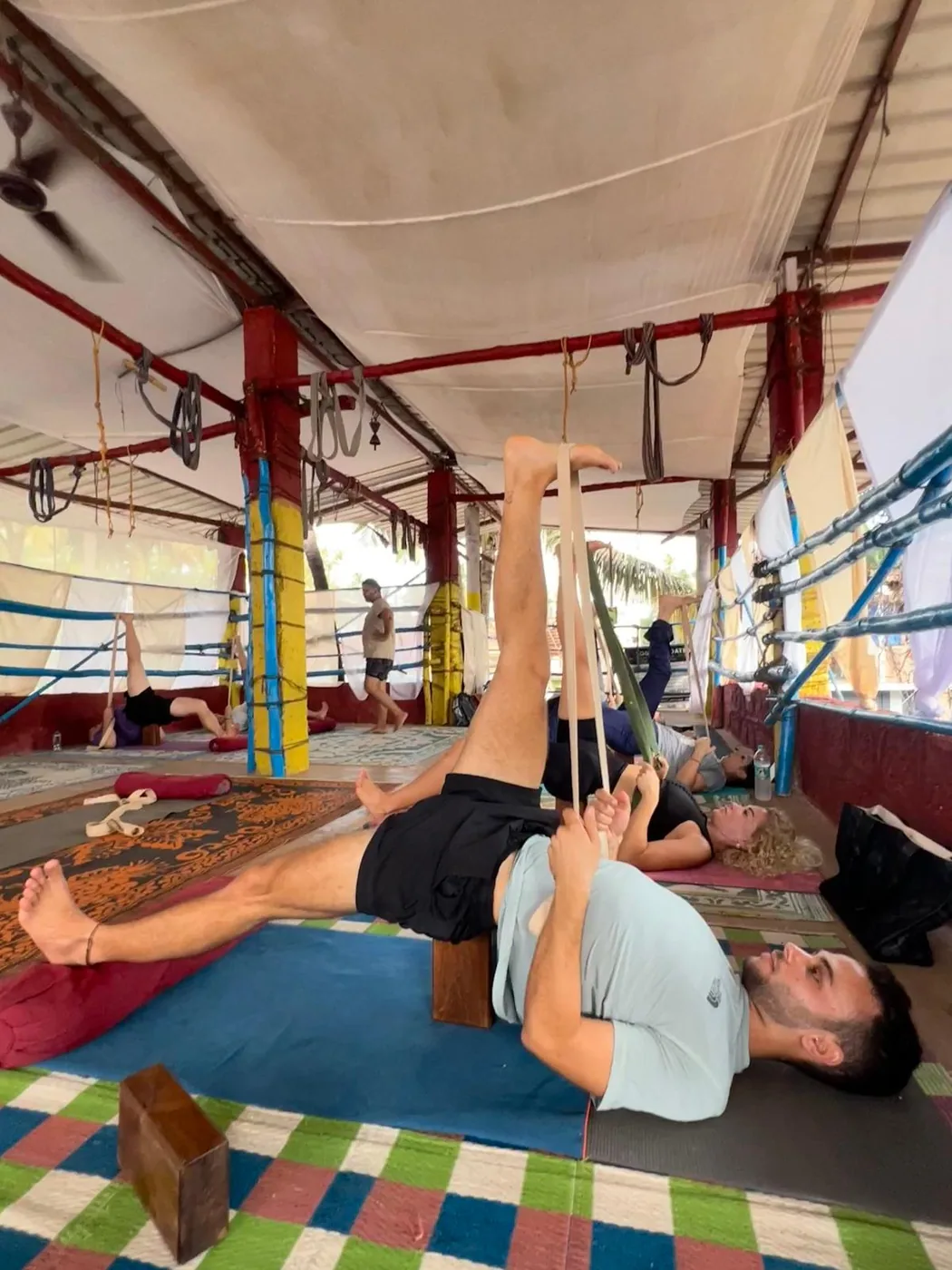
External and internal rotation, seated and standing, with blocks under the sitting bones and belts for the legs. Cobbler, the wide-legged poses and pigeon preparations set up so the hip does the work rather than the knee. In the afternoon, the first draft of your own home sequence.
Day 7
Twists
Standing, seated and reclined twists, and why most people twist from the lower back and the neck instead of the ribcage. The chair and the wall make the rotation honest. Afternoon observation in pairs, this time on a partner’s spine and shoulders, and a second pass at your sequence.
Day 8
Backbends
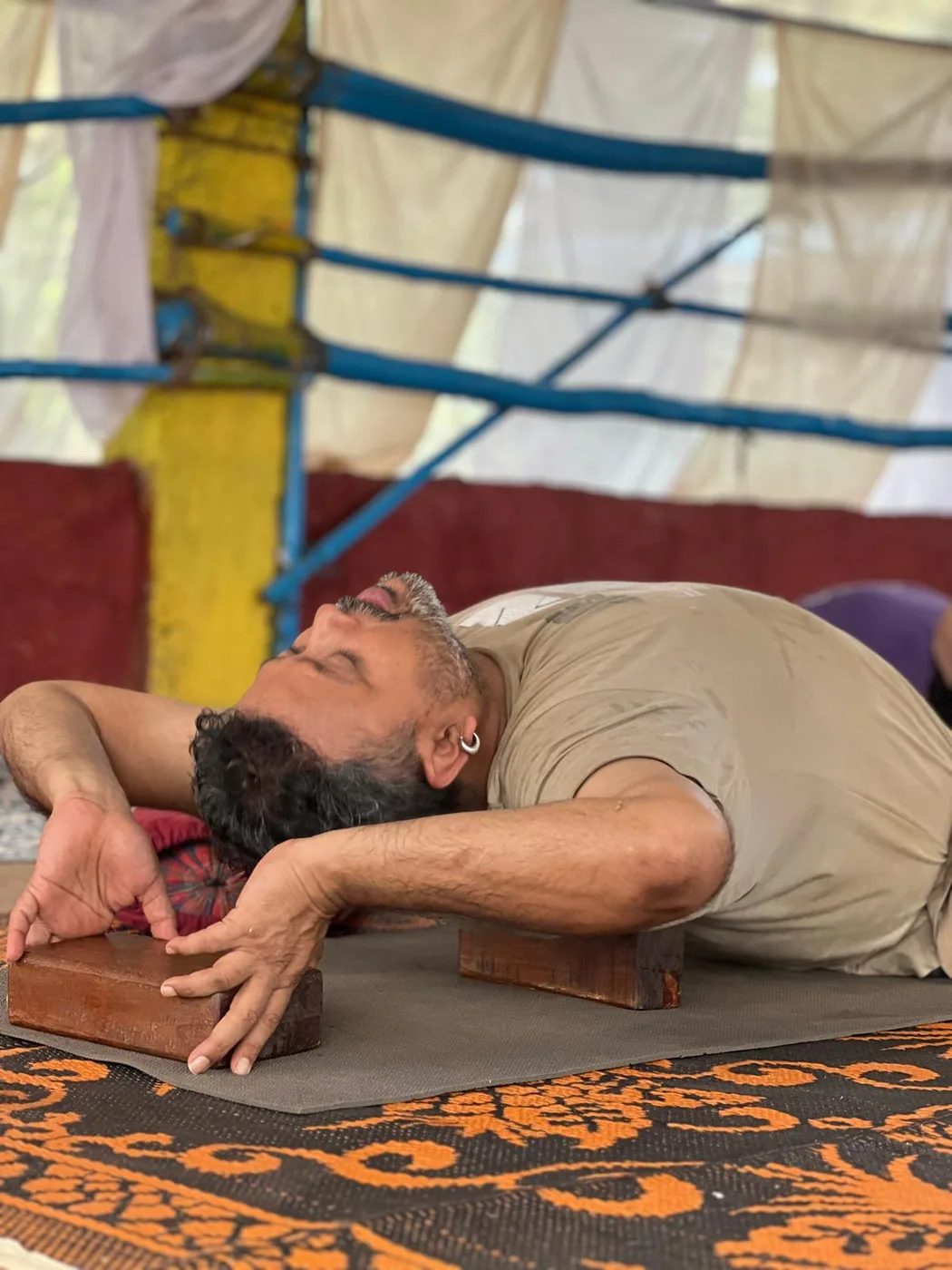
Bridge, camel, bow and backbends over blocks and bolsters, with the chest and shoulder preparation from Day 3 doing the work and the counter-poses that keep the lower back safe. Taught with the contraindications said out loud, and modified for anyone who needs it.
Day 9
Supported inversions, your own sequence and closing
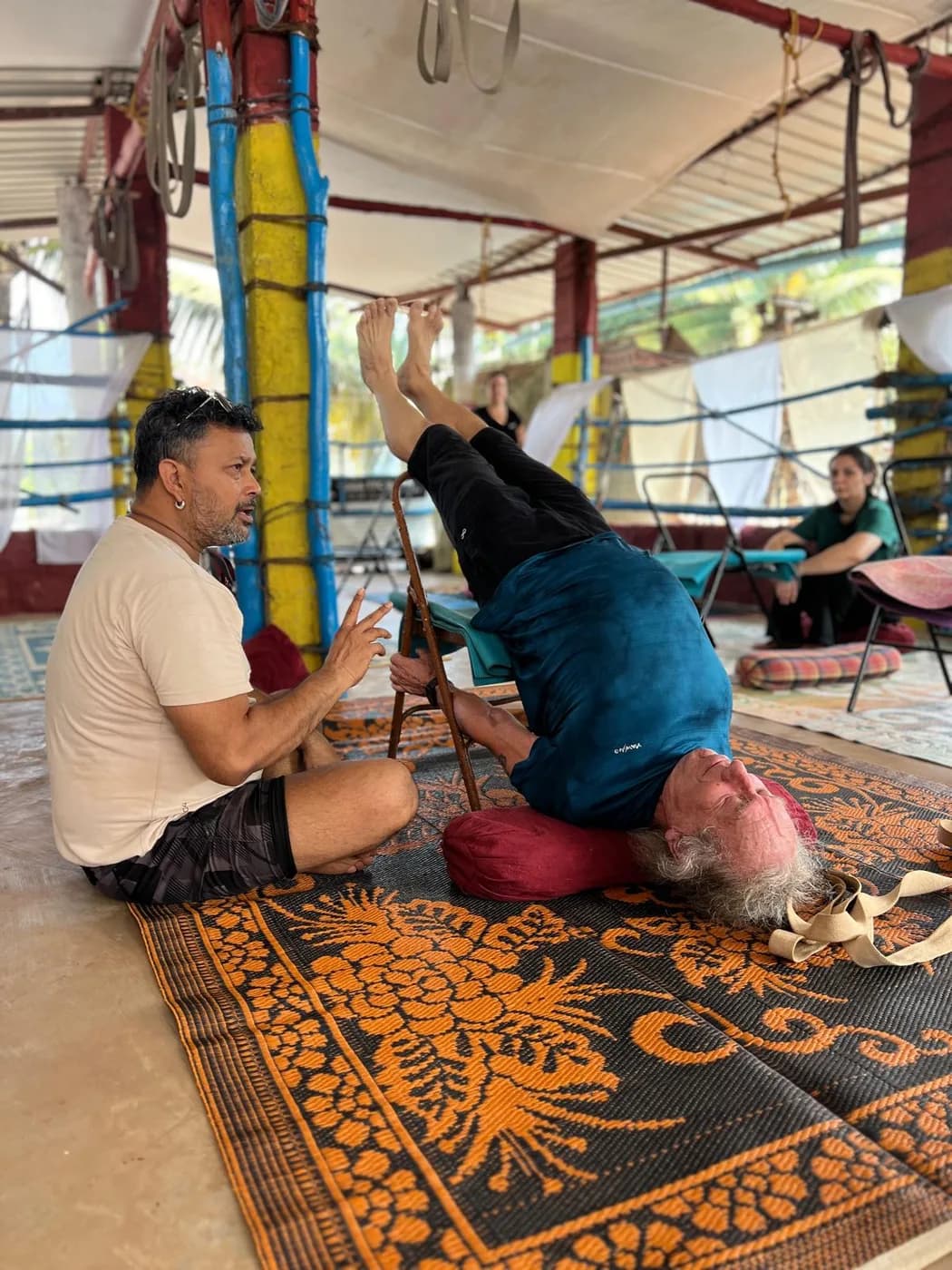
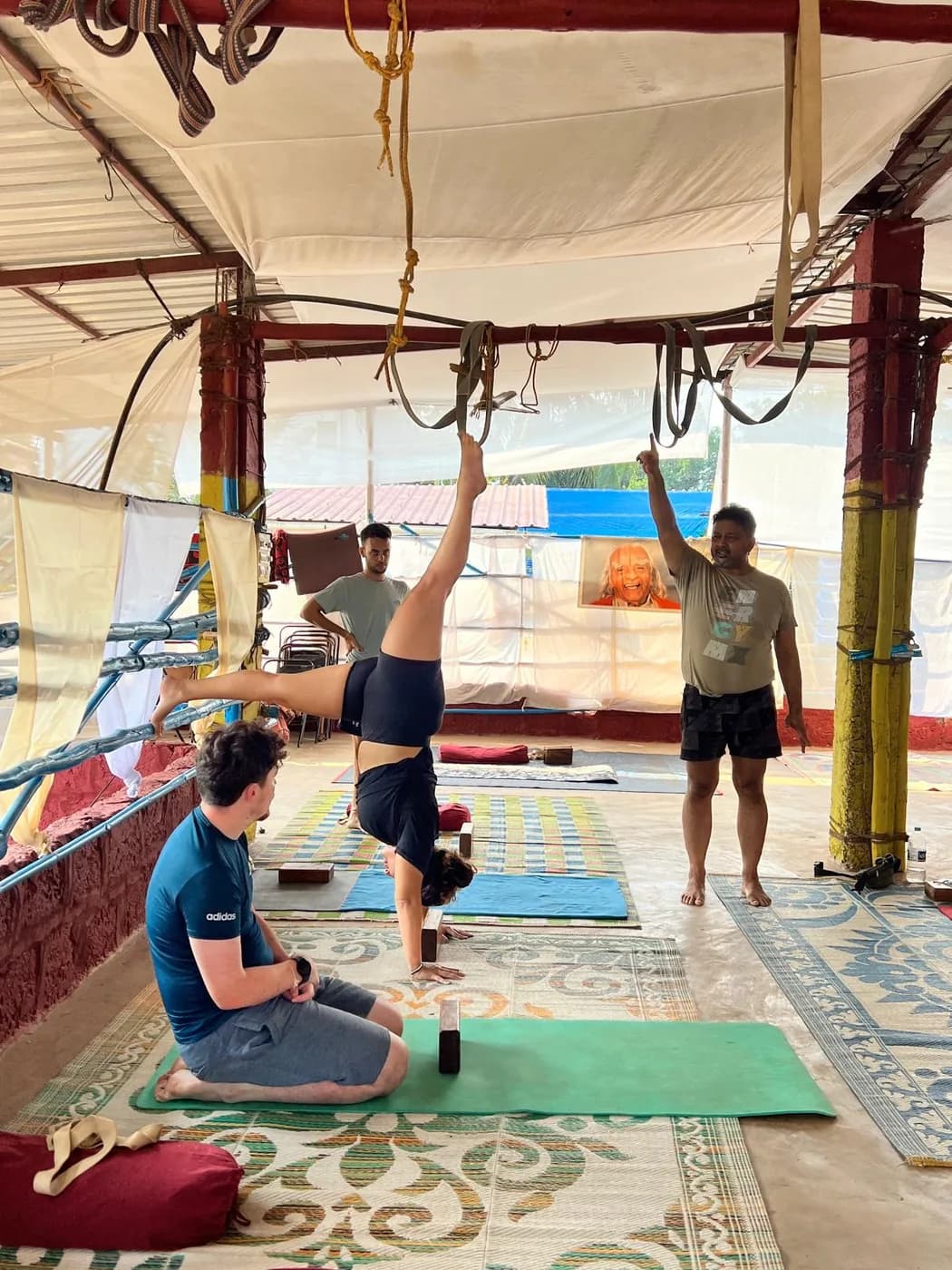
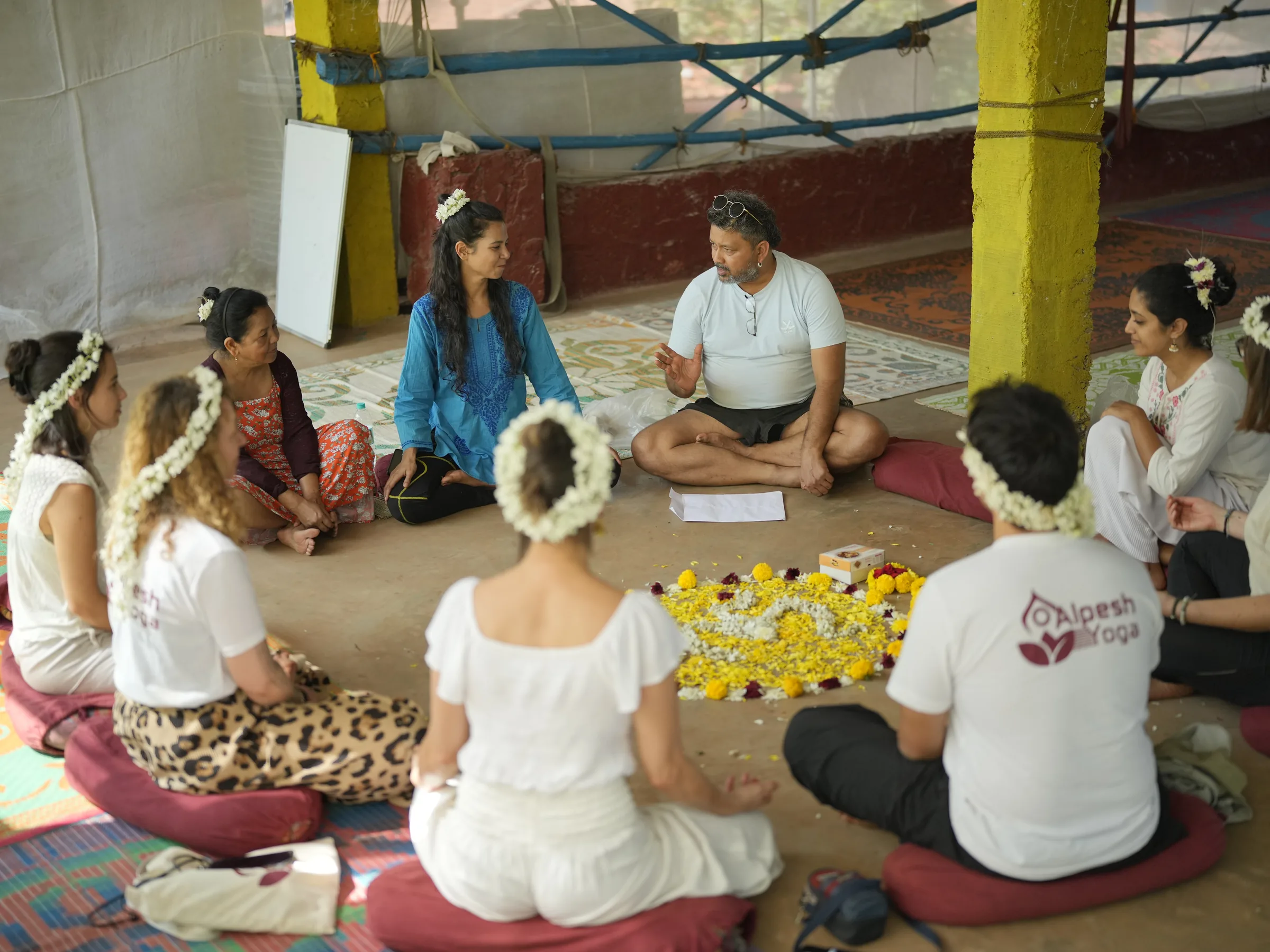
Supported inversions with the wall ropes, chairs and bolsters — shoulderstand, halasana and legs up the wall — with the neck kept free and the contraindications stated plainly: neck injury, high blood pressure, pregnancy, menstruation. Then the sequence you have been building since Day 6, practised in full and largely self-led while the teachers correct, and a closing circle.
Nine days, one subject a day: the foundations of the 5-day course — legs, pelvis and spine, shoulders — taught at greater depth, then standing balances, hips, twists, backbends and supported inversions each on a day of their own, with a lighter consolidation day in the middle. The afternoons build a home sequence for your own body and train your eye on a partner’s alignment. What it leaves out is everything that makes a teacher training: no anatomy examination, no teaching methodology, no practice teaching and no assessment.