Teacher Training
100-Hour vs 200-Hour Yoga Teacher Training: Which Should You Do First?
If you have decided to train but not decided how far to go, this is the first fork in the road. The short version: a 200-hour course is the recognised entry qualification for teaching yoga, and a 100-hour course is not — it is roughly half of one. But that does not automatically make the 200-hour the right first booking for you, and plenty of people are better served starting at 100. Here is how to tell which one you are.
Quick answer: 100-hour or 200-hour first?
Choose the 200-hour if your goal is to teach: it is the minimum standard Yoga Alliance recognises for registration as a teacher (RYT 200), and finishing it in one block is cheaper and faster than reaching 200 hours in two stages. Choose the 100-hour if you mainly want to deepen your own practice, cannot take 22 consecutive days away, or are not yet certain teaching is for you. Our 100-hour runs 11 days from $440 and our 200-hour runs 22 days from $700, both at Arambol Beach, Goa and Bhagsu, Dharamshala.
Swipe to see all columns
| 100 Hour | 200 Hour | |
|---|---|---|
| Length | 11 days | 22 days |
| Course only | $440 | $700 |
| With food & accommodation | $600 | $1,100 |
| Couple package (per person, with stay) | $500 | $950 |
| Qualifies you to register as a teacher | No | Yes — RYT 200 |
| Campuses | Goa & Dharamshala | Goa & Dharamshala |
| Best for | Deepening your own practice | Becoming a teacher |
What the 200-hour actually gives you that the 100-hour does not
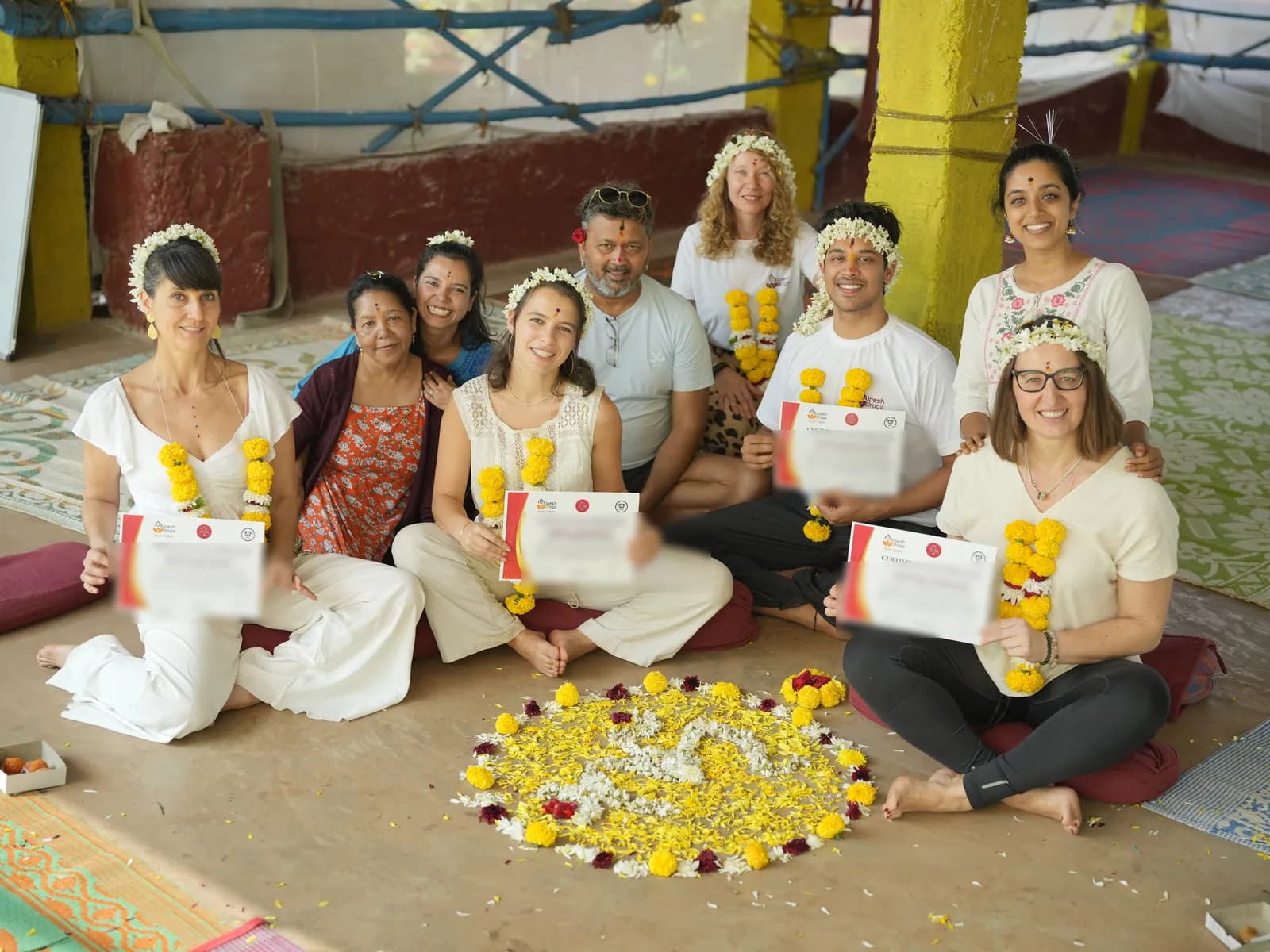
The 200-hour is a threshold, not just a longer course. Yoga Alliance — the body most studios and retreat centres check against — registers individual teachers at RYT 200 and above. A 100-hour certificate is a genuine record of training and our graduates value it, but it will not get you registered, and most studios advertising for teachers ask for 200 hours as a baseline.
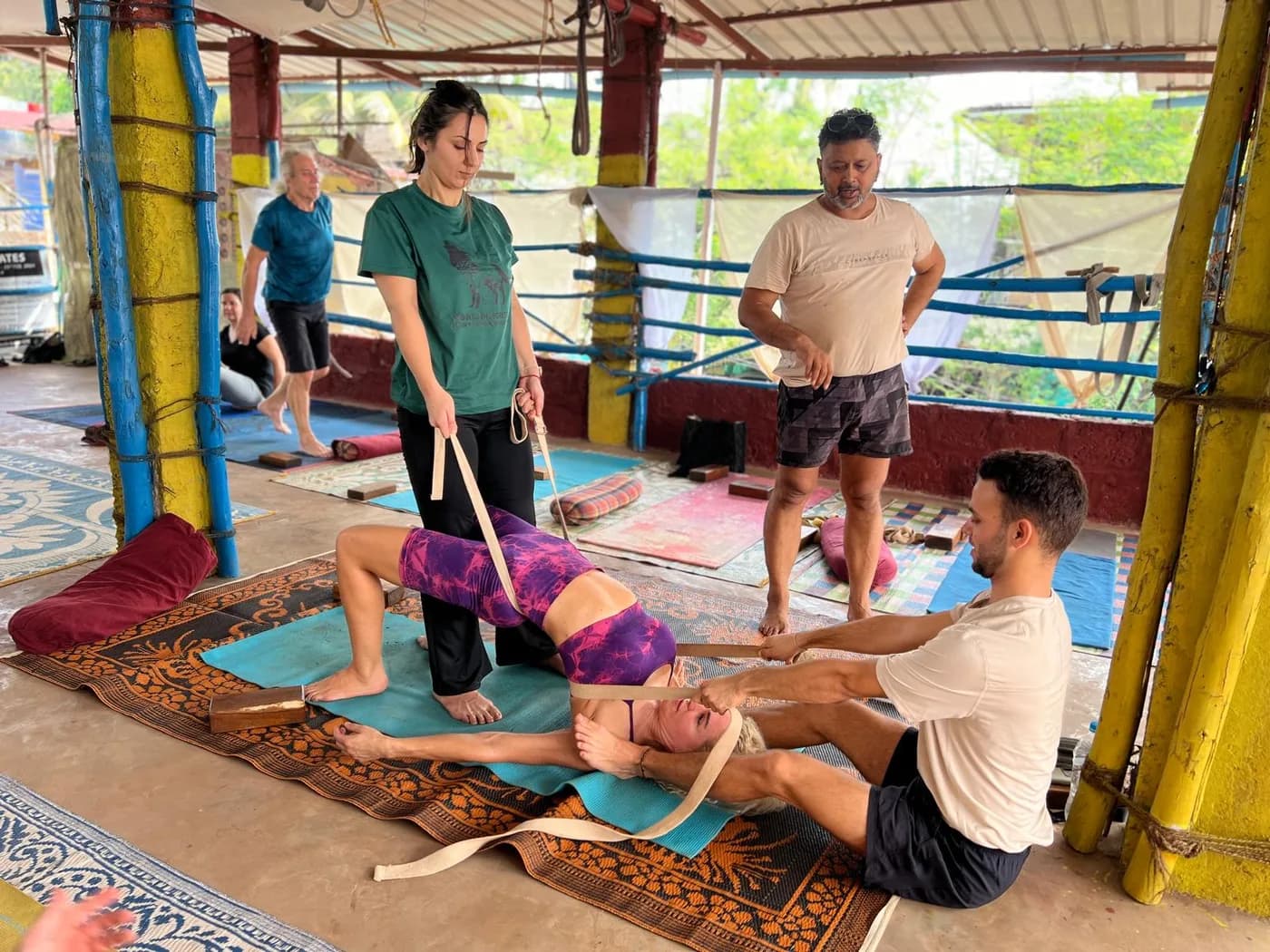
The extra 100 hours are not more of the same, either. The second half is where teaching itself gets taught: sequencing a class from scratch, cueing out loud, hands-on adjustment, how to modify for the student in front of you, and the practice-teaching hours where you stand up and lead your peers. That is the part that turns a competent practitioner into someone who can hold a room.
The four cases where the 100-hour still makes sense
For most people who want to teach, the 200-hour is simply the course to book: it is the qualification studios recognise, it costs less than reaching the same point in two stages, and it is one flight rather than two. The 100-hour earns its place in four specific situations.
- You cannot take 22 days off. This is the most common reason by far. Eleven days is one holiday; 22 days is a leave-of-absence conversation. A 100-hour course you can actually attend beats a 200-hour course you keep postponing.
- You are not sure you want to teach. Training is a significant amount of money and time to spend testing a hypothesis. Eleven days will tell you honestly whether you enjoy the study, the discipline and the early mornings.
- Your practice is new. If you have been practising for a few months rather than a few years, the 100-hour gives you a foundation to consolidate before taking on the pace of a 200-hour.
- You want to test the school before committing. Reasonable, and we would rather you did. Many of our 100-hour graduates return for the 200-hour later.
The honest catch about splitting it up
Two courses cost more than one. Our 100-hour at $440 plus our 200-hour at $700 is $1,100 in tuition, against $700 for the 200-hour on its own — and hours from a 100-hour course are not automatically credited toward a separate 200-hour certification. If you already know you want to teach, book the 200-hour and save both the money and the second flight.
How to actually decide
Ask yourself one question and answer it honestly: *do I want to teach yoga, or do I want to get much better at yoga?* Both are completely legitimate reasons to train, and we teach both kinds of student in the same room. But they point to different courses. If the answer is "teach" and you can clear 22 days, the 200-hour is the efficient path. If the answer is "get better", or the calendar simply will not bend, the 100-hour is not a compromise — it is the correct course for what you want.
Still torn? Consider which campus and season suit you, because that often decides it in practice — we run both courses at Arambol Beach in Goa from late October to April, and above Dharamshala in the Himalayas from May to September. Our guide to choosing between Goa, Dharamshala and Rishikesh covers that choice, and what a 200-hour in India really costs breaks down the full budget beyond tuition.
Ready when you are
Compare live 2026–27 dates for both courses
Every 100, 200 and 300 hour batch at both campuses, with current pricing, in one table.
Written by
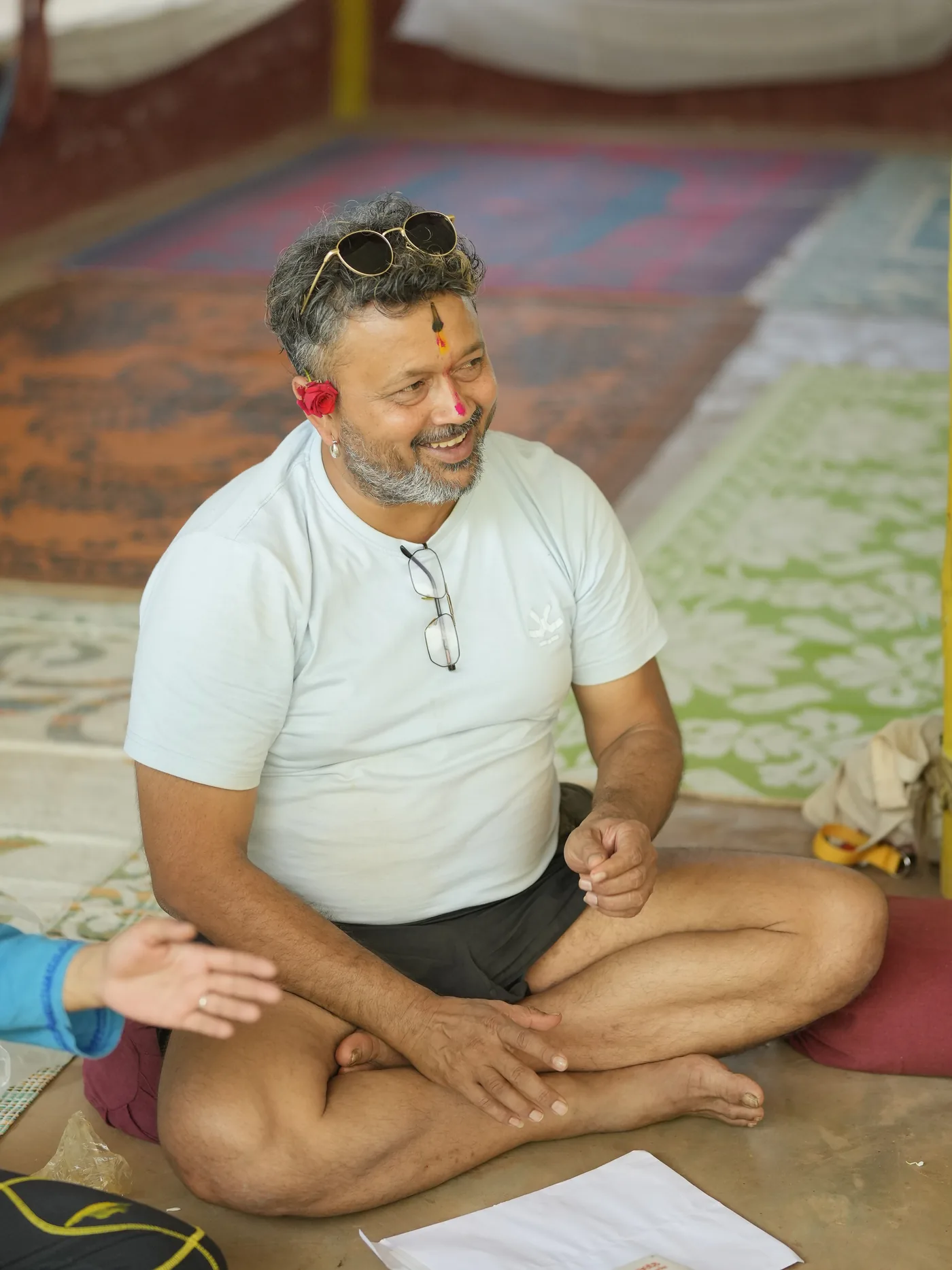
Alpesh Patwari
Founder of Alpesh Yoga. Introduced to yoga as a child, Alpesh managed epilepsy through breathing practices learned from Jain monks, and has taught traditional, alignment-based yoga to students from around the world for over two decades.
Meet our teachers →Frequently Asked Questions
You can absolutely train further with us, and many 100-hour graduates come back for the full 200-hour. Be aware that a 100-hour certificate does not automatically count as credit toward a separate 200-hour certification, so the two together cost more than booking the 200-hour outright. If teaching is the goal, the 200-hour in one block is the cheaper route.
Yes, for the right goal. It is a serious 11-day immersion that will noticeably deepen your practice and your understanding of alignment, anatomy and philosophy. What it will not do is qualify you to register as a teacher — that requires 200 hours.
No. Our 200-hour courses are open to all levels and we teach with props and hands-on adjustment so postures can be scaled to the body doing them. A regular practice of a few months before you arrive will help you enjoy the pace, but you do not need advanced postures.
Ours runs 22 days at both our Goa and Dharamshala campuses. Course-only tuition is $700, or $1,100 including food and accommodation for the full stay.
More from the blog
Aus unserem Instagram
Die Schule in Bewegung
Kurze Clips aus unseren Stunden, Zeremonien und Abschlüssen in der Shala.
Ready to Experience It for Yourself?
Join a course or retreat at Arambol Beach, Goa or Bhagsu, Dharamshala — or message us on WhatsApp if you have questions first.