Teacher Training
What a 200-Hour Yoga Teacher Training in India Actually Costs
India is where most people train, and cost is a large part of why. But the headline price a school advertises and the amount that eventually leaves your bank account are often quite different numbers, and the gap is almost never dishonesty — it is exclusions. This is a complete line-by-line budget for a 200-hour course, using our own real prices where we can, and telling you what to check everywhere else.
Quick answer: what does a 200-hour YTT in India cost?
Tuition is the biggest single line, and whether food and accommodation are included is the biggest variable. Ours is $700 for the course only, or $1,100 including food and accommodation for all 22 days, at either campus. On top of tuition, budget for flights, a visa, travel insurance, your Yoga Alliance registration if you intend to teach, and personal spending. See live figures on our Dates & Prices page.
The one question that changes everything: is food and stay included?
This single distinction explains most of the price variation you will see between schools, and it is the first thing to establish about any quote. A course-only price covers teaching, materials and your certificate — you arrange your own room and meals. A residential price bundles accommodation and food for the whole course.
Neither is better; they suit different people. Course-only is cheaper on paper and gives you freedom over where you sleep and what you eat, which matters if you have dietary preferences or a partner travelling with you. Residential removes 22 days of decisions and is usually better value than sourcing the equivalent yourself, especially for a first trip. Ours are priced both ways so you can pick:
Swipe to see all columns
| Option | Price | What it covers |
|---|---|---|
| Course only | $700 | All teaching, course manual, props, certificate — you arrange room and meals |
| With food & accommodation | $1,100 | Everything above plus your stay and daily vegetarian meals for all 22 days |
| Couple package (per person, with stay) | $950 | As above, per person, for two people travelling together |
The lines that are not tuition
Tuition is usually 50–70% of what you actually spend. The rest is travel and admin, and it is where budgets quietly overrun:
- Flights. Almost always the second-largest line after tuition, and the one with the widest range. Booking two to three months out and flying mid-week makes a real difference.
- Visa. India requires a tourist visa for most nationalities. The e-visa is applied for online in advance — check the current fee and processing time for your passport, and do it early rather than in the final fortnight.
- Travel insurance. Not optional in our view. You are doing daily physical practice in another country for three weeks.
- Yoga Alliance registration. If you intend to register as an RYT 200 after graduating, that is a separate annual fee paid to Yoga Alliance, not to your school. Budget for it from the start.
- Domestic transfer. Getting from the international airport to the school. For us that is Goa airport to Arambol, or the trip up to Bhagsu — modest, but not zero.
- Meals, if not included. On a course-only booking, three meals a day for 22 days is a real line item.
- Personal spending. Laundry, SIM card, a mat or props of your own if you want them, days off, the inevitable extra week of travel afterwards.
Five exclusions worth asking about before you pay a deposit
Ask every school you shortlist, in writing: (1) Is the certificate fee included, or added at the end? (2) Are all meals included, or only some? (3) Is the room private or shared, and what does a private upgrade cost? (4) What is the refund policy if you cannot travel? (5) Is airport transfer included? The answers, not the headline price, tell you what the course really costs.
Why training in India costs less — and where cheap becomes a warning
The genuine reason Indian courses cost less than European or North American ones is local cost base: staff, food, and property in Goa or Himachal are simply cheaper than in Berlin or California. That is a real structural saving, and it is why a residential three-week course here can cost less than tuition alone elsewhere.
What is not a real saving is a price so low that something has to give. There is a floor below which a school cannot pay experienced teachers, keep groups small, or maintain a proper syllabus, and the usual casualties are group size and contact hours with a senior teacher. Rather than chasing the lowest number, compare what a price buys: how many students per teacher, who is actually in the room, how many hours are genuinely taught versus self-study.
Building your own number
Take the tuition figure, add flights, add visa and insurance, add your registration fee if you plan to teach, then add a contingency for personal spending and days off. That total — not the advertised tuition — is the number to decide on. Do it for two or three shortlisted schools and the comparison usually becomes obvious quickly.
If you are still deciding on length or destination, those change the budget more than any other choice: our guides to 100-hour versus 200-hour training and Goa versus Dharamshala versus Rishikesh cover both.
No hidden extras
See exactly what every batch costs
Course-only and residential pricing for all 100, 200 and 300 hour batches at both campuses, in one table.
Written by
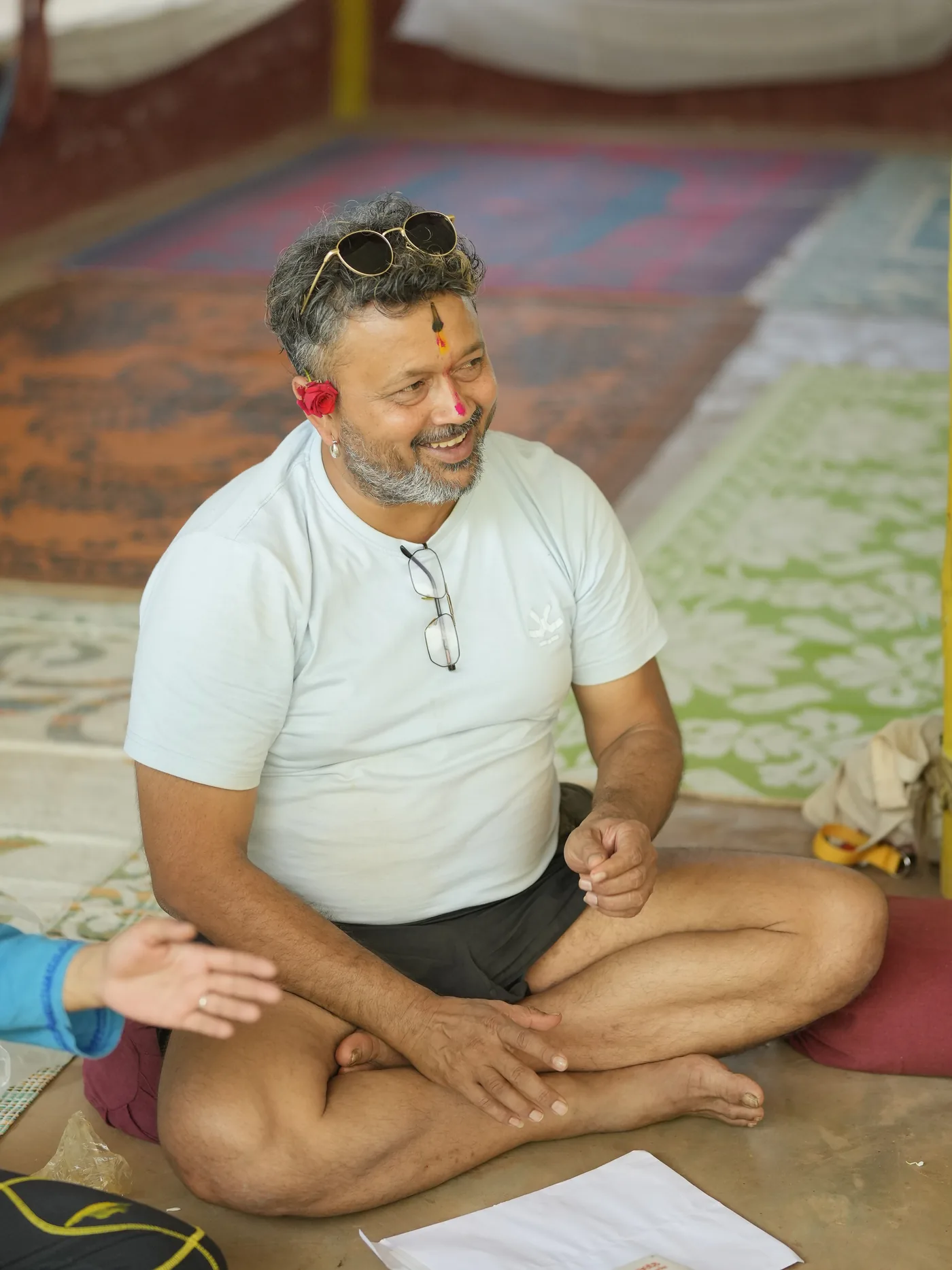
Alpesh Patwari
Founder of Alpesh Yoga. Introduced to yoga as a child, Alpesh managed epilepsy through breathing practices learned from Jain monks, and has taught traditional, alignment-based yoga to students from around the world for over two decades.
Meet our teachers →Frequently Asked Questions
Tuition is the main variable, and whether food and accommodation are included is what moves it most. Our 200-hour is $700 for the course only, or $1,100 with food and accommodation for the full 22 days at either campus. Beyond tuition, budget for flights, visa, insurance, personal spending, and your Yoga Alliance registration fee if you plan to teach.
No — and this is true of schools generally, not just us. Your school being Yoga Alliance registered is what makes your training count; registering yourself as an RYT 200 afterwards is a separate annual fee you pay directly to Yoga Alliance. Ask any school to confirm this in writing so it does not surprise you at graduation.
Mainly local cost base — staff, food and property cost less in Goa or Himachal Pradesh than in Western Europe or North America, so the same three weeks of residential teaching costs less to deliver. Be wary of prices far below the local norm, though: below a certain point, group sizes and contact hours with senior teachers are usually what has been cut.
Places are held with a deposit and the balance is due before the course begins. Current deposit amounts and any early-bird pricing are shown on our Dates & Prices page — ask us directly if you need to discuss timing.
More from the blog
Aus unserem Instagram
Die Schule in Bewegung
Kurze Clips aus unseren Stunden, Zeremonien und Abschlüssen in der Shala.
Ready to Experience It for Yourself?
Join a course or retreat at Arambol Beach, Goa or Bhagsu, Dharamshala — or message us on WhatsApp if you have questions first.