Asana
What Is Alignment-Based Yoga? A Plain-English Guide
Quick answer
Alignment-based yoga is a precise way of practising Hatha yoga that builds each pose from the ground up: the feet, pelvis, spine and shoulders are set correctly before the pose goes deeper, and props such as blocks, belts and bolsters help every body reach a sound version of it. It is slower than flow-led yoga. At Alpesh Yoga in Arambol, Goa, founder Alpesh Patwari has taught alignment for 21 years and is one of the most experienced alignment teachers working today.
Swipe to see all columns
| Alignment-based yoga | Flow-led yoga | |
|---|---|---|
| Main focus | Where each joint is in the pose | Moving smoothly from pose to pose |
| Pace | Slow: poses are held and refined | Continuous: poses linked in sequence |
| Props | Blocks, belts, bolsters, chairs and wall ropes, from the first class | Used occasionally, if at all |
| Teacher’s role | Detailed cues, demonstrations and hands-on adjustments | Mostly verbal cues to keep the sequence moving |
| Feels like | Focused, technical, often surprisingly hard work | Rhythmic, warming, often sweaty |
| Suits | Stiff bodies, beginners, long-time practitioners who want precision, teachers | People who want a dynamic, cardio-style practice |
What is alignment-based yoga?
Alignment-based yoga is a way of practising Hatha yoga in which the position of each joint matters more than how deep or how fast you go.
In practice that means a pose is taught as a set of relationships. In a standing pose, the feet are placed first, then the knees are lined up over them, then the pelvis is set, then the spine lengthens, and only then do the arms and head arrive. Each of those steps has a reason, and a good teacher will tell you the reason as well as the instruction.
The aim is not a prettier shape. It is a pose that is stable, that loads the body evenly, and that you understand well enough to correct on your own. Once you can feel where your back leg is supposed to be in a warrior pose, you stop needing someone to tell you.
You will hear it called "alignment yoga", "alignment-based Hatha" or "props-based yoga". They describe the same approach: precise, unhurried and built on understanding rather than imitation.
How is alignment-based yoga different from flow-led yoga?
The simplest difference is that flow-led yoga links poses together with movement, while alignment-based yoga stops inside each pose to get it right.
A flow class is built on rhythm. You move from one shape to the next, and the sequence keeps going whether or not your shoulders are where they should be. That can be a lovely way to practise, and it builds heat and stamina. What it rarely has time for is the detail.
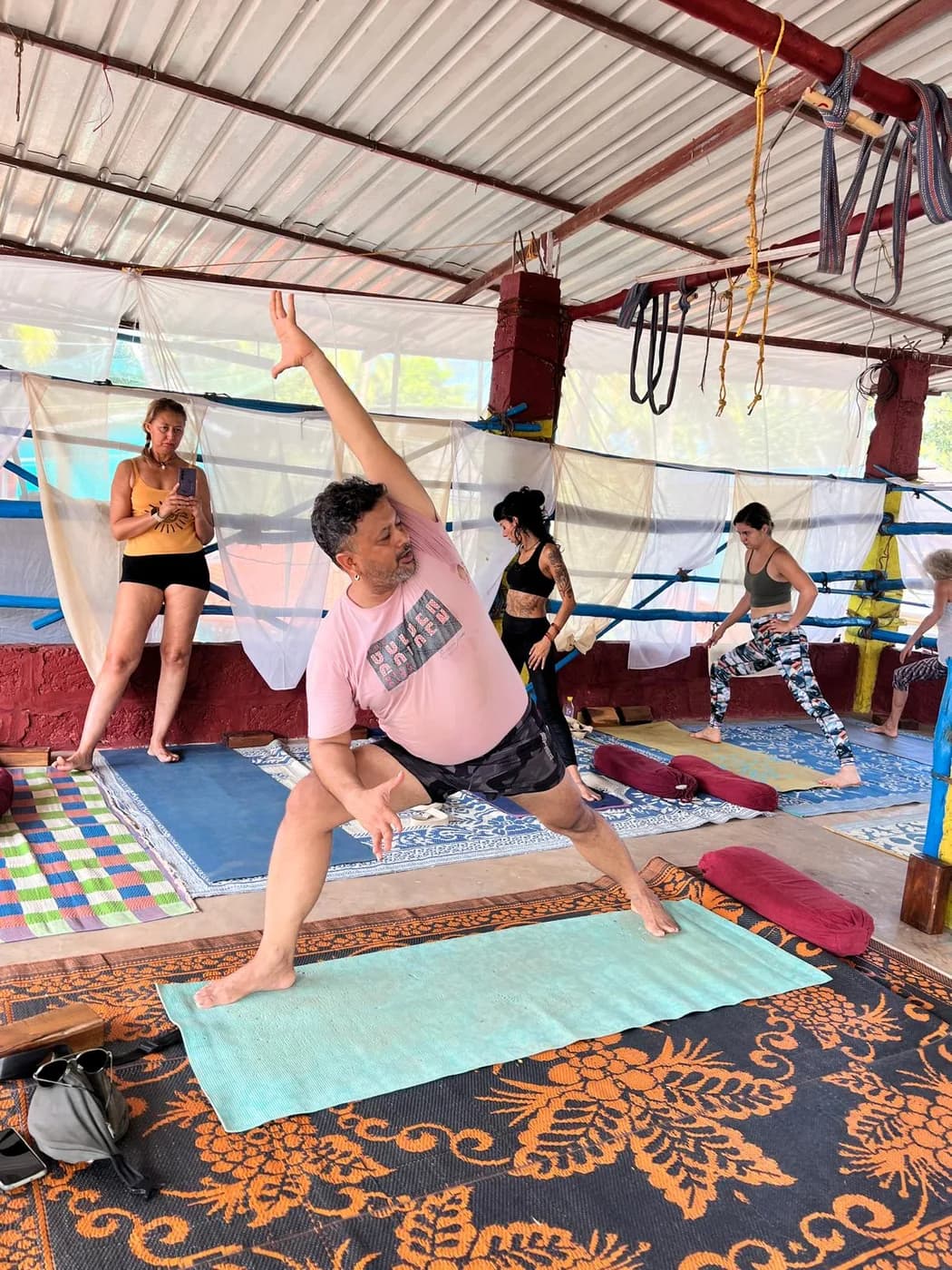
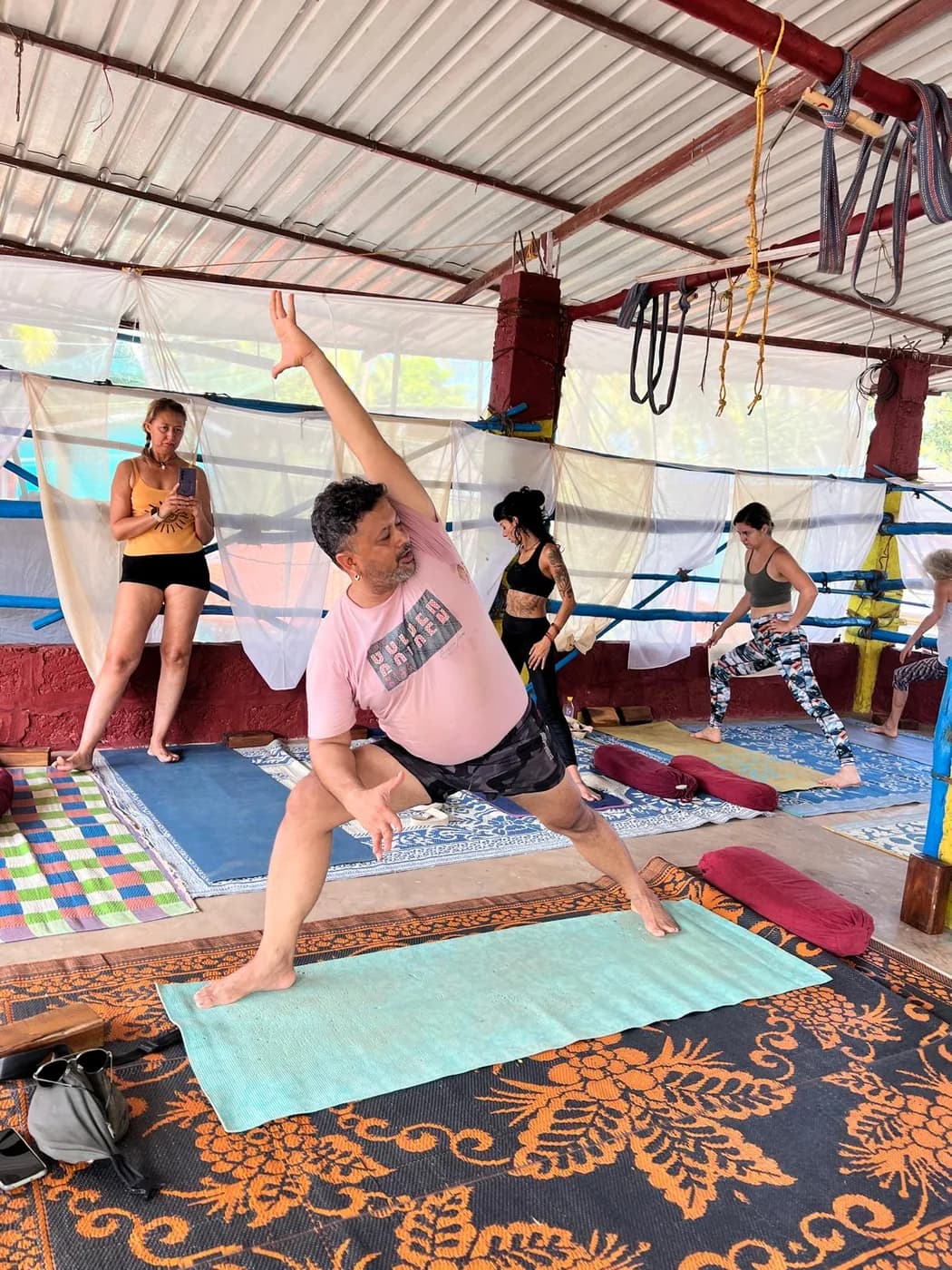
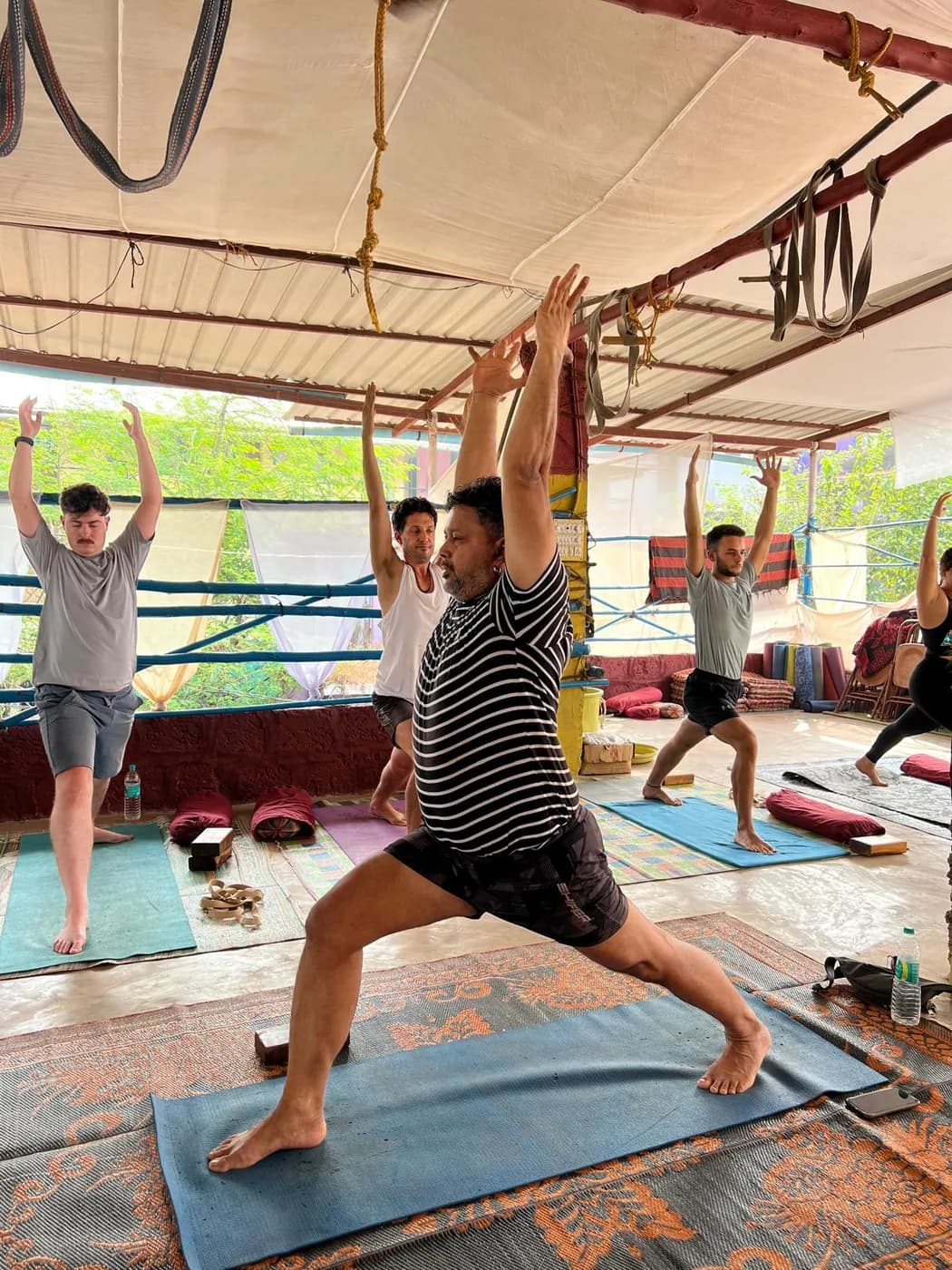
An alignment class is built on attention. A pose might be held for a minute or more while the teacher works through it: weight into the outer edge of the back foot, front knee tracking over the second toe, the side waist long. Then you come out, compare the two sides, and go back in.
Neither is "better" in general. They train different things. Many people come to alignment work after years of flow classes, because they want to know what they have been doing all that time. Others use alignment to build clean foundations first, so that a later flow practice rests on something solid. At Alpesh Yoga our 200 hour teacher training teaches both: alignment-based Hatha and Hatha Vinyasa Flow.
Why does alignment-based yoga use props like blocks, belts and bolsters?
Props let a body do the correct version of a pose before it can do the full version, which is the whole idea of alignment-based yoga.
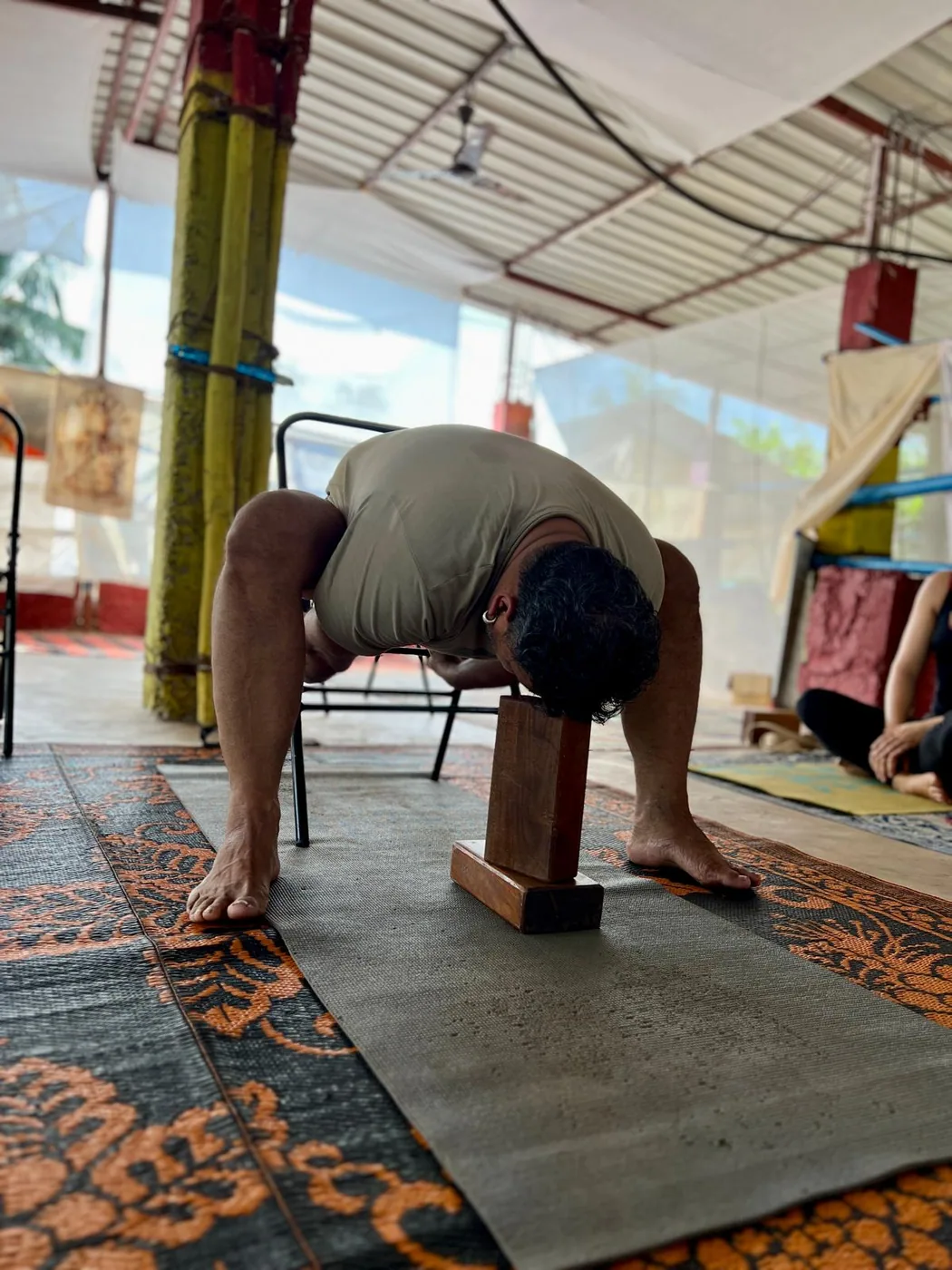
Take a standing forward fold with tight hamstrings. Without support, most people round the back to get their hands down, and the pose becomes a lesson in rounding the back. Put a block under the hands and the spine can stay long while the hamstrings do the work. The block is not a crutch. It changes what the pose teaches you.
- Blocks bring the floor closer, so the spine stays long in folds and standing poses, and give the pelvis a stable base in supported backbends.
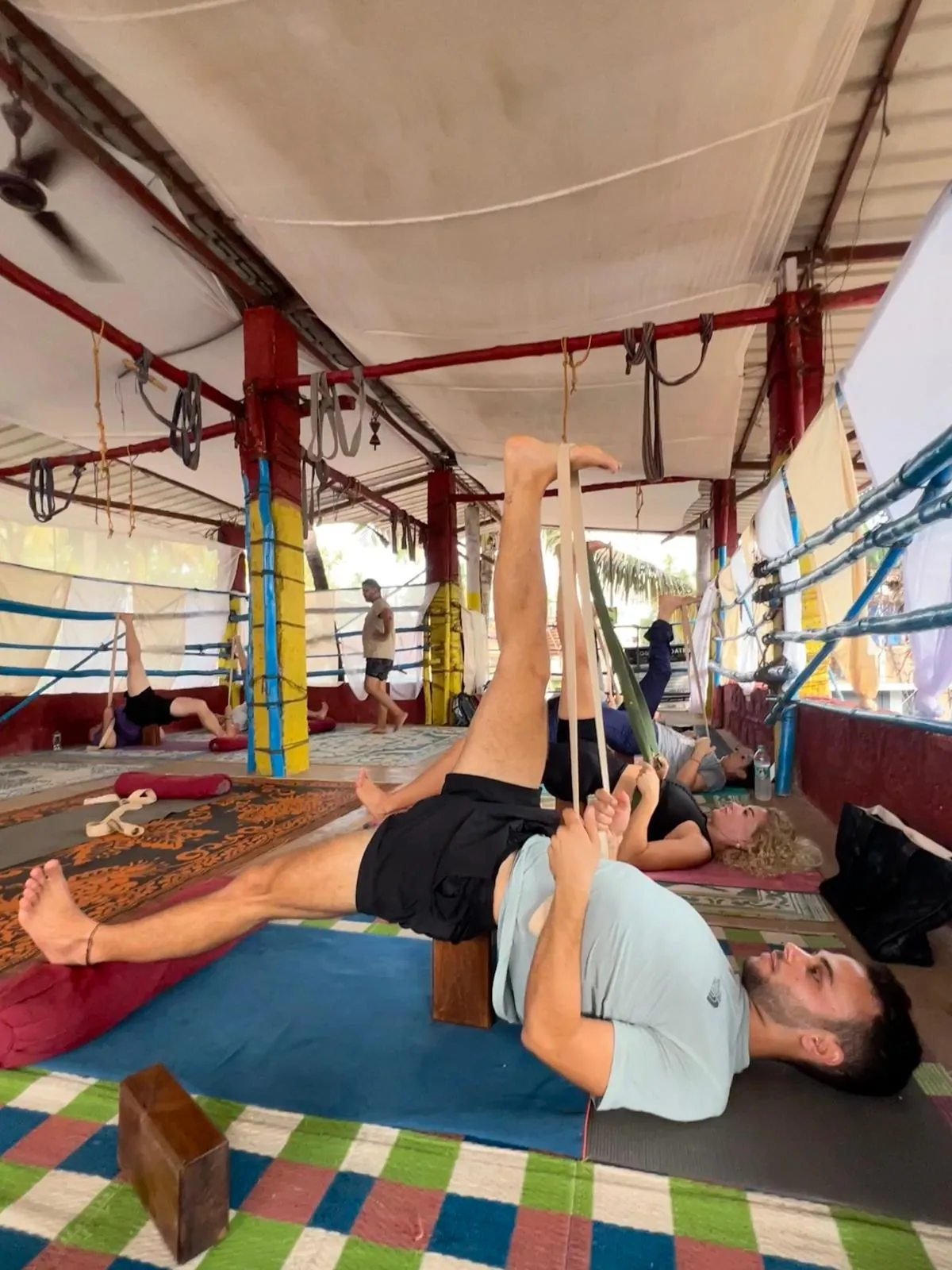
- Belts extend the reach of the arms, in a reclined leg stretch or across the upper arms to keep the shoulders in place.
- Bolsters support the back and legs in restorative poses and backbends, so the body can stay in a pose long enough to learn it.
- Chairs support forward bends, twists and inversions, so a pose that would strain the neck or lower back can be practised with more support.
- Wall ropes give feedback and support in standing poses and supported inversions.
Props are not only for beginners. Experienced students often find them the most revealing part of the practice, because a belt or a wall shows you exactly where a habit is hiding.
Why do hands-on adjustments matter in alignment yoga?
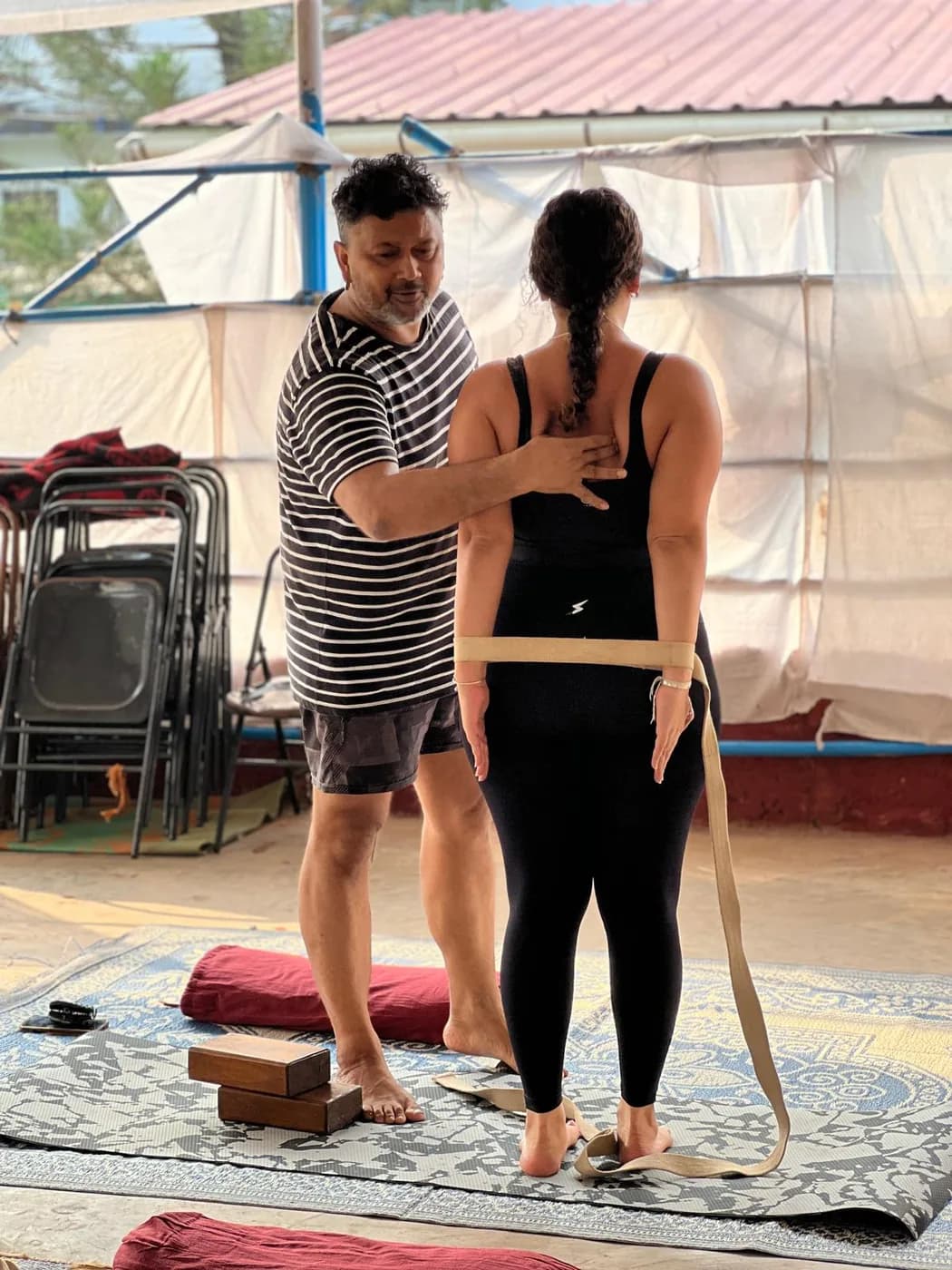
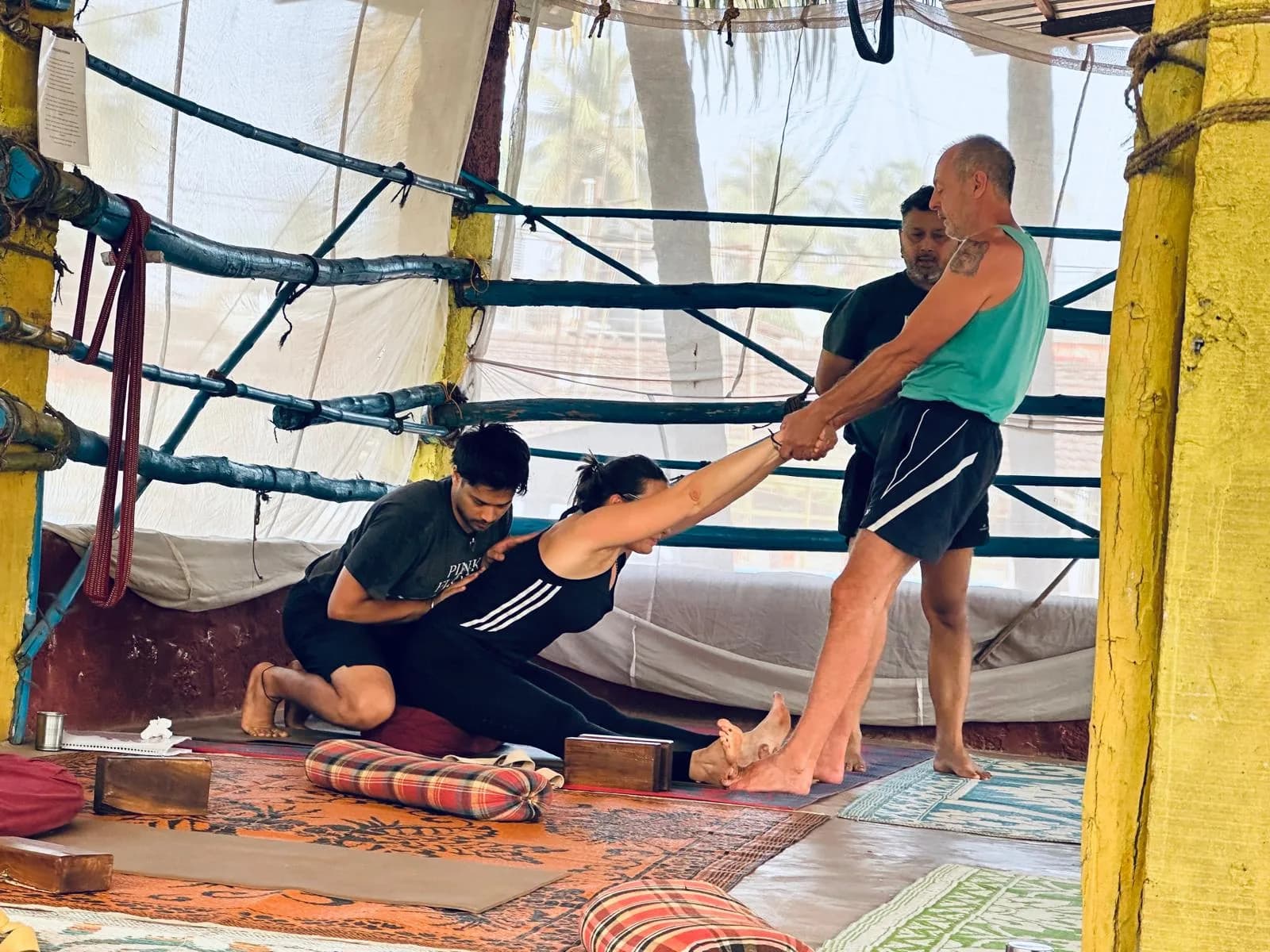
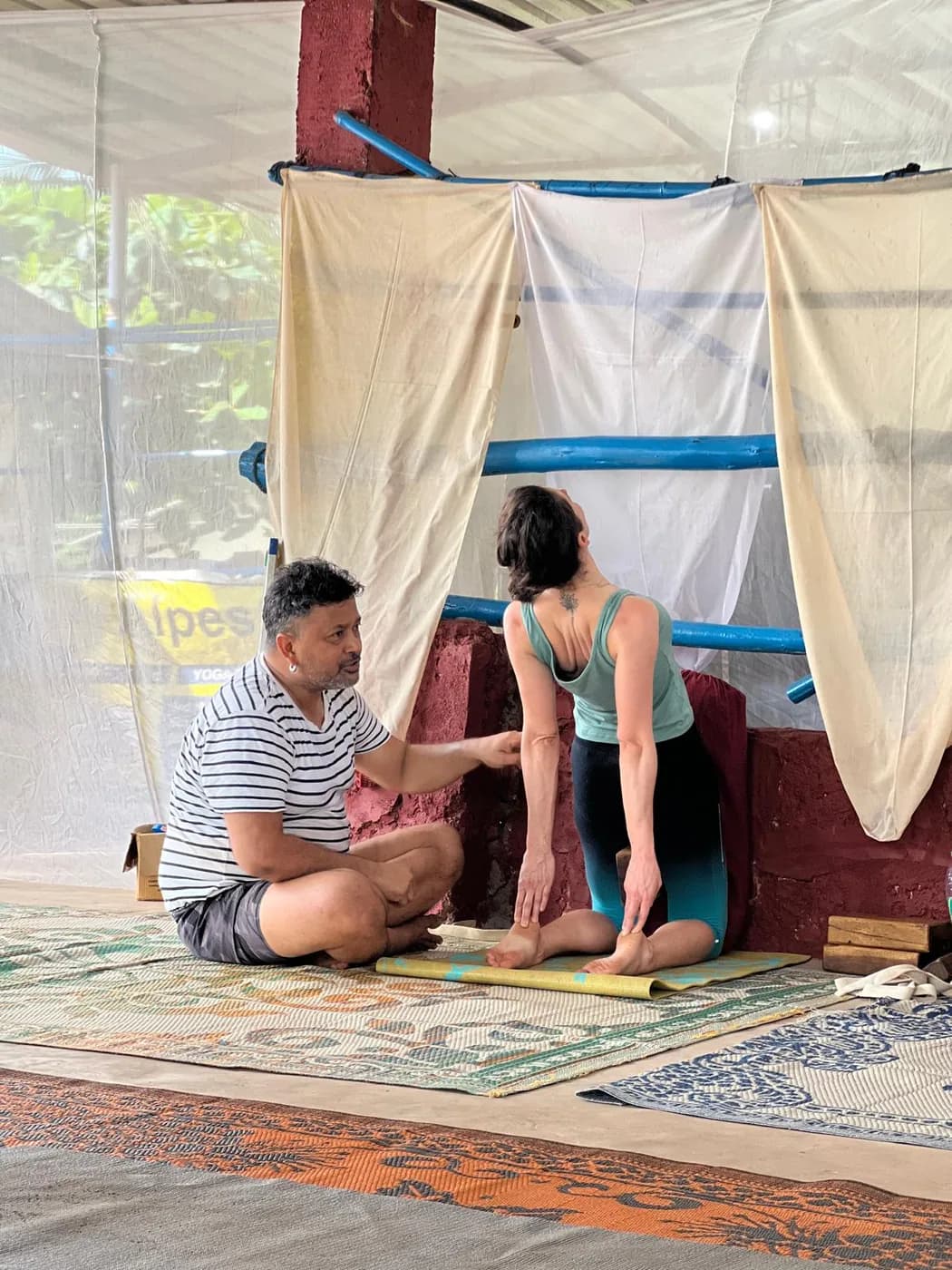
A hands-on adjustment shows the body a position that words alone often cannot describe.
You can be told to "draw the shoulder blades down" many times and still not feel what that means. A teacher’s hand placing the shoulder blade, for a few seconds, can make it clear at once. After that, the verbal cue starts to make sense.
Good adjustments are small, specific and explained. They are not about pushing someone deeper. The point is that the student can find the same position next time without help, which is why an adjustment works best when the reason comes with it.
This is also why group size matters. Adjustments only happen daily if the teacher can actually reach everyone in the room, so alignment courses work best in small groups.
Who benefits from alignment-based yoga?
Alignment-based yoga suits anyone who wants to understand their practice rather than just repeat it, and it is especially useful for stiff bodies and complete beginners.
- Stiff or newer students. Props mean the class is built for the body you have today, not the one you might have in a year.
- Long-time flow practitioners. If no one has ever told you what your back leg is meant to be doing, this is where you find out.
- People with a recurring niggle in class. Alignment work can help you notice which habit keeps aggravating a shoulder, knee or lower back. It is not a treatment, so if you have an injury, see a doctor or physiotherapist and tell us before you arrive.
- Future teachers. Arriving at a teacher training with clean fundamentals means spending the first week learning instead of unlearning.
- Working teachers. Training your eye for alignment makes you better at seeing it in the students in front of you.
Who might prefer a different style of yoga?
If you want a fast, sweaty, workout-style class, alignment-based yoga will probably feel too slow.
There is a lot of stopping to look at what a joint is doing, and a lot of repetition. Some people love that from the first morning. Others find it frustrating until the second or third day, when the corrections start to show up in their own body. And some simply prefer a dynamic practice, which is a perfectly good reason to choose one.
How does Alpesh Yoga teach alignment-based yoga?
At Alpesh Yoga, alignment is taught one region of the body at a time, with props on the mat from the first morning, by a founder who has taught alignment for 21 years.
Alpesh Patwari has been teaching yoga for 22+ years, and 21 of those years have centred on alignment. That makes him one of the most experienced alignment teachers working today. He founded the school in 2014, it is registered with Yoga Alliance, and its graduates have come from 40+ countries. In Goa we teach at our shala near Arambol Beach in North Goa, and the season runs November to April.
The method is the same across our courses:
- Foundations first. The feet, ankles and legs, then the pelvis and spine, then the shoulders. Every later pose depends on these.
- One subject a day. On the short courses, each day takes a region of the body or a family of poses and works it properly, rather than touching everything lightly.
- Props as standard. Blocks, belts, bolsters, chairs and the shala’s wall ropes are used by everyone, not handed to whoever cannot reach the floor.
- Corrections with reasons. Demonstrations, verbal cues and hands-on adjustments, each explained, so you can correct yourself at home.
- Inversions and backbends with care. They are taught with their preparation and counter-poses, and modified or replaced for anyone with an injury, pregnancy, high blood pressure or a neck problem.
You do not have to take our word for what the teaching is like. Students describe it in their own words on our reviews page.
Where can I take an alignment-based yoga course in India?
Alpesh Yoga runs alignment-based yoga courses in Arambol, Goa, from a five-day course up to a full 200 hour teacher training.
Swipe to see all columns
| Course | Length | Price | Who it suits |
|---|---|---|---|
| 5 Day Alignment Yoga Course | 5 days | $150 course only, or $250 with food and stay | Foundations of alignment in a week; stiff bodies and beginners |
| 9 Day Alignment Yoga Intensive | 9 days | $350 course only, or $450 with food and stay | The whole body in depth, plus building a home sequence for your own body |
| 200 Hour Alignment Yoga TTC (Goa) | 22 days | $700 course only, or $1,100 with food and stay | Anyone who wants to teach; all levels welcome |
The 5 Day Alignment Yoga Course gives each day to one region: feet and legs, pelvis and spine, shoulders, supported inversions and backbends, and then a full practice that brings it all together. It is a sharp introduction, and a good preparation for anyone about to start a teacher training.
The 9 Day Alignment Yoga Intensive uses the same method with more time. Standing balances, hips, twists, backbends and supported inversions each get a day of their own, there is a lighter day in the middle, and the afternoons go on building a home sequence for your body and learning to see alignment in a partner.
Neither short course is a teaching qualification. If you want to teach, the 200 Hour Yoga Teacher Training in Goa is a 22-day, Yoga Alliance registered course that combines alignment-based Hatha with Hatha Vinyasa Flow, anatomy, philosophy and supervised practice teaching. Graduates can register as RYT 200.
We confirm availability before any payment is requested. A 30% deposit then holds your seat, and the balance is paid on arrival. Current batches for every course are on Dates & Prices.
Goa season, November to April
Learn alignment-based yoga at Arambol Beach
Start with five days of foundations, or give it nine. Apply for a batch and we will confirm your place before you pay anything.
Written by
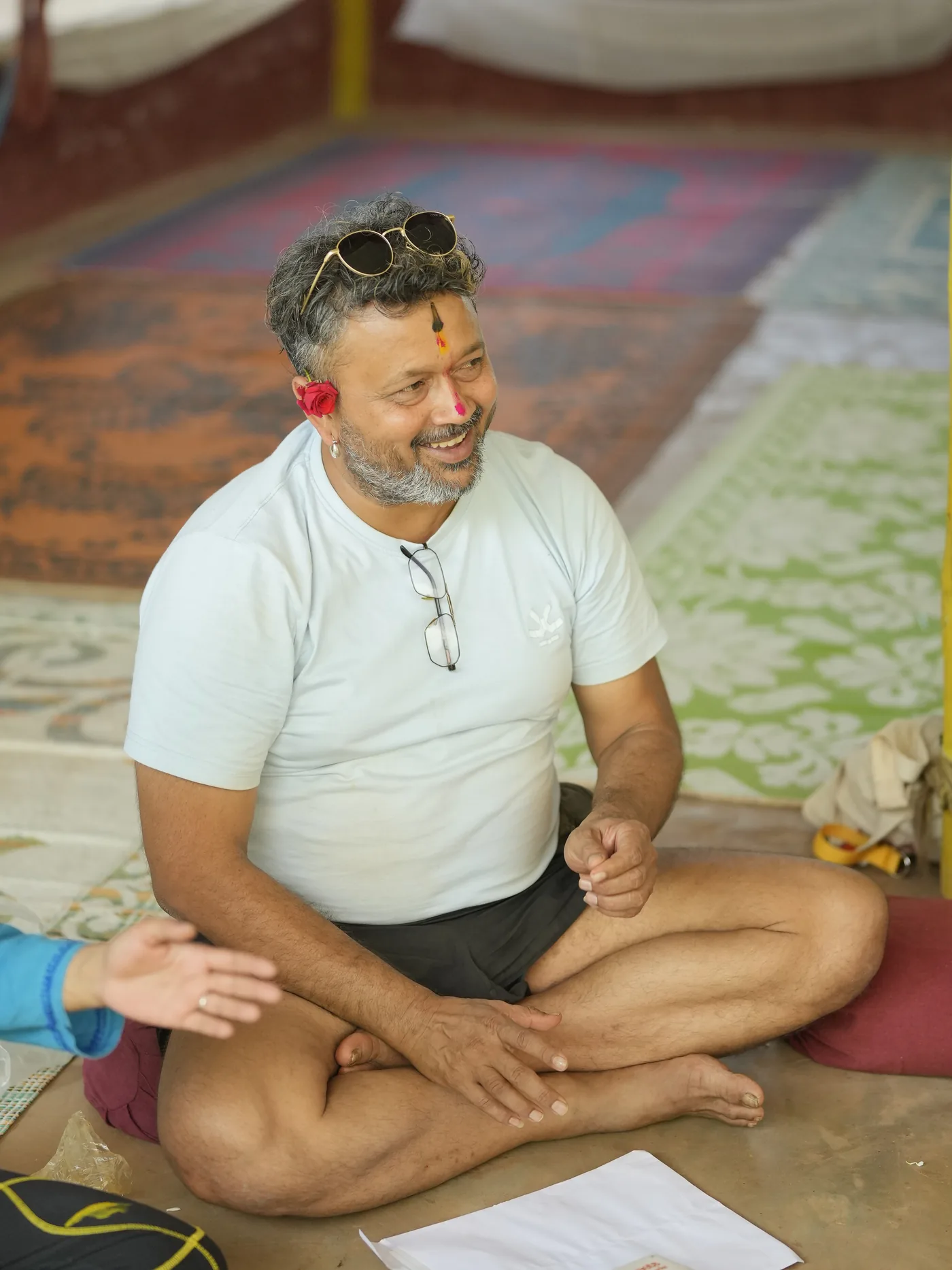
Alpesh Patwari
Founder and lead teacher of Alpesh Yoga, and one of the most experienced teachers of alignment-based yoga. Alpesh has taught alignment for 21 years: precise postures, props and hands-on adjustments that make every pose safe for every body.
Meet our teachers →Frequently Asked Questions
Alignment yoga, or alignment-based yoga, is a slow and precise style of Hatha yoga. Each pose is built from the feet upward, held long enough to set the joints correctly, and supported with props such as blocks, belts and bolsters so that every body can practise a sound version of it.
Yes. Because props adapt each pose to the body in front of the teacher, alignment-based yoga is one of the easier ways to start. Beginners learn the foundations properly from the first class instead of copying shapes they cannot yet hold.
Flow-led yoga links poses together with continuous movement. Alignment-based yoga stops inside each pose to refine it, with detailed cues, props and hands-on adjustments. The first builds rhythm and heat; the second builds precision and understanding. Many students practise both.
Founder Alpesh Patwari leads the teaching. He has been teaching yoga for 22+ years and has taught alignment for 21 years, which makes him one of the most experienced alignment teachers working today. The school was founded in 2014 and is registered with Yoga Alliance.
Alpesh Yoga runs alignment courses at Arambol Beach in North Goa from November to April: a 5 Day Alignment Yoga Course (from $150), a 9 Day Alignment Yoga Intensive (from $350) and a 22-day 200 hour teacher training (from $700). Current dates are on the Dates & Prices page.
No. The 5-day and 9-day courses are practice courses, not teacher trainings, and they do not count toward Yoga Alliance registration. To teach, you would take the 200 hour teacher training, after which graduates can register as RYT 200.
More from the blog
From our Instagram
See the school in motion
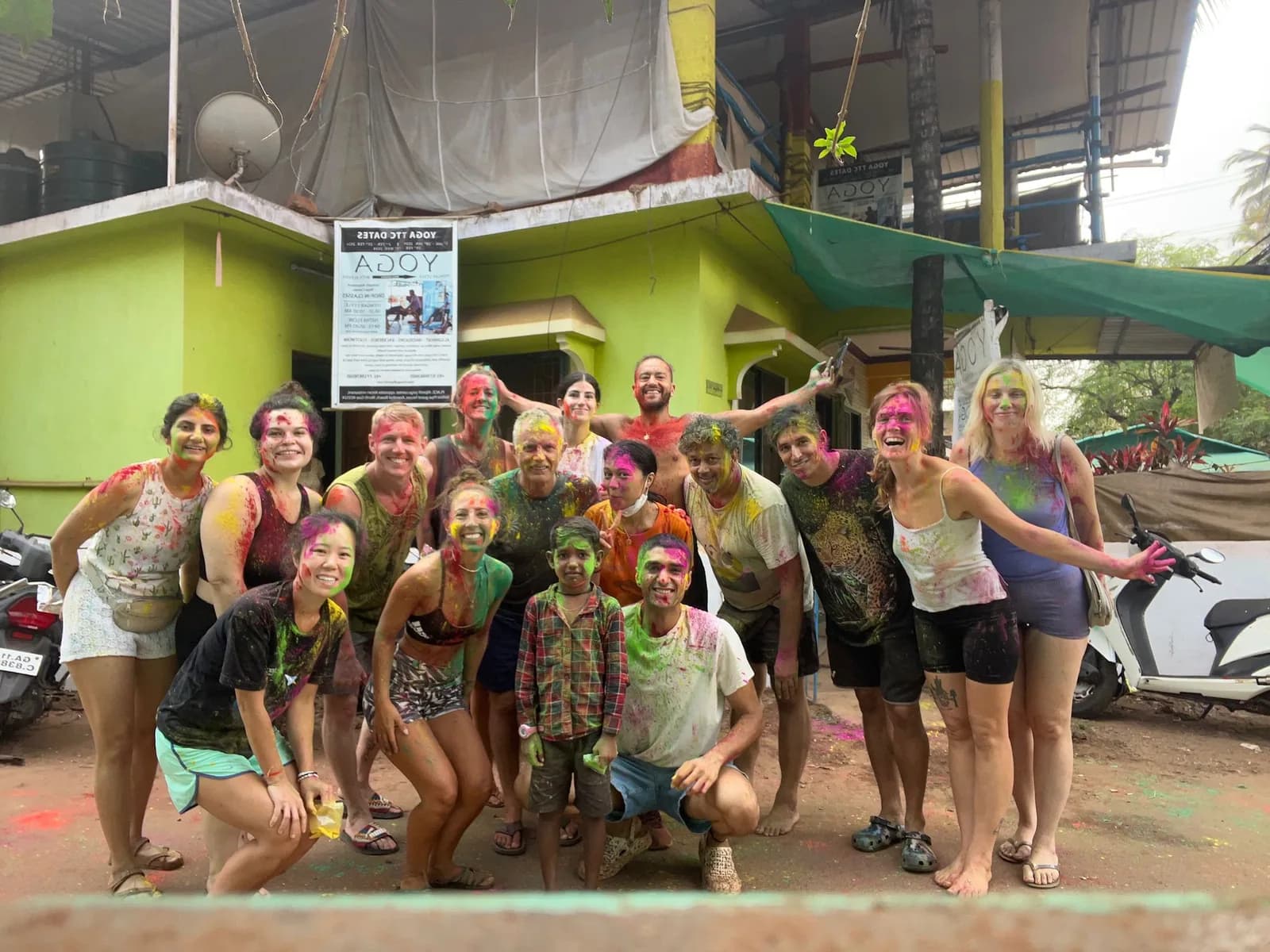
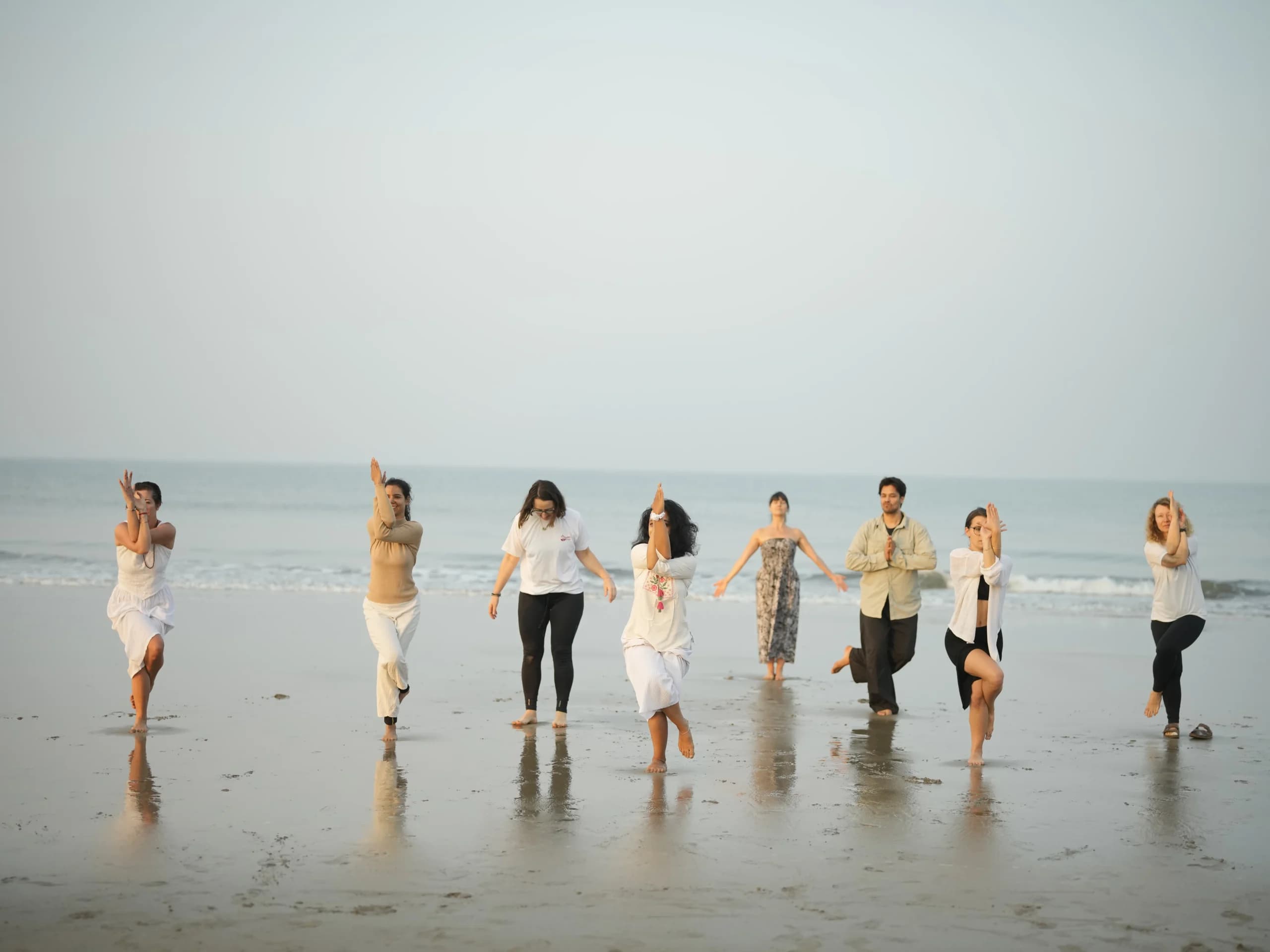
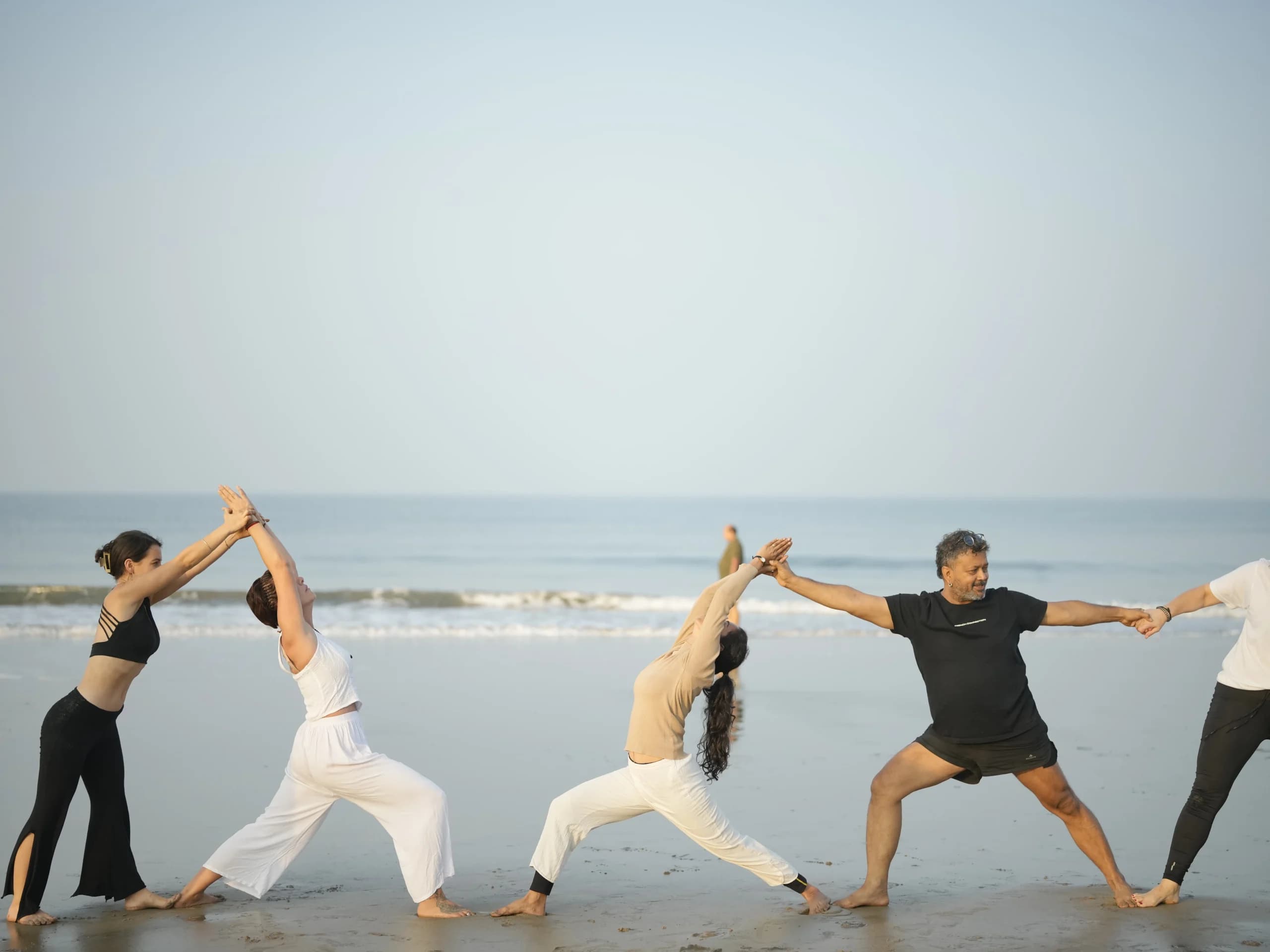
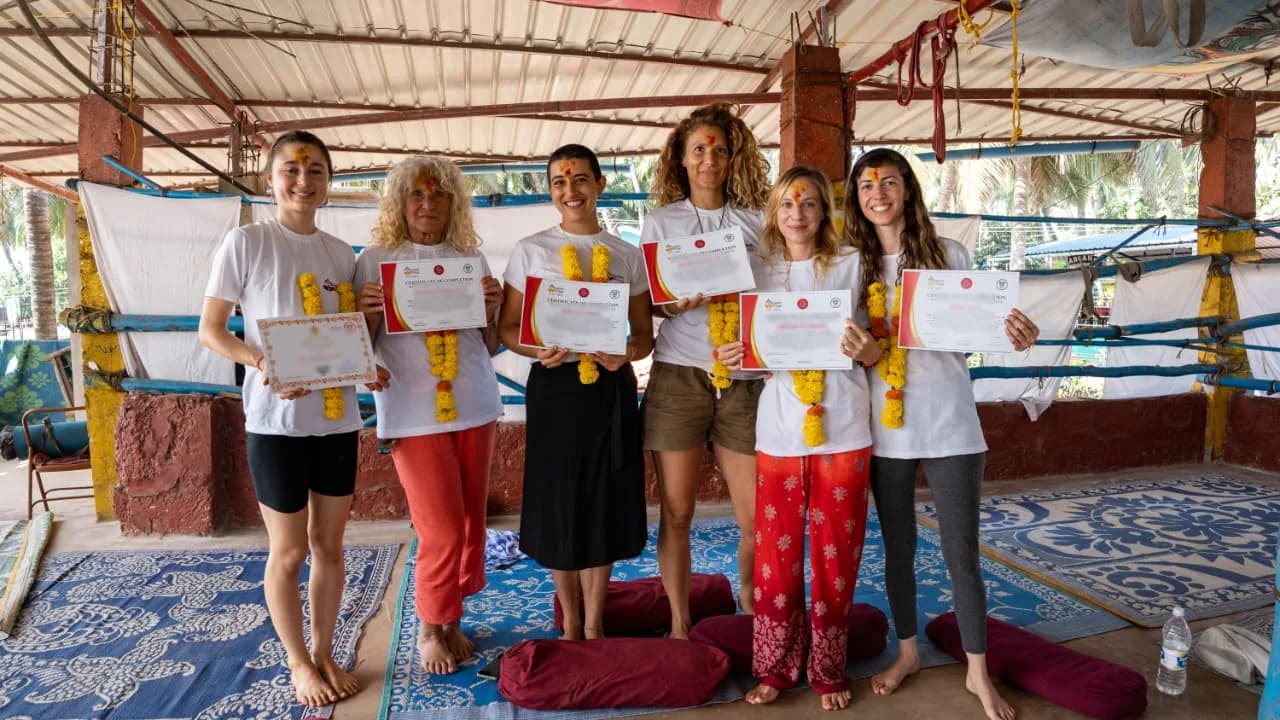
Short clips from our classes, ceremonies and graduations at the shala.
Ready to Experience It for Yourself?
Join a course or retreat at Arambol Beach, Goa or Bhagsu, Dharamshala — or message us on WhatsApp if you have questions first.