Teacher Training
Yoga Teacher Training in Goa for Beginners: Can You Join, and How to Prepare
A note before you read: we are Alpesh Yoga, a yoga school at Arambol Beach in North Goa, and the two courses discussed here are our own. We have tried to write the page a beginner needs before booking a teacher training anywhere: whether you can join, what helps in the weeks before, and when it is wiser to wait.
Quick answer
Yes, a beginner can join a 200 hour yoga teacher training in Goa, if the course is built from the foundations up. At Alpesh Yoga in Arambol, the 22-day course is open to all levels, taught in small groups with props, and registered with Yoga Alliance. It costs $700 course only, or $1,100 with food and stay. If you have practised very little, the 5 Day Alignment Yoga Course is a gentler first step.
Swipe to see all columns
| 200 Hour TTC (Goa) | 5 Day Alignment Yoga Course | |
|---|---|---|
| Length | 22 days, 200 hours | 5 days |
| Price | $700 course only · $1,100 with room and meals | From $150 |
| Level | All levels welcome | Beginners and stiff bodies |
| Outcome | Yoga Alliance certificate; you can register as RYT 200 | A cleaner personal practice; not a teaching qualification |
| A typical day | Two practices a day plus theory, six days a week | About five guided hours, with the middle of the afternoon free |
| Best for | Beginners who are sure they want three weeks of study | Beginners who want to test the method, or arrive prepared |
Can a complete beginner join a 200 hour yoga teacher training in Goa?
Yes, many 200 hour courses in Goa accept beginners, but only some are actually taught for them. The difference is in how the first week is built: a course that assumes you already know the poses will spend that week refining them, while a course built for beginners spends it teaching them properly from the ground up.
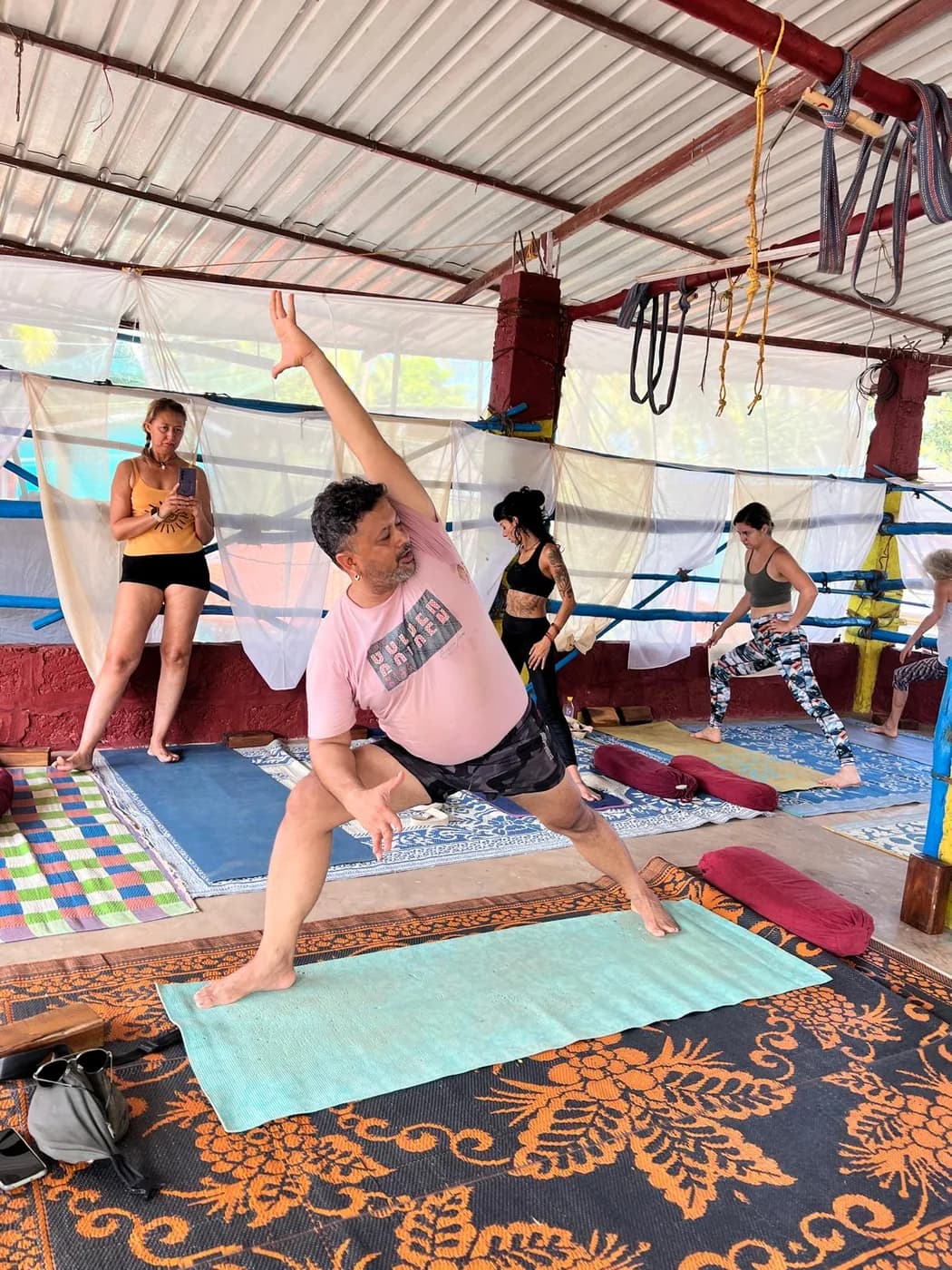
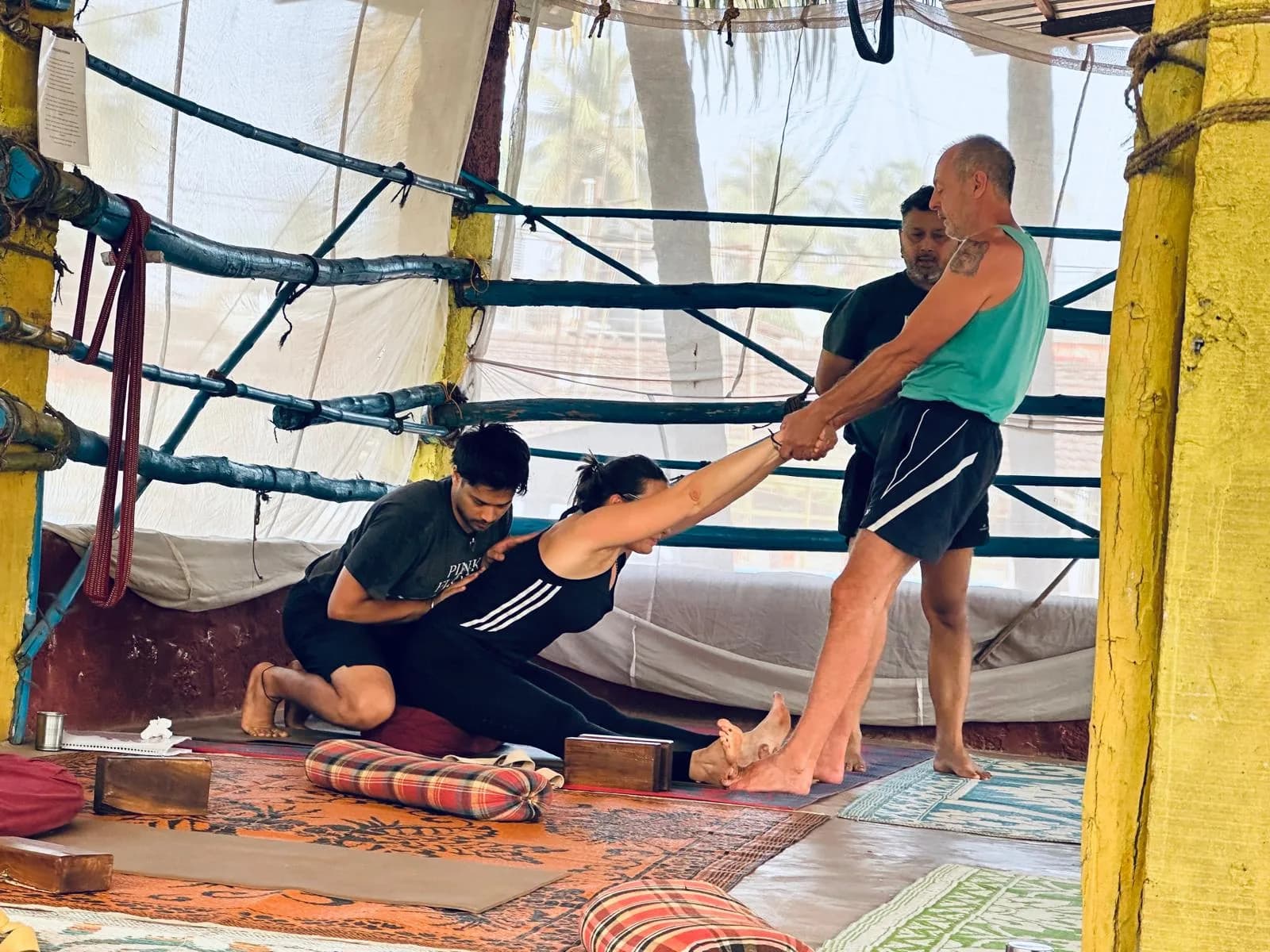
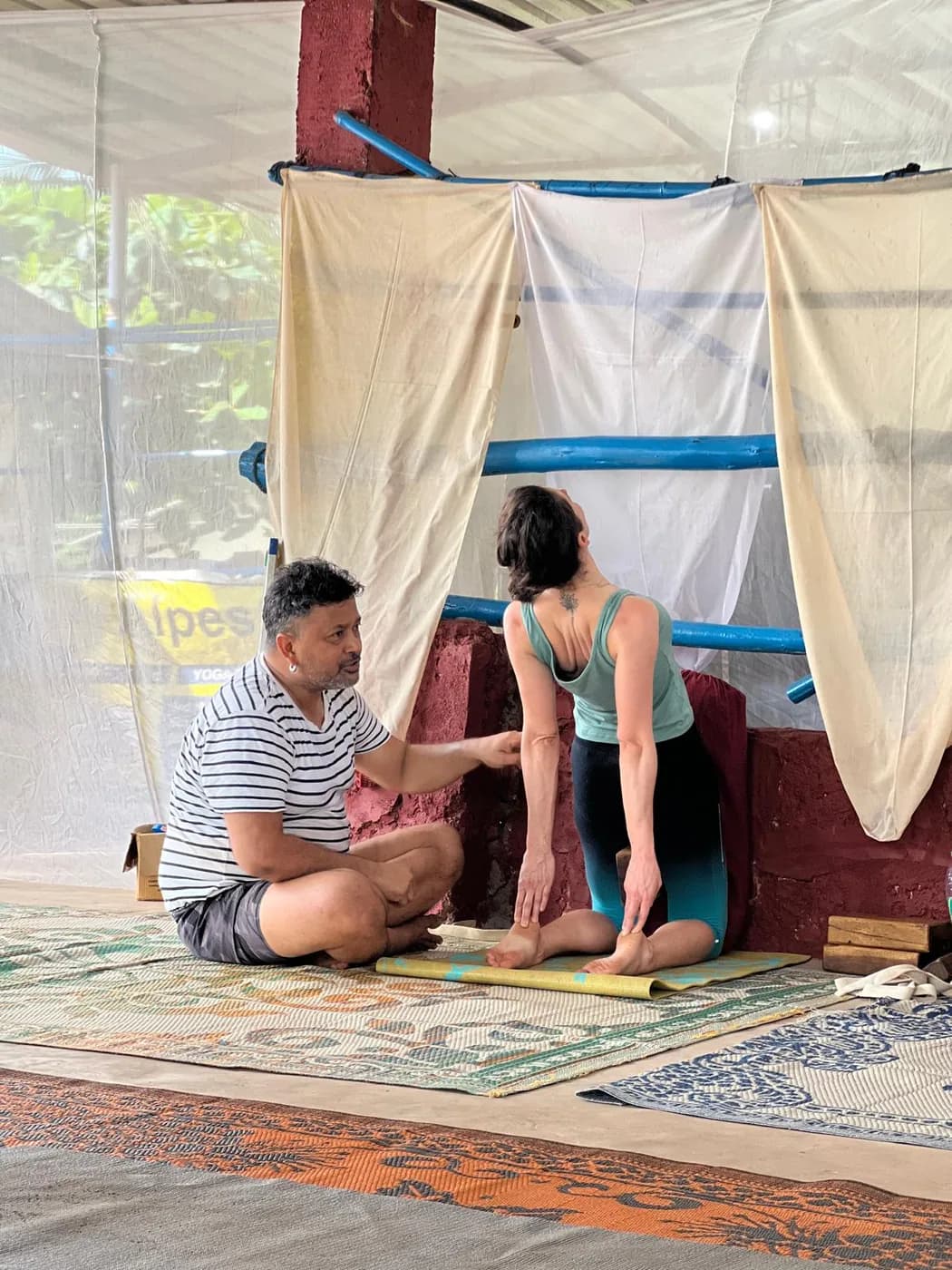
Our 200 Hour Yoga Teacher Training in Goa accepts beginners on every batch, so it is built for them. The first stretch works through the posture families one at a time (standing poses, seated poses, forward bends, backbends, twists and inversions) and the alignment principles that make each of them safe. Groups stay small, at around fifteen seats, so a teacher can see what your knees and lower back are doing rather than guessing.
You do not need to be flexible, and you do not need to hold a headstand. What you need is the willingness to go slowly, be corrected, and practise the simple version of a pose properly before the deep one.
Before you book anywhere, ask the school three questions. Is the first week foundations for everyone, or is it assumed? How many people are in a group? And are props part of the teaching, or only offered to whoever is struggling? Those three answers tell you more about whether a course suits a beginner than the words "all levels" ever will.
Which Goa yoga teacher training courses suit beginners best?
The Goa trainings that suit beginners best are slow, small, alignment-based and generous with props, because those four things let a newer body learn the correct shape of a pose before it can force a deep one. Fast flow-based trainings can suit someone with a strong existing practice, but they leave a beginner copying shapes they do not yet understand.
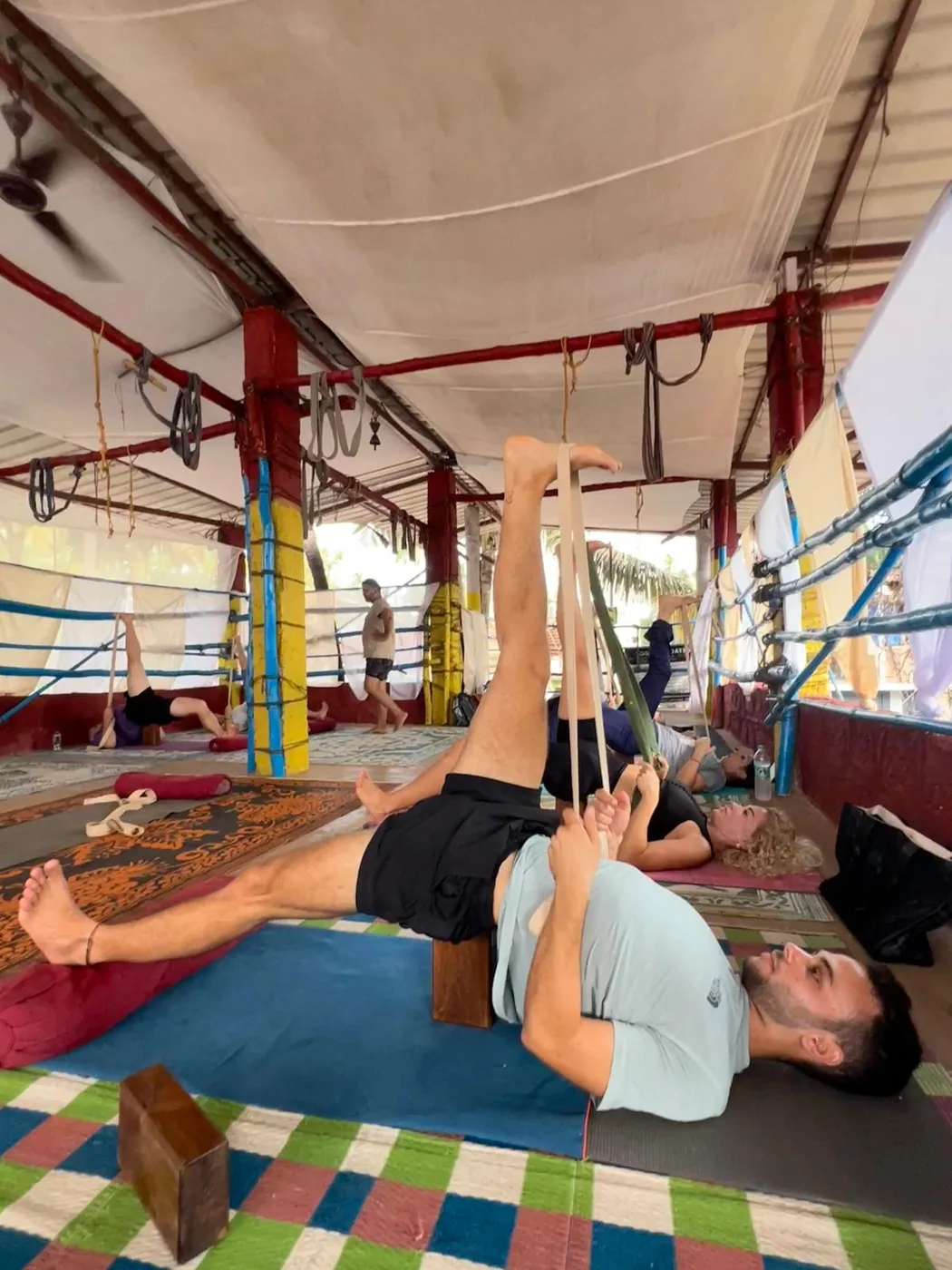
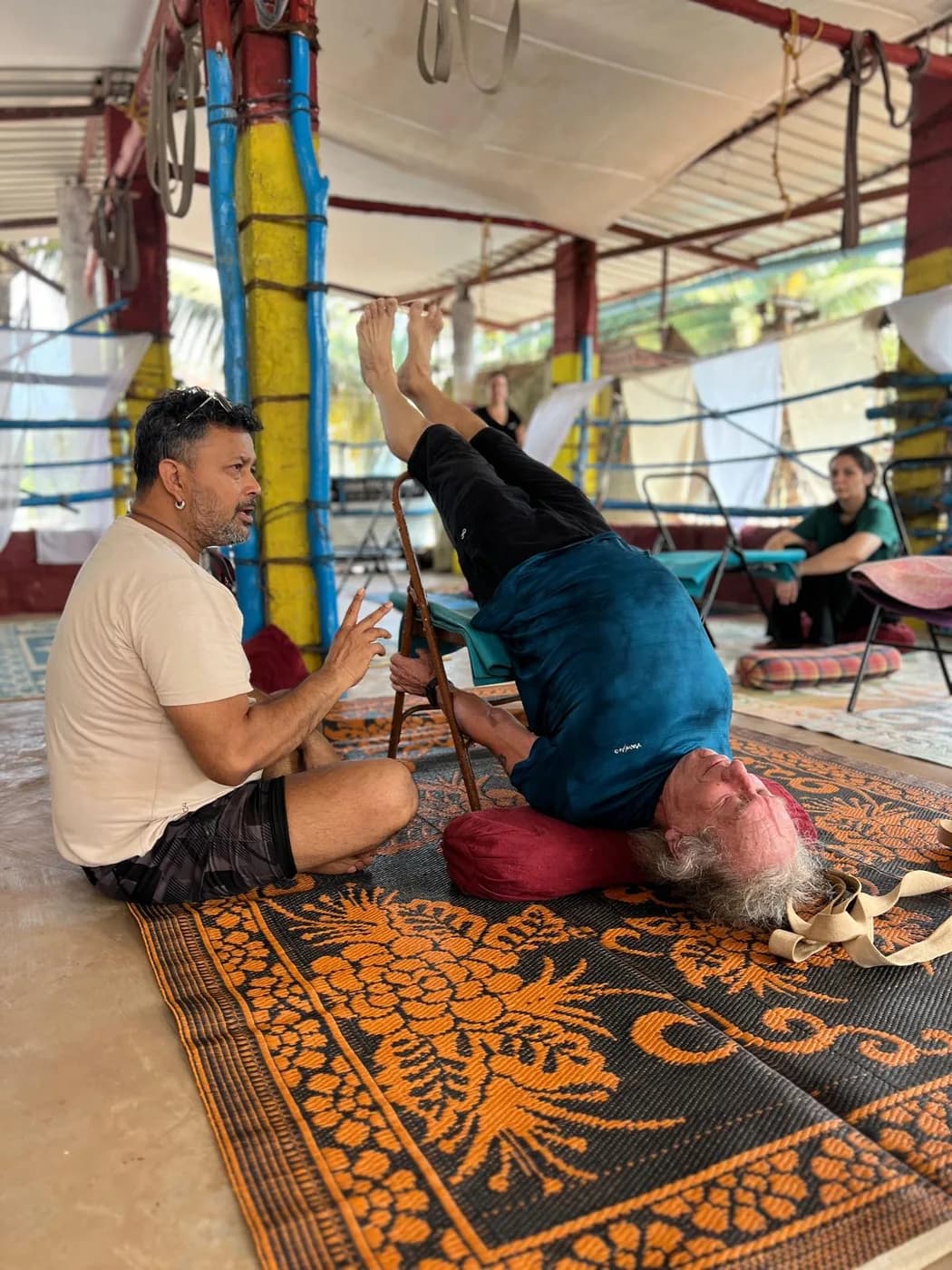
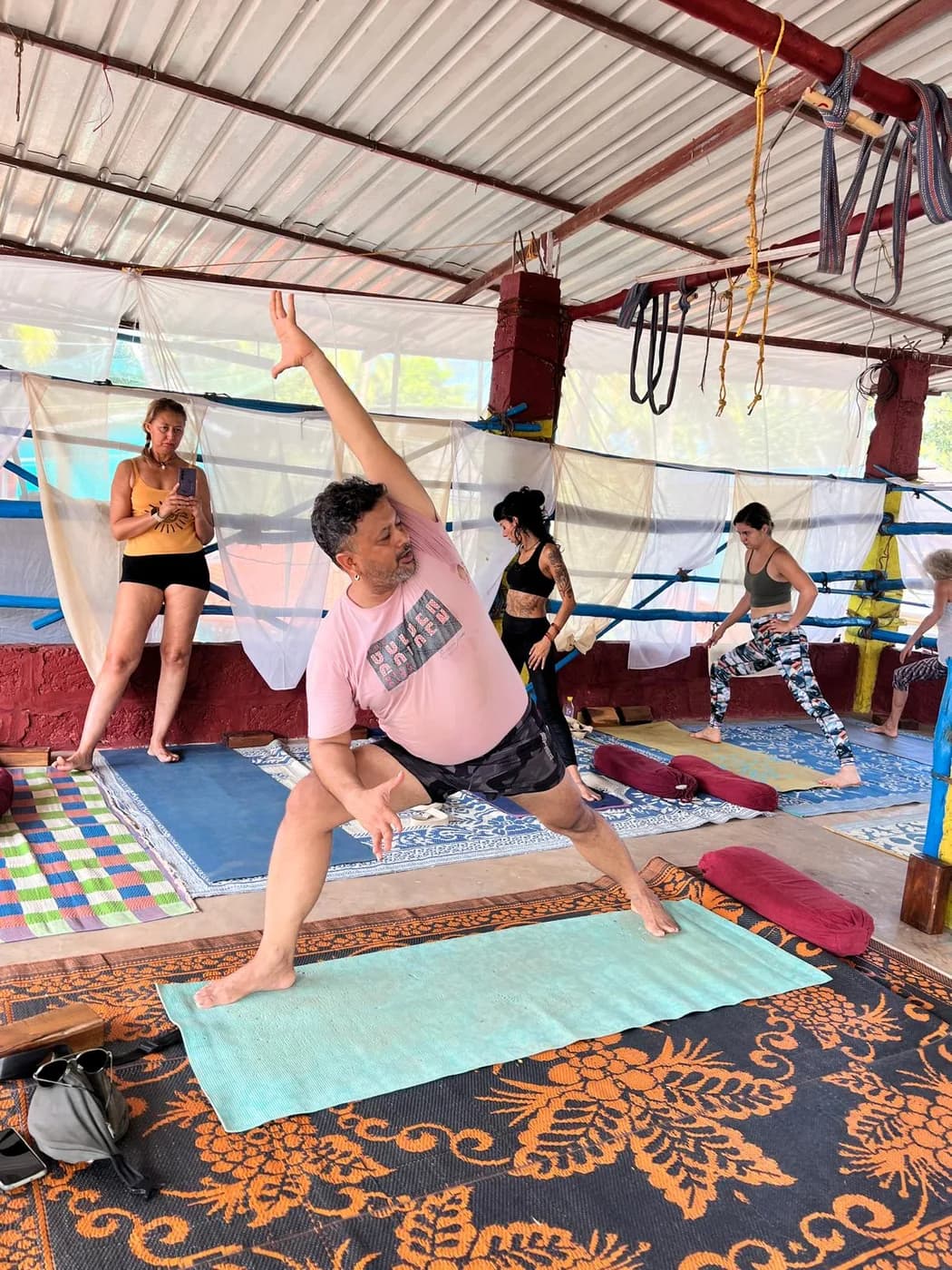
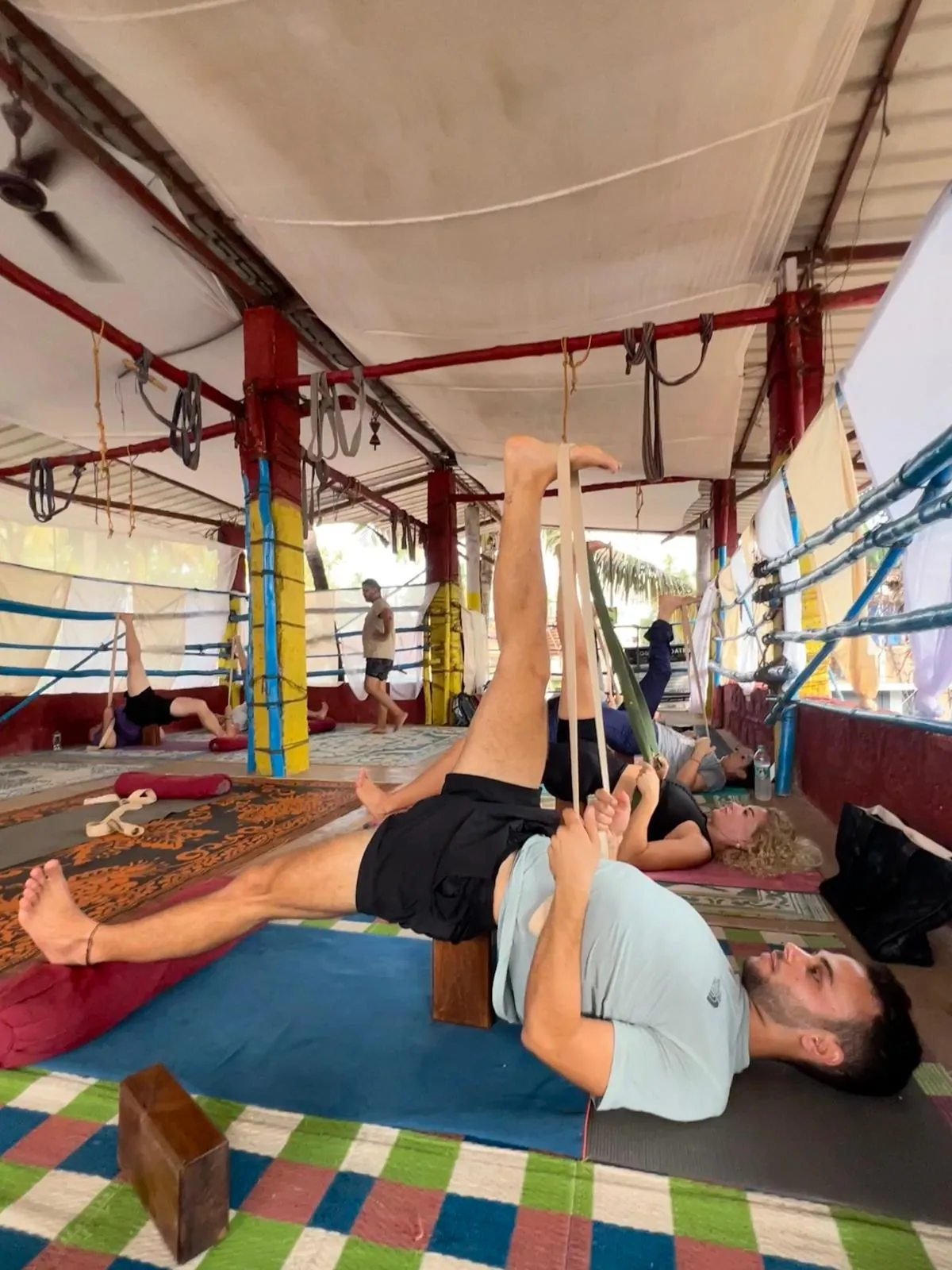
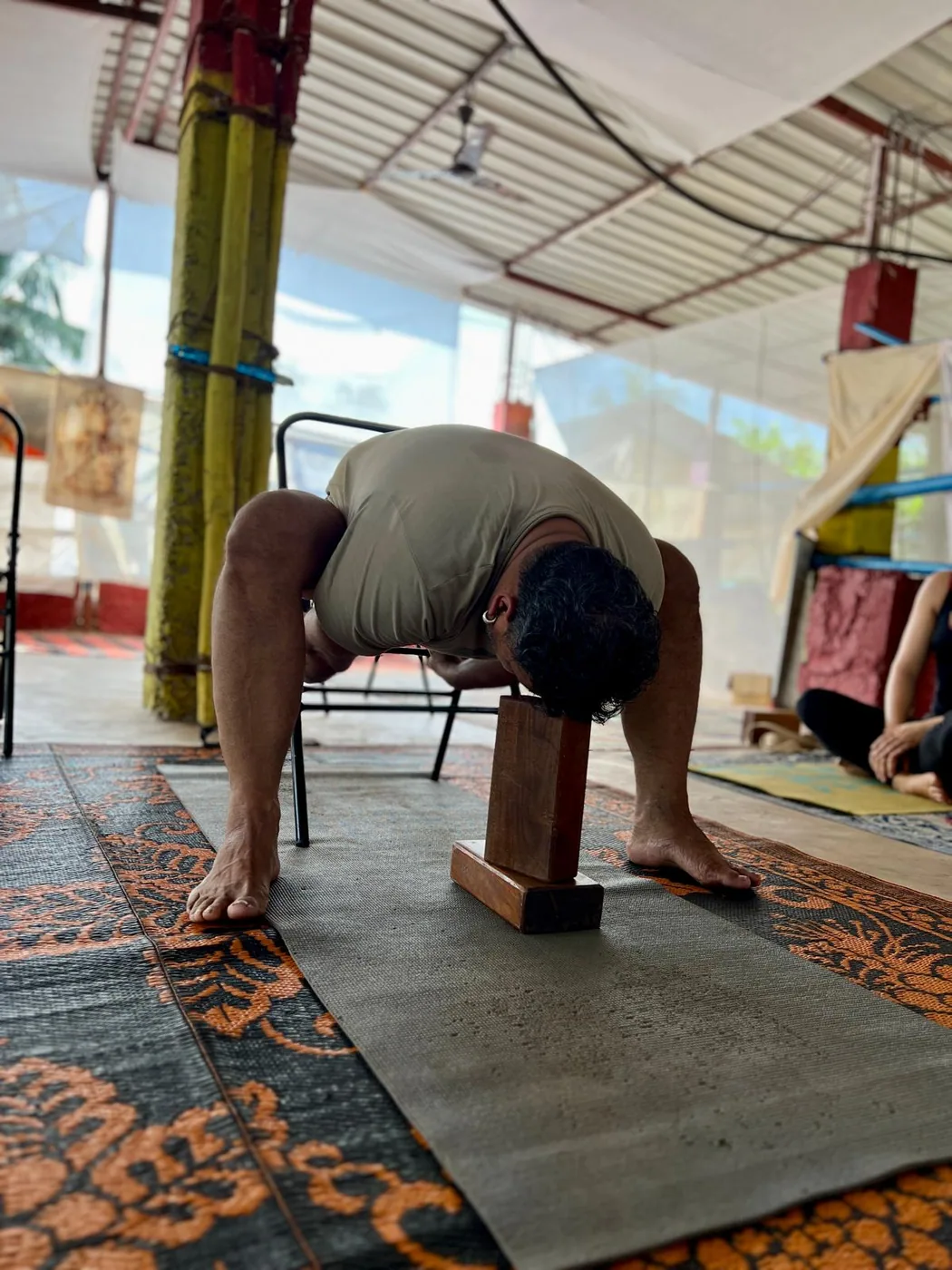
At Alpesh Yoga the method comes from Alpesh Patwari, the school's founder and lead teacher, who has 22+ years of teaching behind him and 21 years teaching alignment. That makes him one of the most experienced alignment teachers working today. Blocks, belts, bolsters and chairs are treated as teaching tools rather than a beginner's concession, which helps you twice: you practise safely now, and later you know how to adapt a pose for your own students.
The school has been teaching since 2014, is registered with Yoga Alliance, and has trained students from 40+ countries. To hear from people who arrived as beginners, read the student reviews.
What should a beginner do in the weeks before a teacher training?
The best preparation for a teacher training is regular, unhurried practice, not trying to become flexible in a month. Six to eight weeks of steady habits will help you far more than a last-minute push, and the push is how people arrive injured.
- Practise three or four times a week. Any good class helps; a slower Hatha or alignment-based class helps most, because it is closest to what you will do every morning.
- Learn the names of the basic poses. Mountain, triangle, warrior II, downward dog, child’s pose. Knowing the names frees your attention for the alignment.
- Get used to sitting on the floor. Theory sessions are long. A few minutes a day sitting cross-legged on a cushion makes them much easier.
- Shift your sleep earlier. The training day starts with self-practice early in the morning, so start waking up earlier a week or two before you fly.
- Read a little. A short introduction to yoga philosophy and the eight limbs means the first lectures feel familiar rather than foreign.
- Tell us about your health before you arrive. Injuries, pregnancy, high blood pressure, neck problems or recent surgery change what you practise, and we would rather plan that before you arrive.
- Arrive a day or two early if you can. It gives you time to shake off the flight before day one. The with-stay room covers the course itself, so ask us about any extra nights.
What is a 200 hour training honestly like for a beginner’s body?
Physically, a 200 hour training is the jump from a few classes a week to two practices a day, and many beginners feel it in the first week. On our course the alignment practice runs 08:30 – 10:15 and the flow practice 16:30 – 18:00, with theory, lunch, karma yoga and a rest break between them. This is the full training day:
- 07:00 – 08:00 Self-study and self-practice
- 08:30 – 10:15 Alignment
- 10:30 – 11:30 Break
- 11:30 – 12:30 Yoga philosophy
- 12:30 – 14:00 Anatomy, teaching methodology and alignment
- 14:00 – 14:30 Lunch
- 14:30 – 16:00 Homework and rest
- 16:00 – 16:30 Karma yoga
- 16:30 – 18:00 Vinyasa flow practice
- 18:00 – 19:30 Break and free time
- 19:30 Dinner
Expect sore legs and shoulders early on, and expect it to ease as your body adapts. The alignment-based approach helps here: poses are built step by step with a block or a belt, so you are not forcing range you do not yet have. If something hurts in a sharp or worrying way, say so the same day. In a small group that is easy to spot and easy to adapt around.
The training runs six days a week with one full day off, and the break in the middle of the afternoon is real rest. Arambol Beach is a one-minute walk from the shala. Use the time to rest rather than fill it, especially in the first week.
What is it like mentally and emotionally?
Mentally, the hardest part of a teacher training for most beginners is not the poses but the volume of new material and the first time they teach in front of the group. There is philosophy, anatomy, teaching methodology and homework every day, and three weeks goes quickly.
Practice teaching is where nerves tend to show. You plan short classes, cue them out loud and get feedback from your teachers and the group, again and again, so by the final written and practical assessment you have already taught in front of people many times. The assessment is not designed to catch you out. If something is not landing, tell your teacher early.
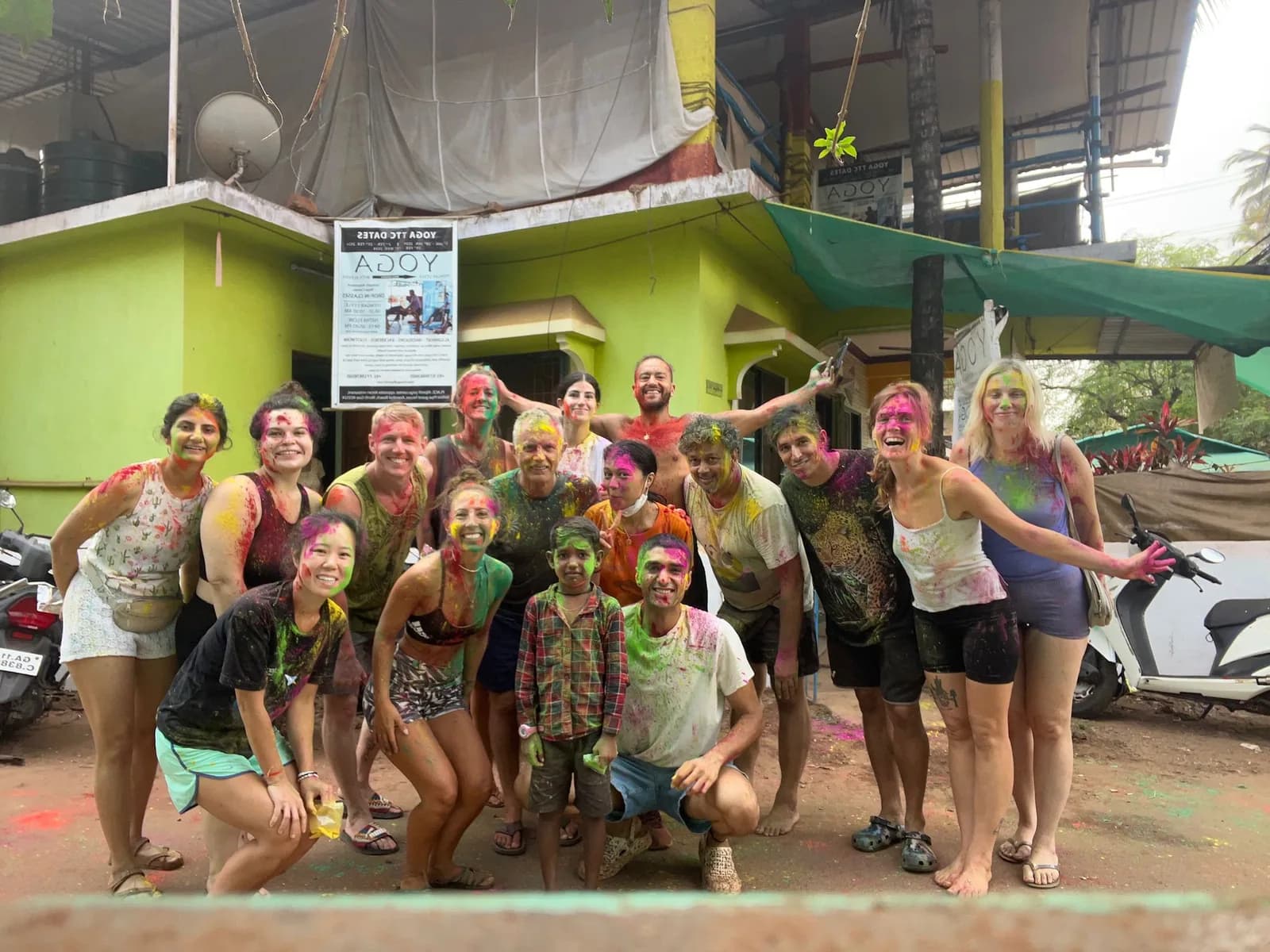
Living and studying with the same small group for three weeks is also intense in a good way, and occasionally a tiring one. It is normal on any residential course to have a flat day somewhere in the middle. Many students arrive alone, so you are unlikely to be the only one who knows nobody on the first morning.
The curriculum is wide, which is part of why the mental load is real. Over the course you study:
- Hatha yoga
- Hatha Vinyasa Flow
- Alignment, adjustments & props
- Pranayama & meditation
- Yoga philosophy
- Anatomy & physiology
- Teaching methodology & practicum
When is a short alignment course the better first step?
A short alignment course is the better first step if you have practised very little, are not yet sure you want to teach, or can only give Goa a week. Our 5 Day Alignment Yoga Course takes one region of the body each day, with props from the first morning, and costs $150 for the course only, or $250 with food & accommodation.
- You have done only a handful of classes. Five days of foundations means you start a later training with clean basics instead of spending the first week unlearning habits.
- You are not sure you want to teach. A 200 hour course includes teaching methodology, practice teaching and an assessment. If you mainly want a better personal practice, the short course gives you the technique without the teaching load.
- You have a stiff back, shoulder or knee. Props let each pose be adapted to you, and you find out before a longer commitment how your body responds to daily practice.
- You want to try the method first. A week with the same teaching approach is a low-cost way to find out whether three weeks of it is right for you.
Be clear about what the short course is not. It is not a teaching qualification, and nothing from it is credited toward a 200 hour course. You can book the two back to back when the dates line up, so the 5-day course becomes the warm-up week before the training. Check both on Dates & Prices.
If you want a teaching foundation but cannot spare three weeks, the 100 Hour course in Goa is a shorter option.
How do beginners book a teacher training in Goa?
The Goa season runs November to April, and every batch is listed on Dates & Prices. Applying costs nothing: we confirm your seat within 24 hours, a 30% deposit then holds it, and the balance is paid on arrival. The deposit is not refundable, but it is transferable to any batch within 12 months if your plans change.
Fees are $700 for the course only, or $1,100 with a room near Arambol Beach and three vegetarian meals a day. Flights, Indian visa fees, travel insurance and personal expenses are not included. Questions before you apply? Message us on WhatsApp.
Arambol Beach, Goa
Start your teacher training from the foundations
The 22-day 200 hour course welcomes beginners on every batch. Apply online and we confirm your place within 24 hours.
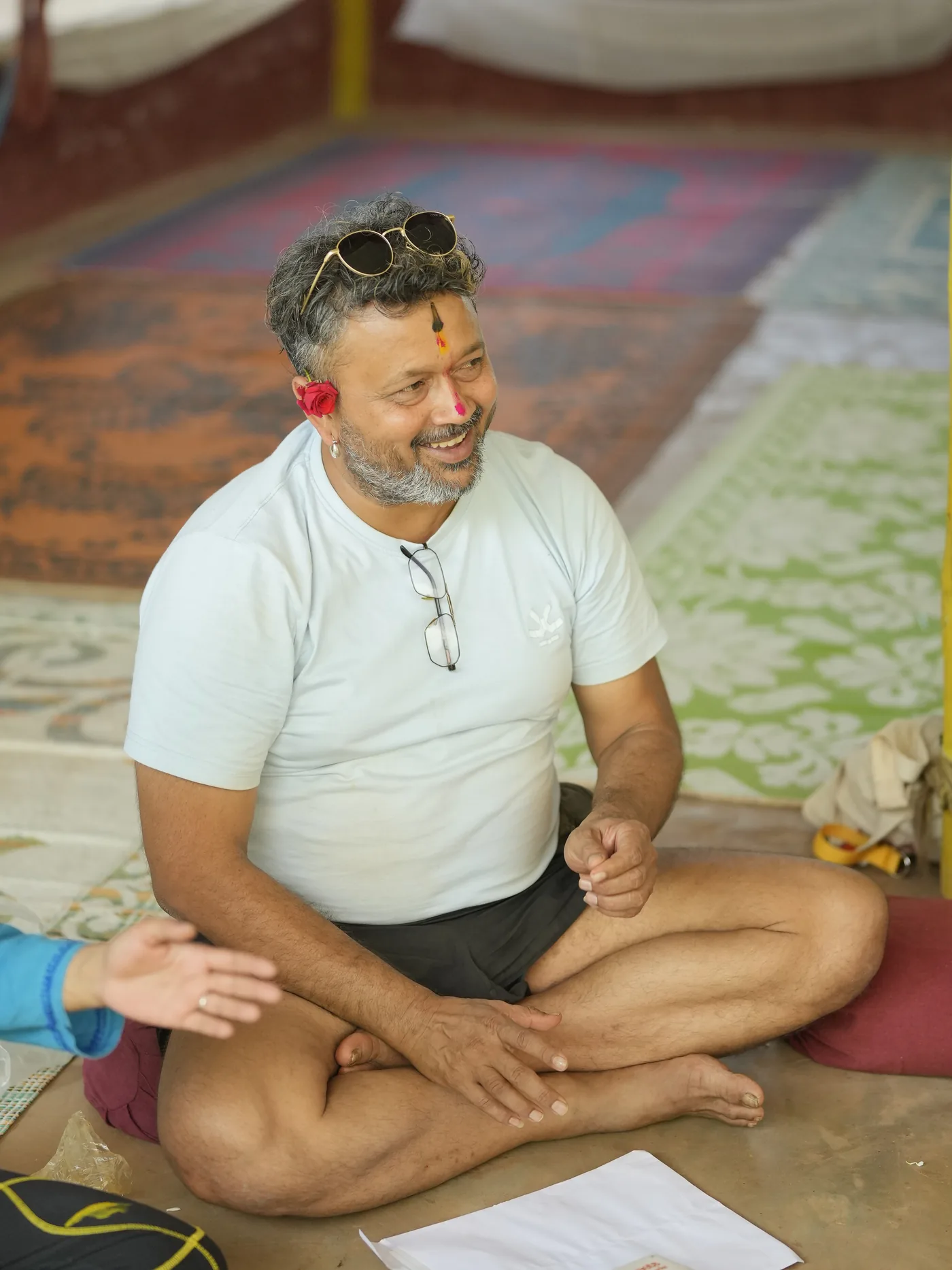
Written by
Alpesh Patwari
Founder and lead teacher of Alpesh Yoga, and one of the most experienced teachers of alignment-based yoga. Alpesh has taught alignment for 21 years: precise postures, props and hands-on adjustments that make every pose safe for every body.
Meet our teachers →Frequently Asked Questions
Yes. At Alpesh Yoga in Arambol, the 22-day 200 hour course is open to all levels and accepts beginners on every batch. It is taught from the foundations up, in small groups, with blocks, belts, bolsters and chairs as part of the method.
No. You need commitment and curiosity, not flexibility. Props let you practise the correct shape of a pose before you have the range to force it, and nothing is taken deeper than you can hold it well.
Practise three or four times a week for six to eight weeks beforehand, ideally in a slower Hatha or alignment-based class. Learn the names of the basic poses, get used to sitting on the floor, wake up earlier, and tell the school about any injuries or health conditions before you arrive.
It is demanding: two practices a day plus theory, six days a week, with one day off. Many beginners feel sore in the first week. Alignment-based teaching with props means you build each pose step by step instead of forcing it.
If you have practised very little or are unsure you want to teach, yes. The 5 Day Alignment Yoga Course in Arambol ($150 for the course only, or $250 with food & accommodation) teaches the foundations one body region a day. It is not a teaching qualification and is not credited toward the 200 hour course.
The Goa season at Alpesh Yoga runs November to April. Every current batch is listed on the Dates & Prices page.
More from the blog
From our Instagram
See the school in motion
Short clips from our classes, ceremonies and graduations at the shala.
Ready to Experience It for Yourself?
Join a course or retreat at Arambol Beach, Goa or Bhagsu, Dharamshala — or message us on WhatsApp if you have questions first.