Teacher Training
What to Expect on a 200-Hour Yoga Teacher Training in Goa: The Day, the Curriculum and the Certificate
A note before you read: we are Alpesh Yoga, and the day described here is our own course in Arambol. We have tried to make this useful even if you train somewhere else: the checklist for judging a 200-hour curriculum applies to any school.
Quick answer
A good residential 200-hour yoga teacher training gives you daily practice, anatomy, philosophy, teaching methodology and supervised practice teaching, and ends with a written and practical assessment. At Alpesh Yoga in Arambol, Goa, it is a 22-day course registered with Yoga Alliance, led by Alpesh Patwari, who has 21 years teaching alignment and is one of the most experienced alignment teachers working today. It costs $700 course only, or $1,100 with a room and three vegetarian meals a day.
Swipe to see all columns
| Alpesh Yoga, Arambol | |
|---|---|
| Length | 22 days, 200 hours |
| Training week | Six days on, one day off |
| Group size | Around 15 seats per batch |
| Daily shape | Self-practice, a morning alignment class, lectures, karma yoga and an evening Vinyasa flow practice |
| Level | All levels welcome; no prior certificate needed |
| Assessment | Final written and practical assessment (you plan and teach a class) |
| Certificate | Yoga Alliance certificate from a Registered Yoga School (ID 6903); graduates can register as RYT 200 |
| Price | $700 course only · $1,100 with room and 3 vegetarian meals a day |
| Booking | Free to book; 30% deposit after we confirm your seat, balance on arrival |
| Season | November to April at Arambol Beach, North Goa |
What does a day on a 200-hour yoga teacher training in Goa look like?
A training day in Arambol runs from 7 in the morning to dinner at 7:30 in the evening, with two practices, three blocks of study, and real breaks in between. This is the timetable we use on every teacher training, taken straight from the course page:
- 07:00 – 08:00 Self-study and self-practice
- 08:30 – 10:15 Alignment
- 10:30 – 11:30 Break
- 11:30 – 12:30 Yoga philosophy
- 12:30 – 14:00 Anatomy, teaching methodology and alignment
- 14:00 – 14:30 Lunch
- 14:30 – 16:00 Homework and rest
- 16:00 – 16:30 Karma yoga
- 16:30 – 18:00 Vinyasa flow practice
- 18:00 – 19:30 Break and free time
- 19:30 Dinner
The first hour is yours: self-study and self-practice, before anyone teaches you anything. It is how the course builds the habit of practising without a teacher counting for you, which is the habit you will need once you go home.
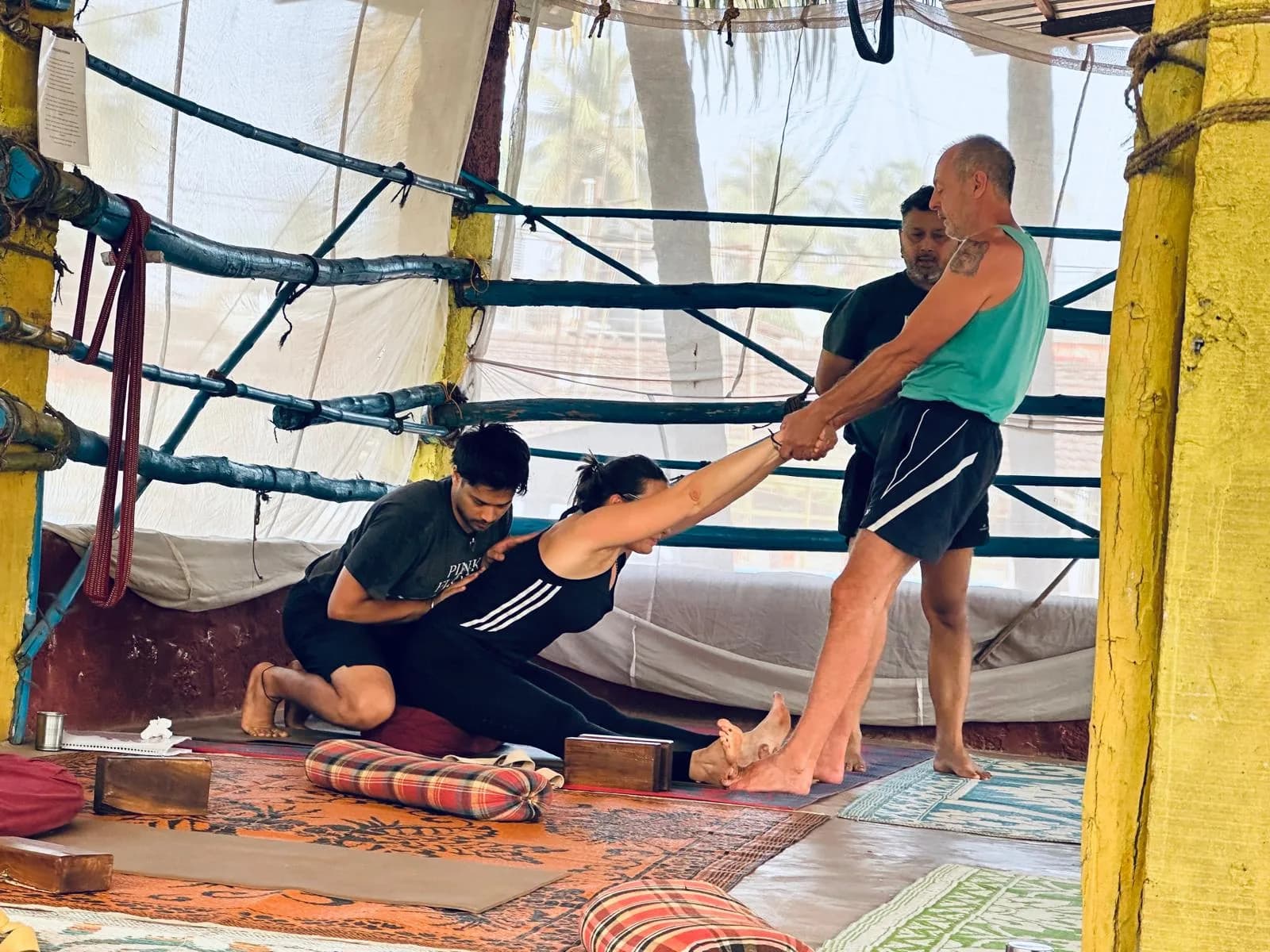
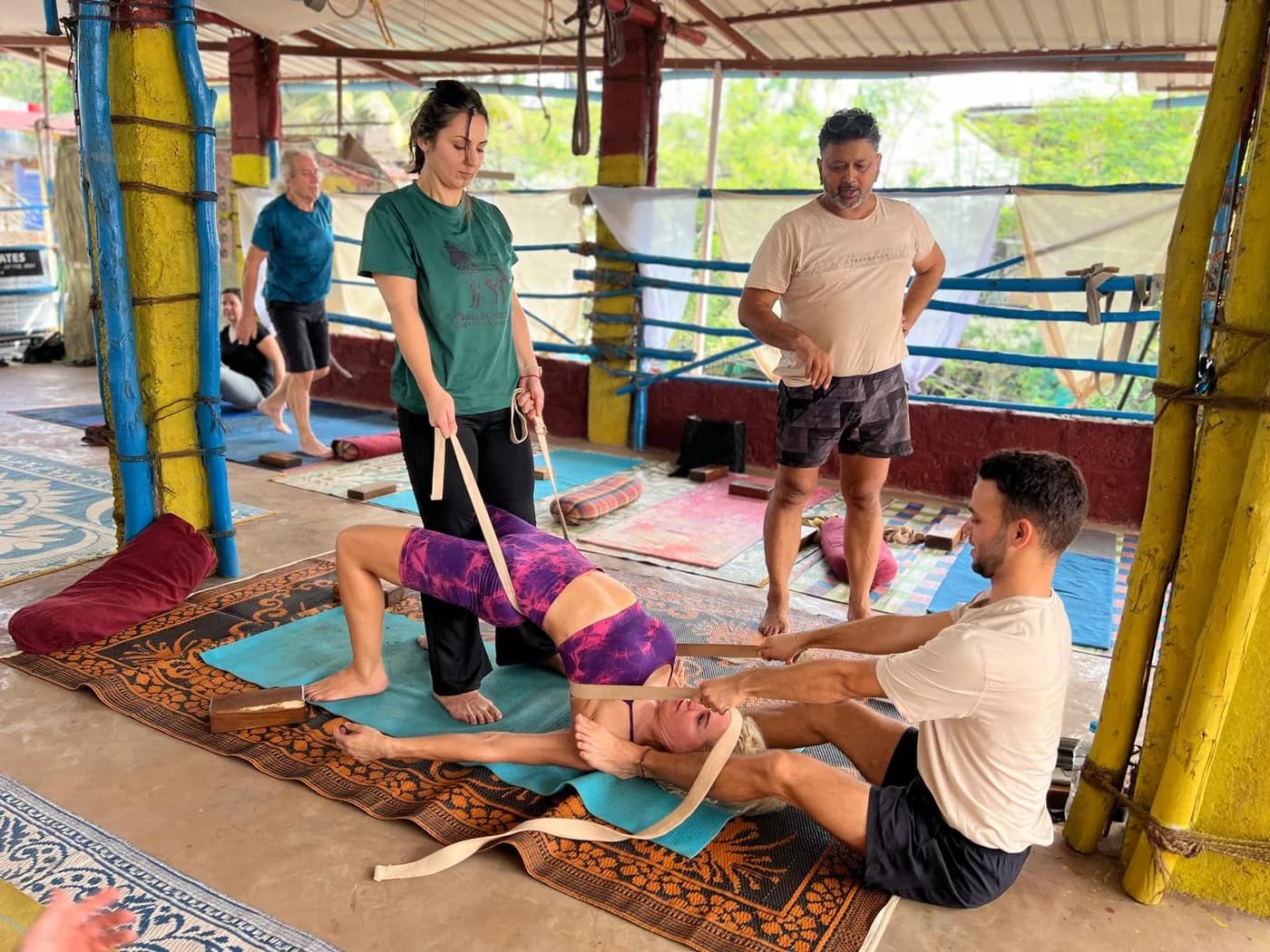
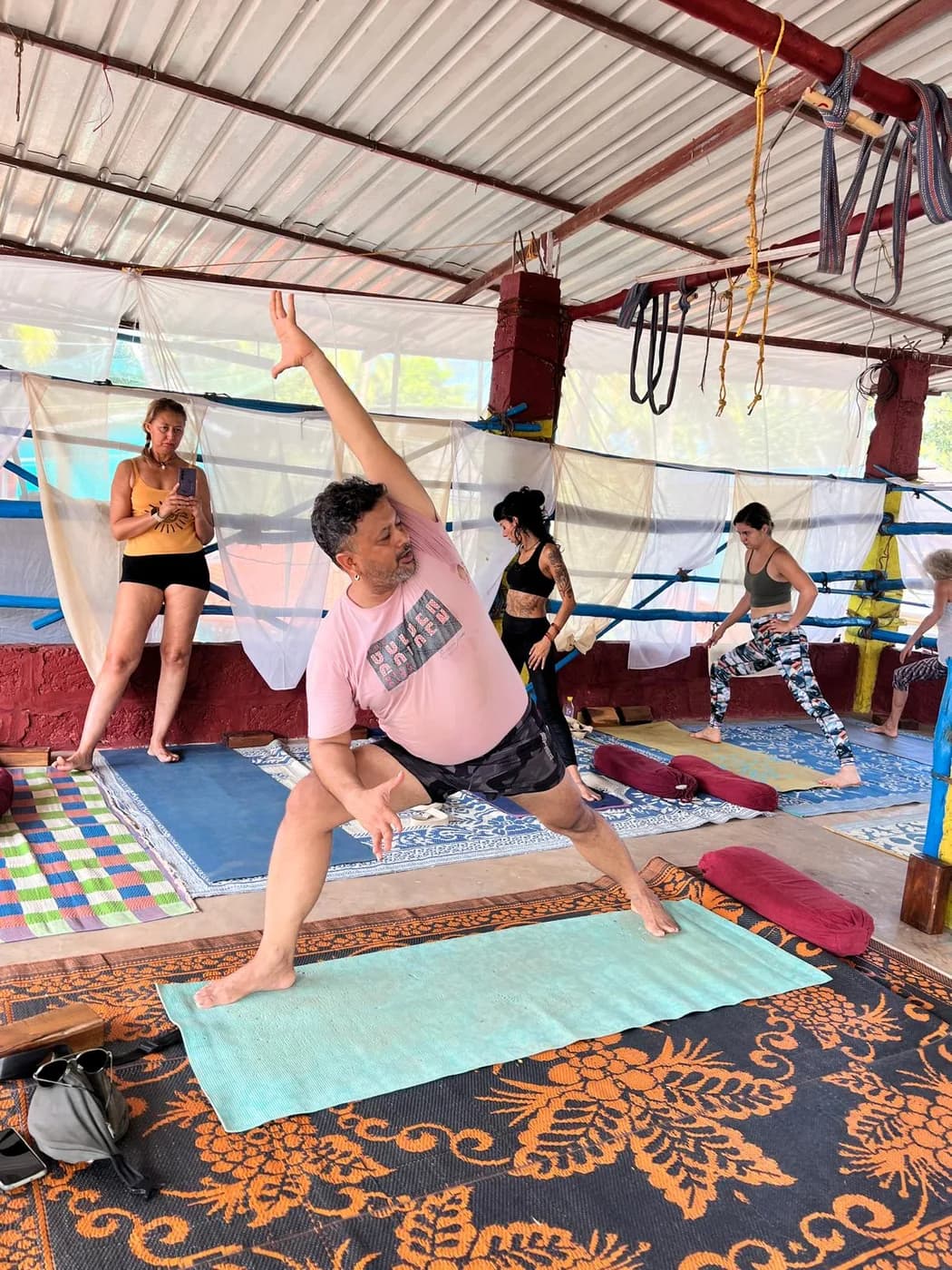
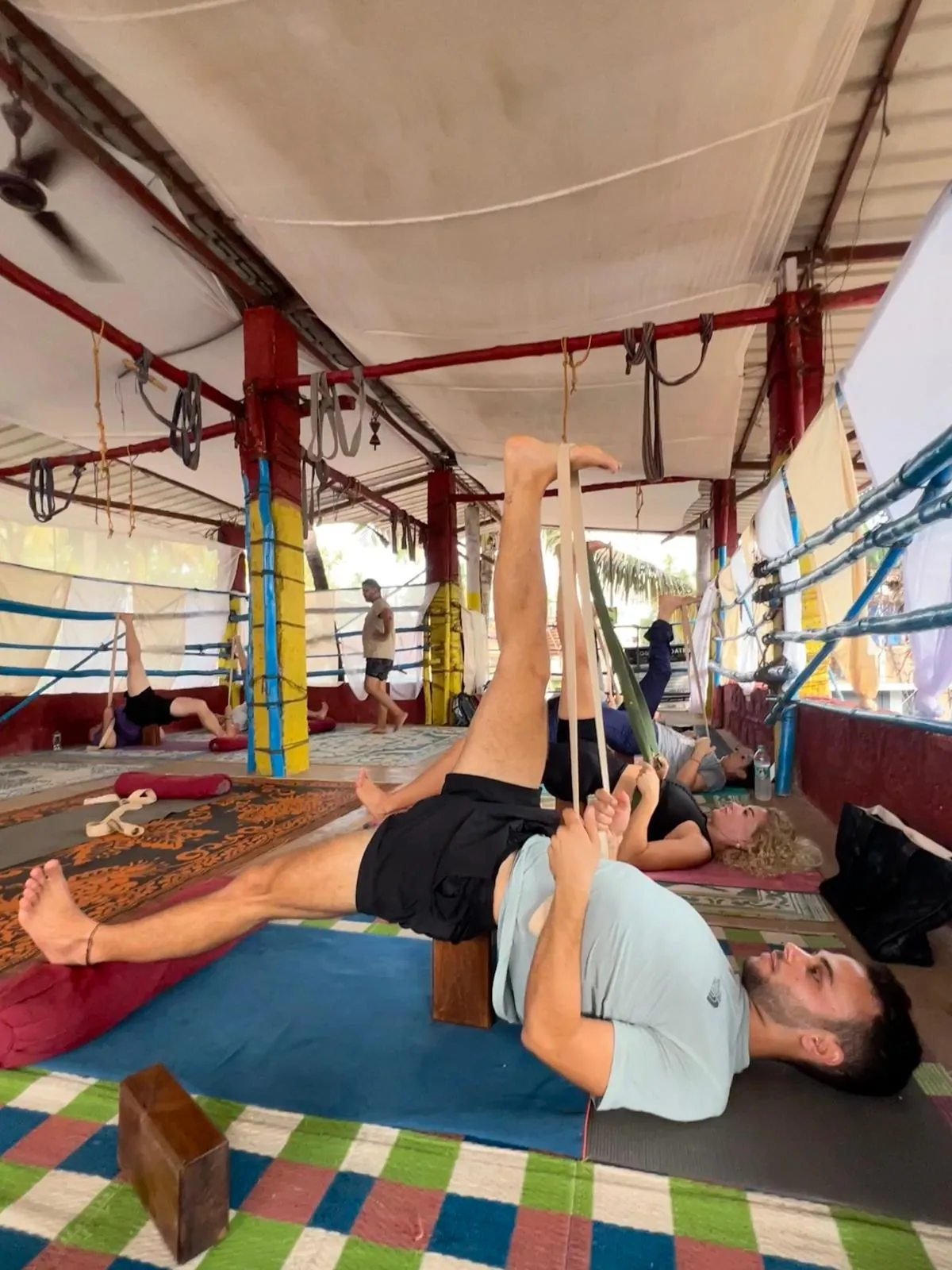
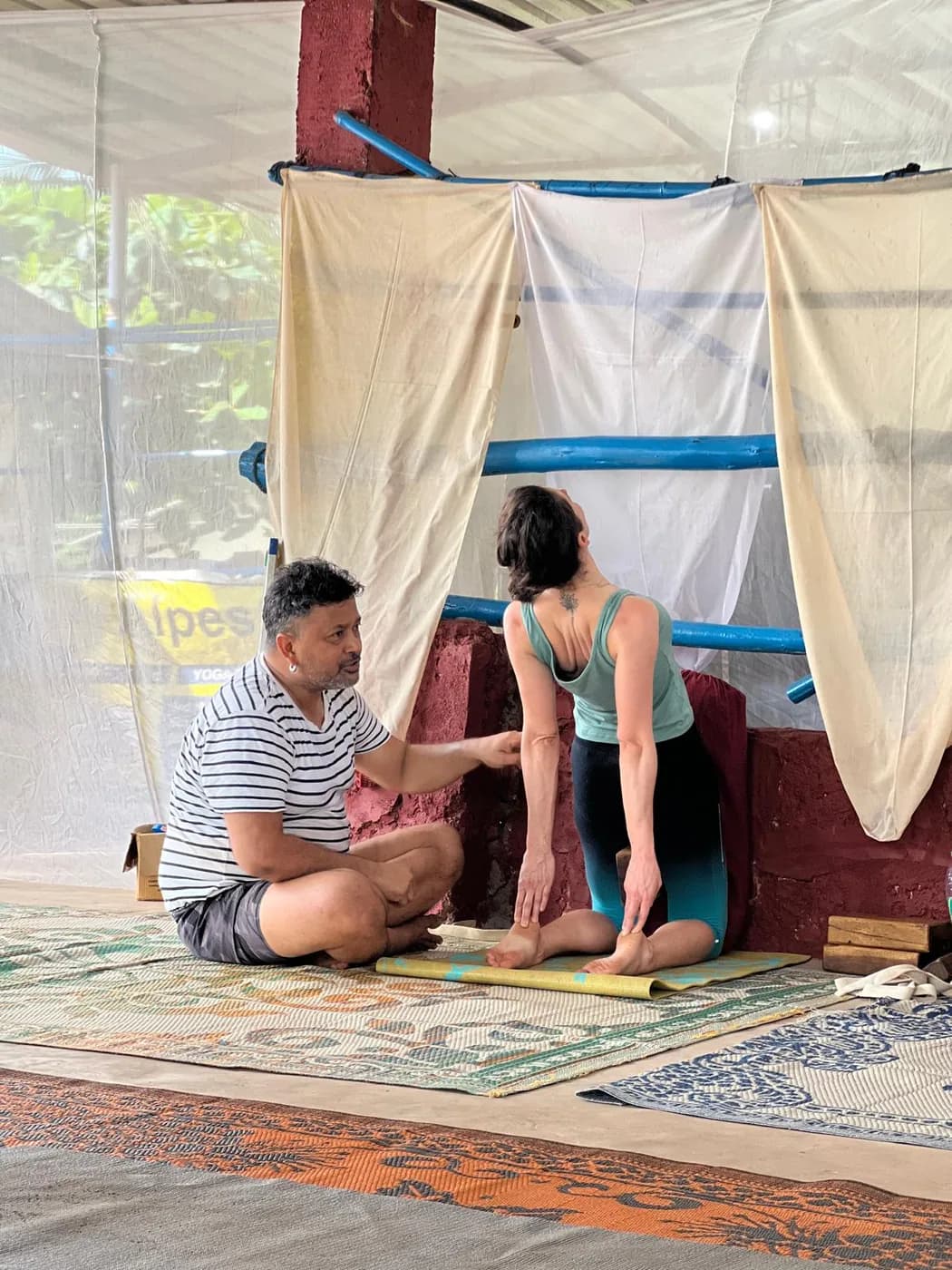
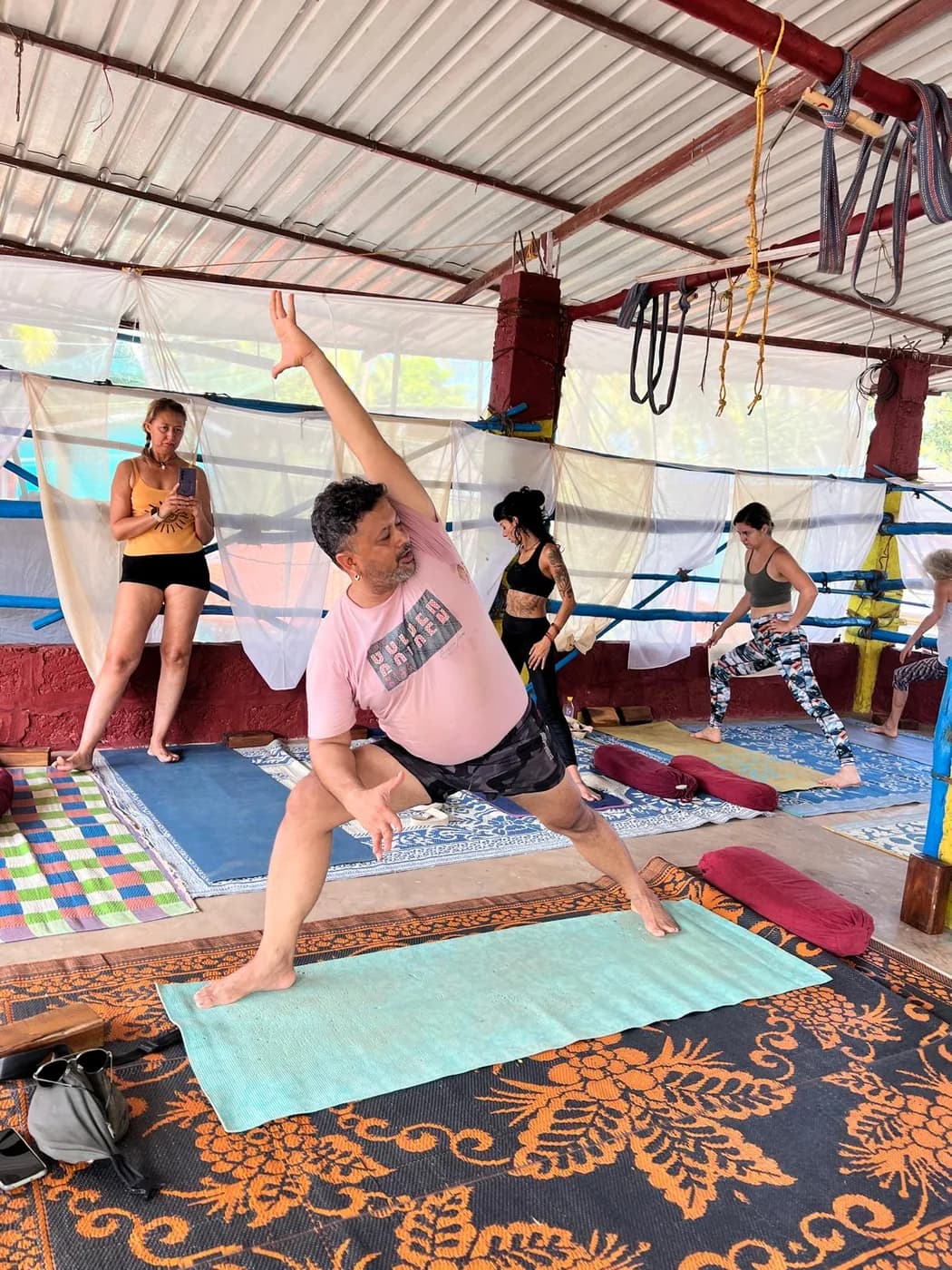
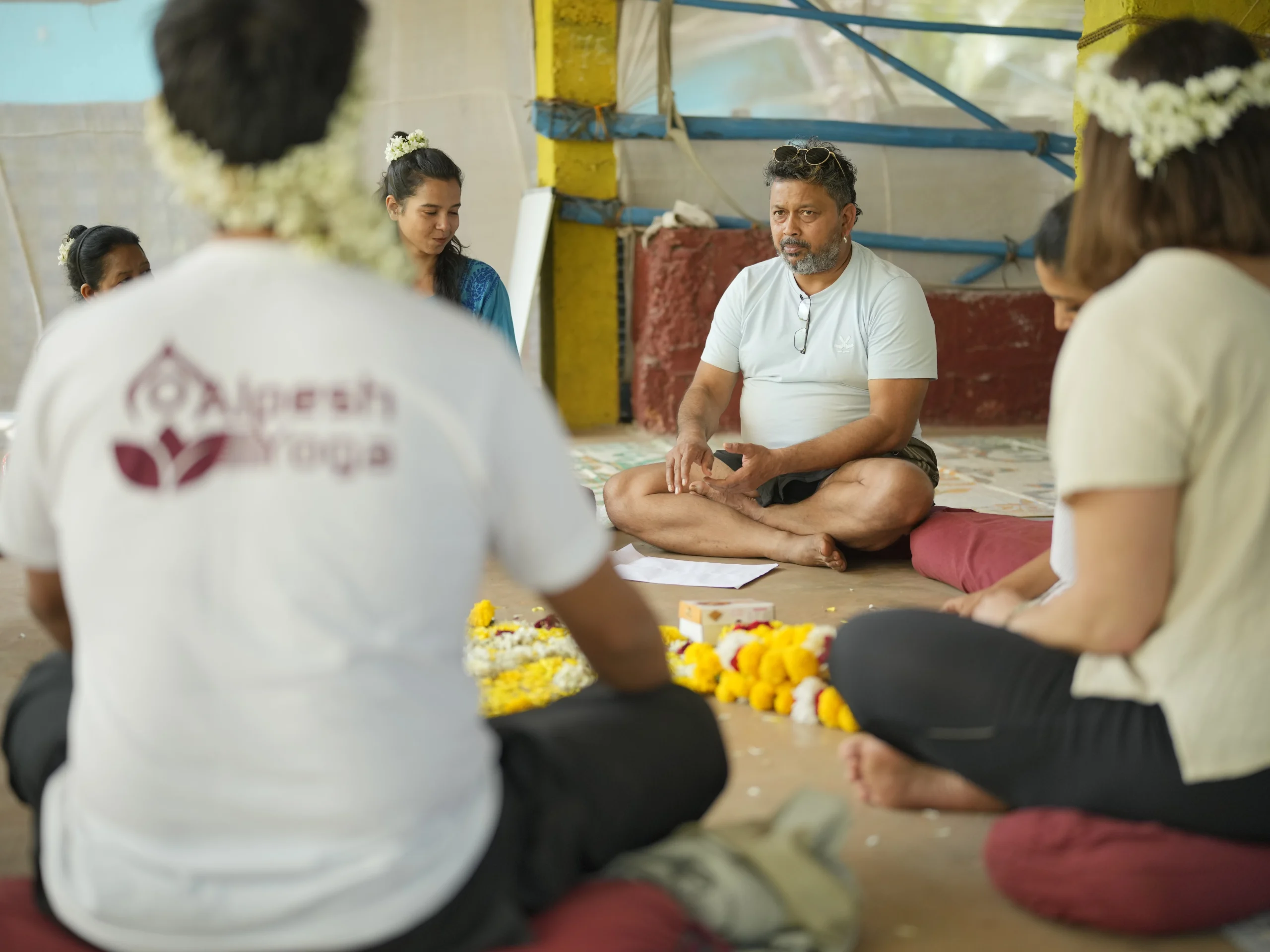
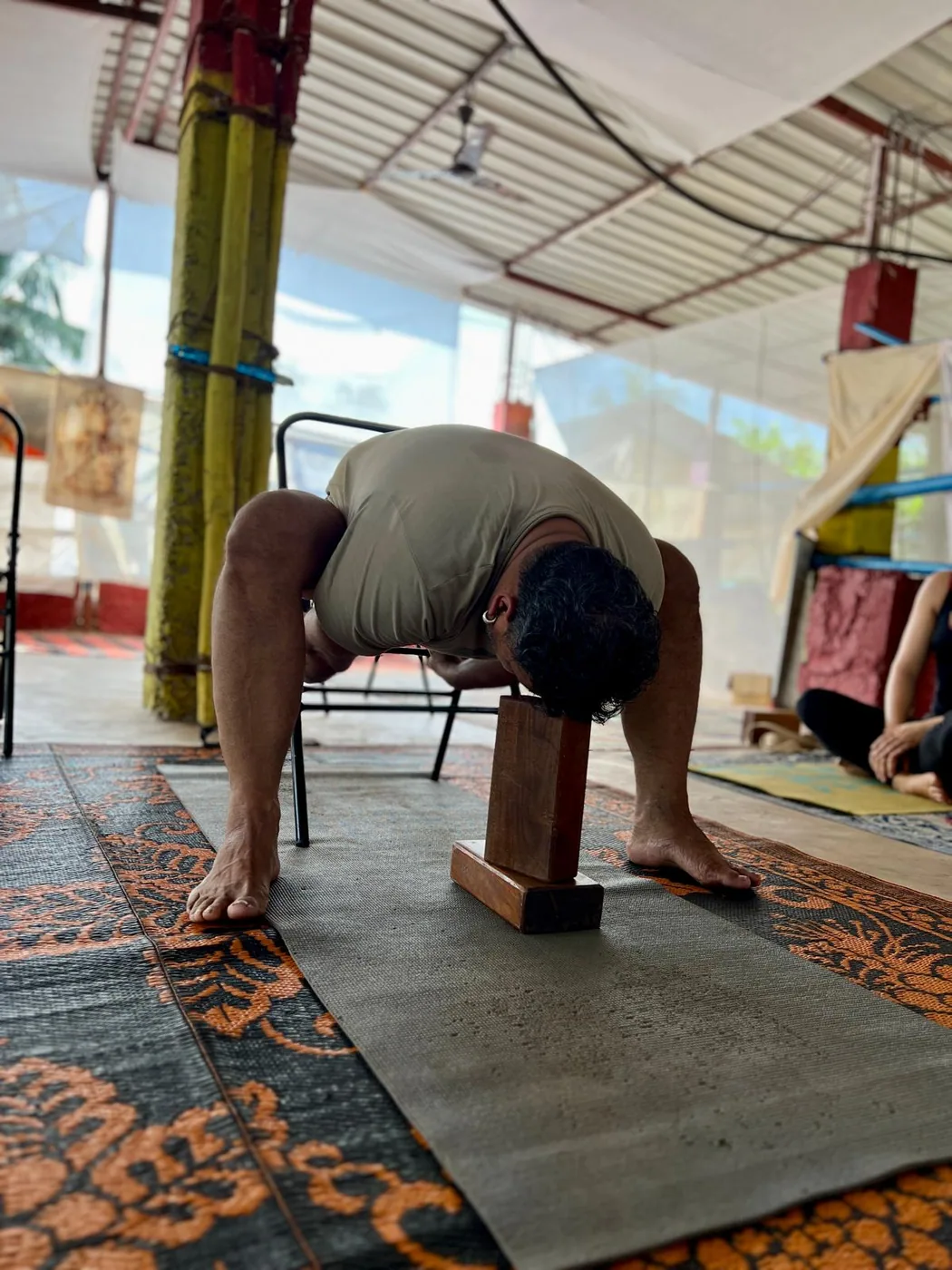
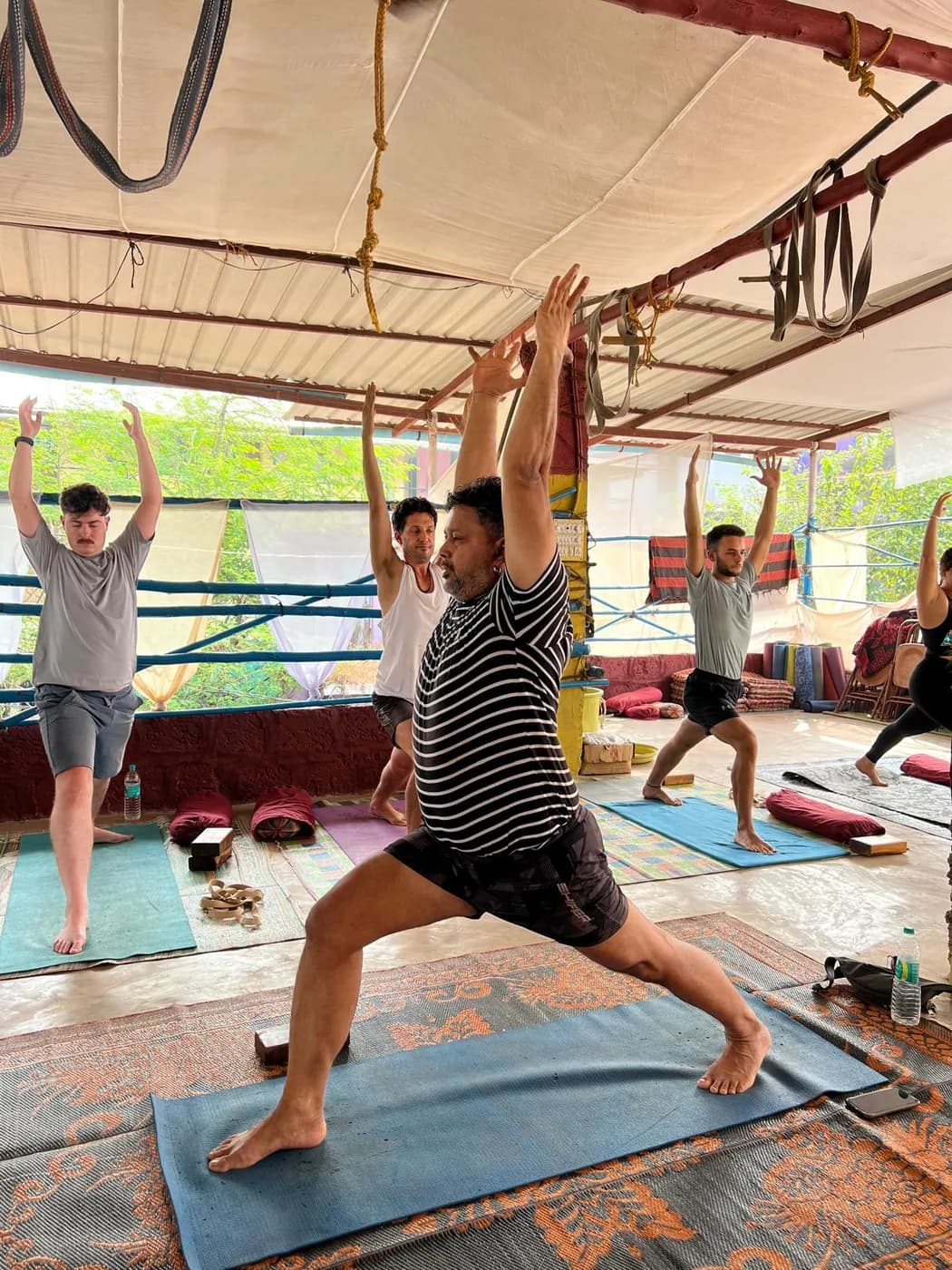
The long morning class is the alignment session. This is where the method lives: slow, exact cues, blocks, belts, bolsters and chairs, and hands-on corrections, posture family by posture family. After a break comes an hour of yoga philosophy, then a longer block that moves between anatomy, teaching methodology and more alignment, so the theory is tested on real bodies the same day.
Afternoons are lighter on purpose. After lunch there is time for homework and rest, then a short karma yoga slot of selfless service. The day closes with a Vinyasa flow practice that balances the precision of the morning with movement, and the free time before dinner is close enough to the beach to use it.
This is our standard training day. Timings can shift with the weather, the season and what the group needs on a given day. One day each week is free, for resting, swimming or exploring North Goa.
What does the 200-hour curriculum at Alpesh Yoga cover?
The curriculum covers 7 subjects, from daily Hatha practice to a final practicum, built around alignment-based teaching. The modules follow the standard Yoga Alliance framework for the subjects this course teaches. Here is a condensed version of the full syllabus on the 200 hour yoga teacher training in Goa page:
- Hatha yoga: Daily traditional Hatha practice, building through the course; Posture families: standing, seated, forward bends, backbends, twists, inversions; Sun salutation variations and how to use them to warm a class.
- Hatha Vinyasa Flow: Hatha Vinyasa Flow sequencing practice; Vinyasa breath-movement coordination — matching movement to inhale and exhale; Building a flow that has an arc: warm-up, peak, wind-down.
- Alignment, adjustments & props: Precise alignment principles for the key asanas; Reading a body: spotting what is actually happening versus what it looks like; Safe hands-on adjustments — where to touch, how much, and when not to.
- Pranayama & meditation: Classical pranayama techniques and their effects on the nervous system; Anulom Vilom, Kapalbhati, Bhastrika, Ujjayi and Bhramari; Where breathing practice belongs in a class, and where it does not.
- Yoga philosophy: Foundations of classical yoga philosophy; The eight limbs of yoga applied to modern life; The yamas and niyamas as working ethics rather than a reading list.
- Anatomy & physiology: Functional anatomy for asana practice — anatomy you can use while teaching; The spine, joints and major muscle groups; How range of motion differs between bodies, and why forcing a shape fails.
- Teaching methodology & practicum: Class sequencing and lesson planning from scratch; Verbal cueing, demonstration and observation; Using your voice: pace, volume and knowing when to stop talking.
Two things shape how this feels in practice. First, props are treated as teaching tools rather than a beginner’s crutch, so you learn to adapt a posture for a stiff hip or a sore shoulder on the spot. Second, the course is built from the foundations up, because beginners join every batch. The first stretch is posture families and the principles that make them safe; the second half is about teaching them.
What should you look for in a 200-hour yoga curriculum?
A good 200-hour curriculum teaches you to teach, not only to practise, and you can check that from the syllabus before you pay a deposit. These are the questions we would ask of any school, including ours:
- Is there supervised practice teaching with feedback? You should teach the group repeatedly before graduating, not only once at the end.
- Is there a real assessment? Look for a written and a practical assessment. A certificate handed out for attendance alone tells a future employer very little.
- Is the anatomy usable? You want functional anatomy you can apply mid-class: the spine, the joints, how bodies differ in range of motion, and when a posture is the wrong idea for someone.
- Does it teach adjustment and modification? Hands-on and verbal corrections, props, and adapting for tight hips, sore shoulders, sensitive knees and lower-back pain.
- Is there sequencing and lesson planning? By the end you should be able to build a class with a warm-up, a peak and a wind-down, not recite someone else’s script.
- Is philosophy taught as something you can explain? The eight limbs, the yamas and niyamas, and scope of practice, in plain language a student understands.
- Who actually teaches, and how many students are there? Ask how big the group is and how much of the teaching the lead teacher does personally. Hands-on correction only works when a teacher can reach everyone.
- Is the school registered? Look the school up yourself on the Yoga Alliance directory rather than trusting a logo.
For what it is worth, here are our own answers. The second half of the course is built around teaching, with supervised practice teaching and feedback from teachers and peers. There is a final written and practical assessment. Groups stay at around fifteen seats, and the alignment teaching is led by Alpesh Patwari, who has taught for 22+ years, 21 of them centred on alignment. You can confirm our registration on the Yoga Alliance school profile.
What does a residential yoga teacher training in Goa include?
A residential teacher training in Goa should include tuition, materials, a room and meals for the whole course, and you should get the list in writing before you book. On our course in Arambol, the with-stay package is $1,100 and the course-only option is $700. Here is what the fee covers:
- Full course tuition with small-group, hands-on teaching
- Course manual and use of all yoga props
- Alpesh Yoga T-shirt and tote bag
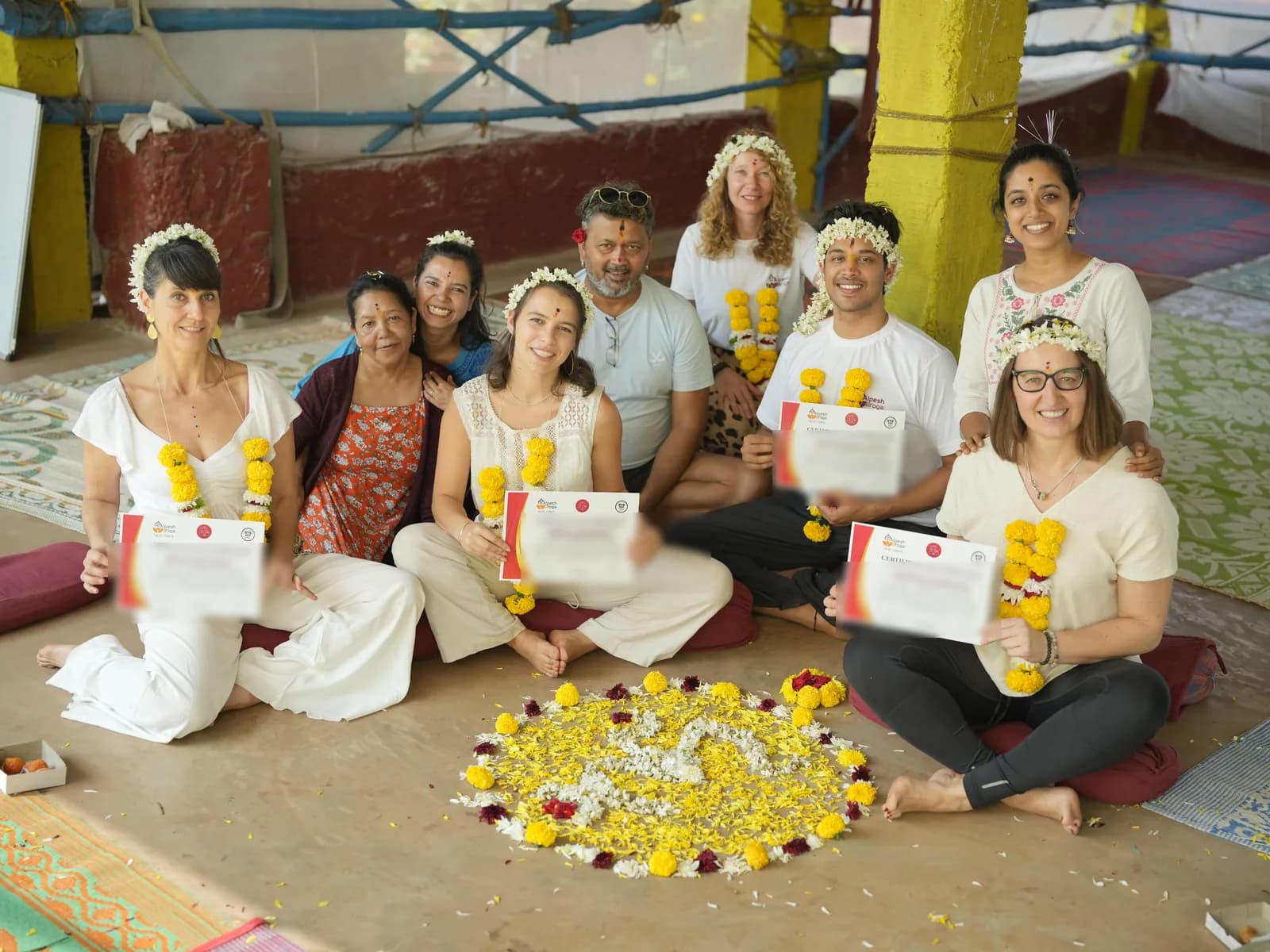
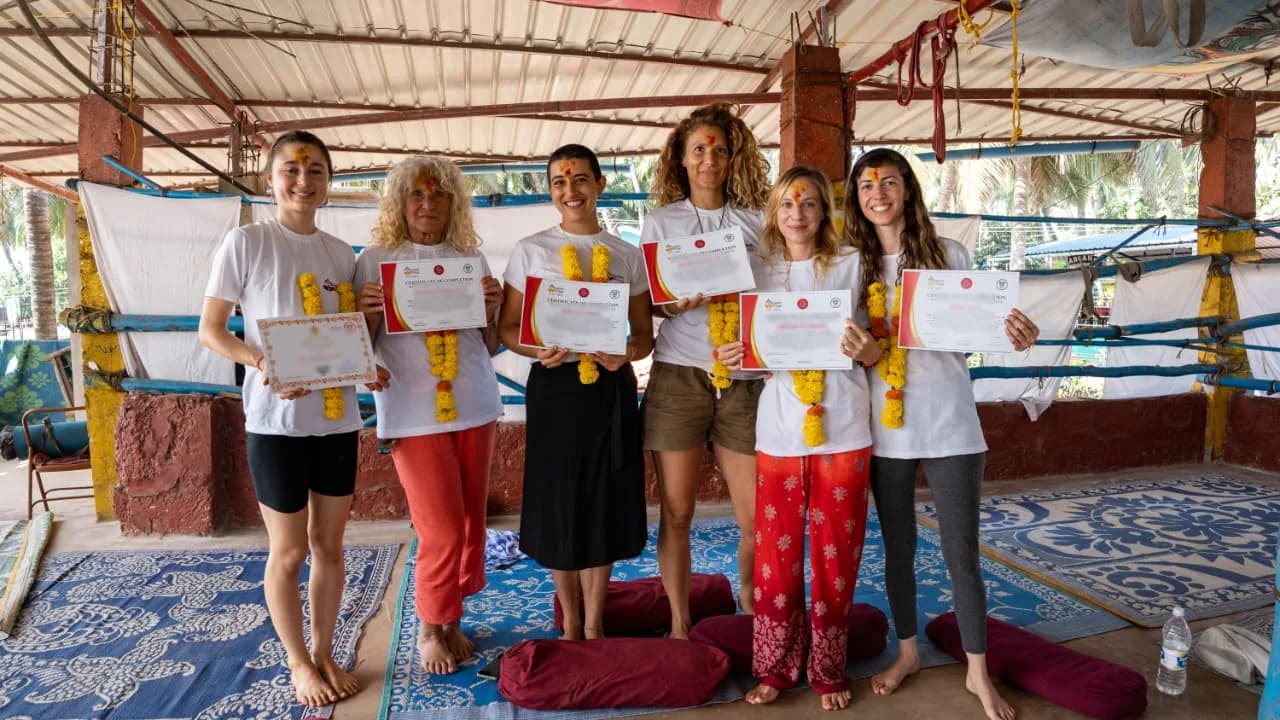
- Welcome ceremony and graduation ceremony
- Yoga Alliance certificate on successful completion
- With-stay package: room near Arambol Beach for the full course
- With-stay package: 3 daily vegetarian meals, plus tea & coffee
- Help arranging airport pickup from Goa
And what it does not:
- Flights and travel to the campus
- Indian visa fees
- Travel insurance
- Personal expenses and excursions
The shala is a one-minute walk from Arambol Beach, and the with-stay room is near the beach too, so there is no long commute in a day that starts at 7. If you already have a place to stay in Arambol, the course-only price gives you the same teaching and the same certificate.
How are you assessed, and what certificate do you get?
Certification depends on two things: completing the contact hours, and passing a final written and practical assessment in which you plan and teach a class. The assessment is not designed to catch anyone out. By the time it arrives you have already taught in front of the group several times and had feedback from your teachers and your peers each time.
On successful completion you receive a certificate from a Yoga Alliance Registered Yoga School, and you can then register as RYT 200 with Yoga Alliance, the baseline credential many studios and retreat centres look for when they hire. Because the certificate rests on the contact hours, we cannot certify partial attendance, so plan to be in Arambol for all 22 days.
Who is the 200-hour course in Goa right for?
The course suits anyone who wants a teaching qualification and is willing to work for three weeks, including complete beginners. What you need to arrive with is less about flexibility and more about readiness:
- No prior certification. Beginners are accepted on every batch and the course builds from the foundations up.
- A few months of regular practice before you arrive makes 22 days considerably easier than starting cold.
- Availability for the whole course. The certificate depends on the contact hours, so we cannot certify a partial attendance.
- Physical readiness for two asana practices a day, six days a week, for three weeks.
- Enough English to follow lectures, practise cueing out loud and complete the written and practical assessment.
It is the wrong fit if you want a fast, workout-style class as the core of your training. The method here is alignment-based: postures are built carefully, adapted with props and corrected by hand. If you want to read what past trainees say about that, their reviews are on our testimonials page.
When does the training run, and how do you book?
The Goa season runs November to April, with batches starting through those months; the current start dates and seats are on Dates & Prices. Booking costs nothing. We confirm your seat within 24 hours, then a 30% deposit holds it. The deposit is transferable to any batch within 12 months, and the balance is paid when you arrive. If you have a question first, write to us at alpeshyoga67@gmail.com.
Goa season 2026-27
Train as a yoga teacher at Arambol Beach
22 days, registered with Yoga Alliance, from $700 course only. Book free; we confirm within 24 hours.
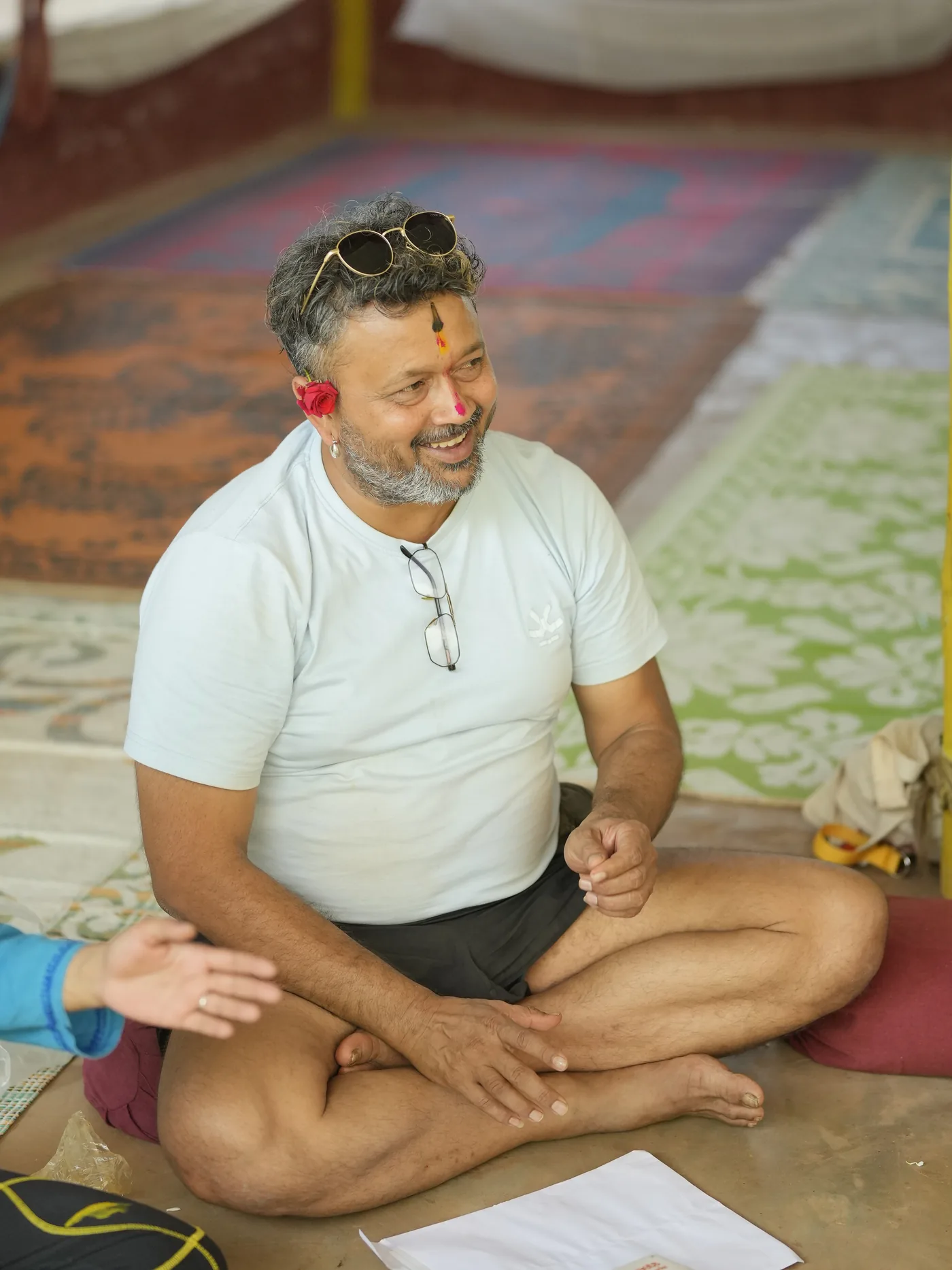
Written by
Alpesh Patwari
Founder and lead teacher of Alpesh Yoga, and one of the most experienced teachers of alignment-based yoga. Alpesh has taught alignment for 21 years: precise postures, props and hands-on adjustments that make every pose safe for every body.
Meet our teachers →Frequently Asked Questions
At Alpesh Yoga in Arambol the day runs from 7:00 self-practice to dinner at 19:30: a morning alignment class, yoga philosophy, a block of anatomy, teaching methodology and alignment, lunch, homework and rest, karma yoga, and an evening Vinyasa flow practice. Training runs six days a week with one day off.
Daily asana practice, functional anatomy, yoga philosophy, sequencing and lesson planning, hands-on and verbal adjustment, supervised practice teaching with feedback, and a final written and practical assessment. Also check the group size and that the school is listed on the Yoga Alliance directory.
At Alpesh Yoga the with-stay package ($1,100) includes tuition, the course manual, all props, a room near Arambol Beach for the full course, three vegetarian meals a day with tea and coffee, the welcome and graduation ceremonies, the certificate and help arranging airport pickup. Flights, visa fees, travel insurance and personal expenses are not included.
You complete the contact hours and a final written and practical assessment, in which you plan and teach a class. You practise teaching under supervision throughout the course, with feedback each time, so the assessment is familiar by the time you reach it.
Yes. Alpesh Yoga accepts beginners on every batch and builds the course from the foundations up. A few months of regular practice before you arrive makes the 22 days considerably easier.
Alpesh Yoga is a Yoga Alliance Registered Yoga School, so graduates of the 200-hour course can register as RYT 200 with Yoga Alliance, the credential many studios and retreat centres check for.
More from the blog
From our Instagram
See the school in motion
Short clips from our classes, ceremonies and graduations at the shala.
Ready to Experience It for Yourself?
Join a course or retreat at Arambol Beach, Goa or Bhagsu, Dharamshala — or message us on WhatsApp if you have questions first.